The short version
- Use fresh, neutral-smelling ice
- Match ice shape to the serving style
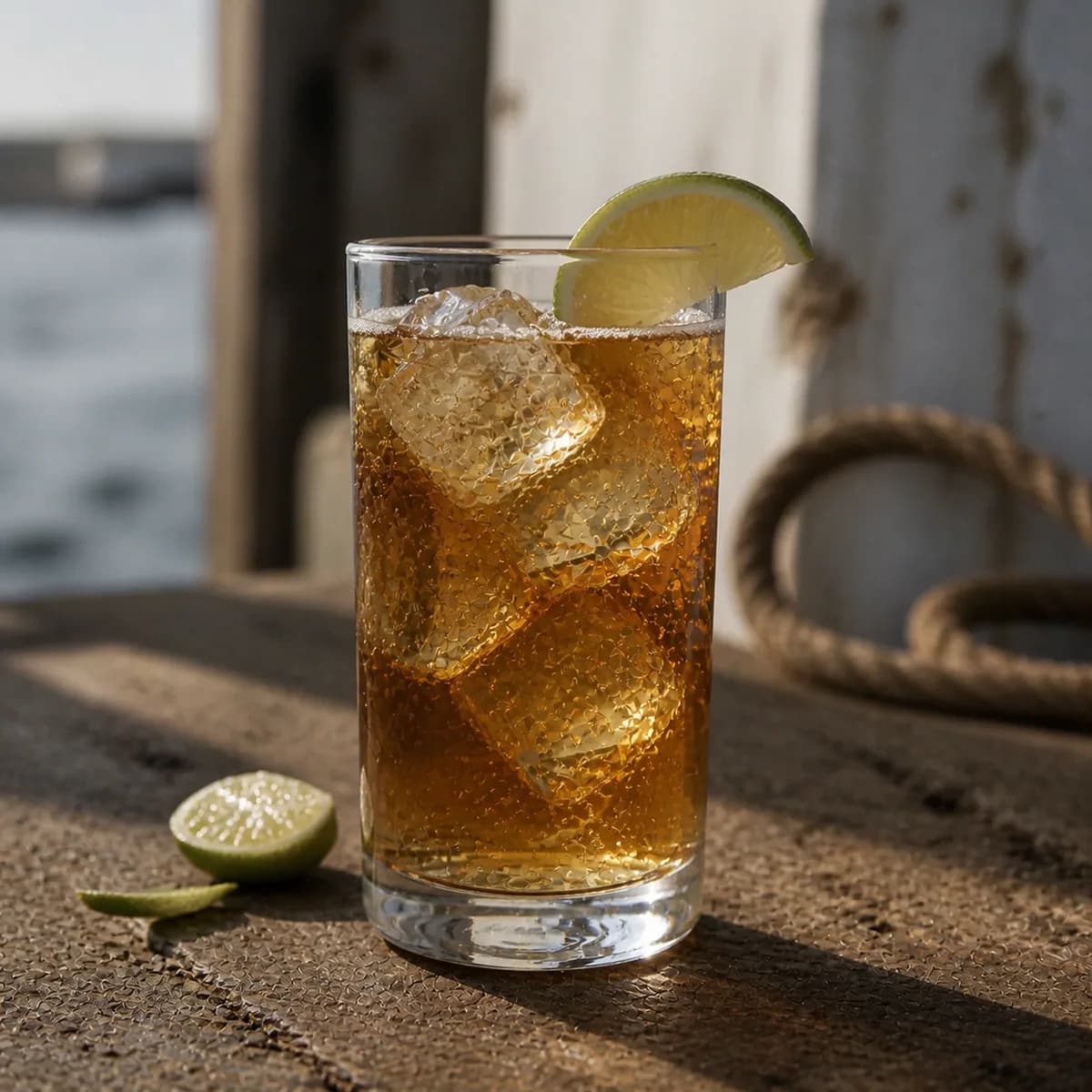
- Fill tall drinks generously
- Plan far more ice for a party than expected
Cold and dilution are linked

Melting ice absorbs heat. That means a drink becomes colder as water enters it, until it approaches its practical serving temperature. Less ice can melt faster because the small amount warms quickly.
The useful goal is controlled dilution, not zero dilution. Water softens alcohol and opens aroma.
Choose the shape for the job
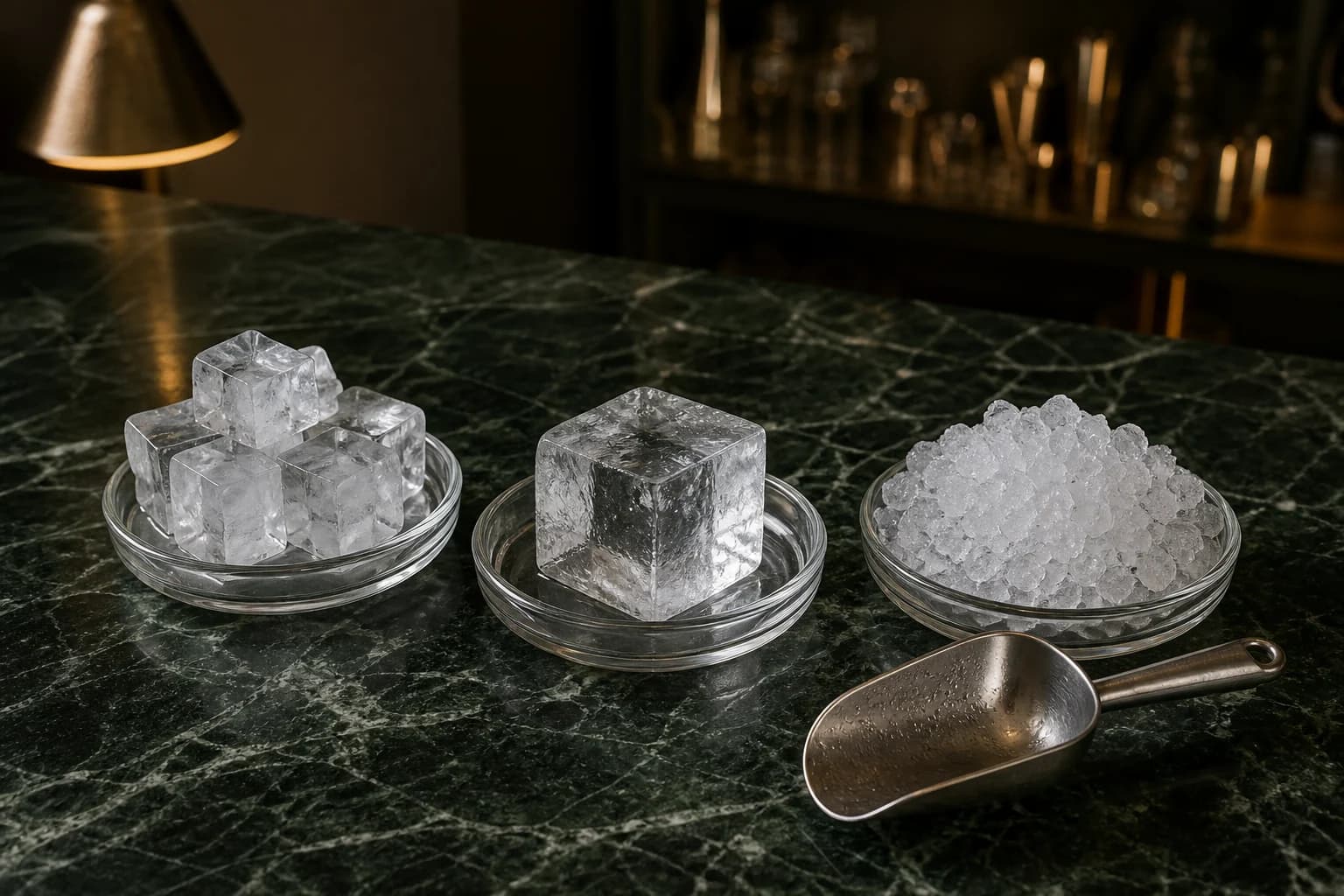
Standard cubes are versatile for shaking, stirring and tall drinks. One large cube slows the evolution of a short drink. Crushed ice creates rapid chilling and a long, frosty texture for swizzles, juleps and tropical styles.
Does clear ice matter?
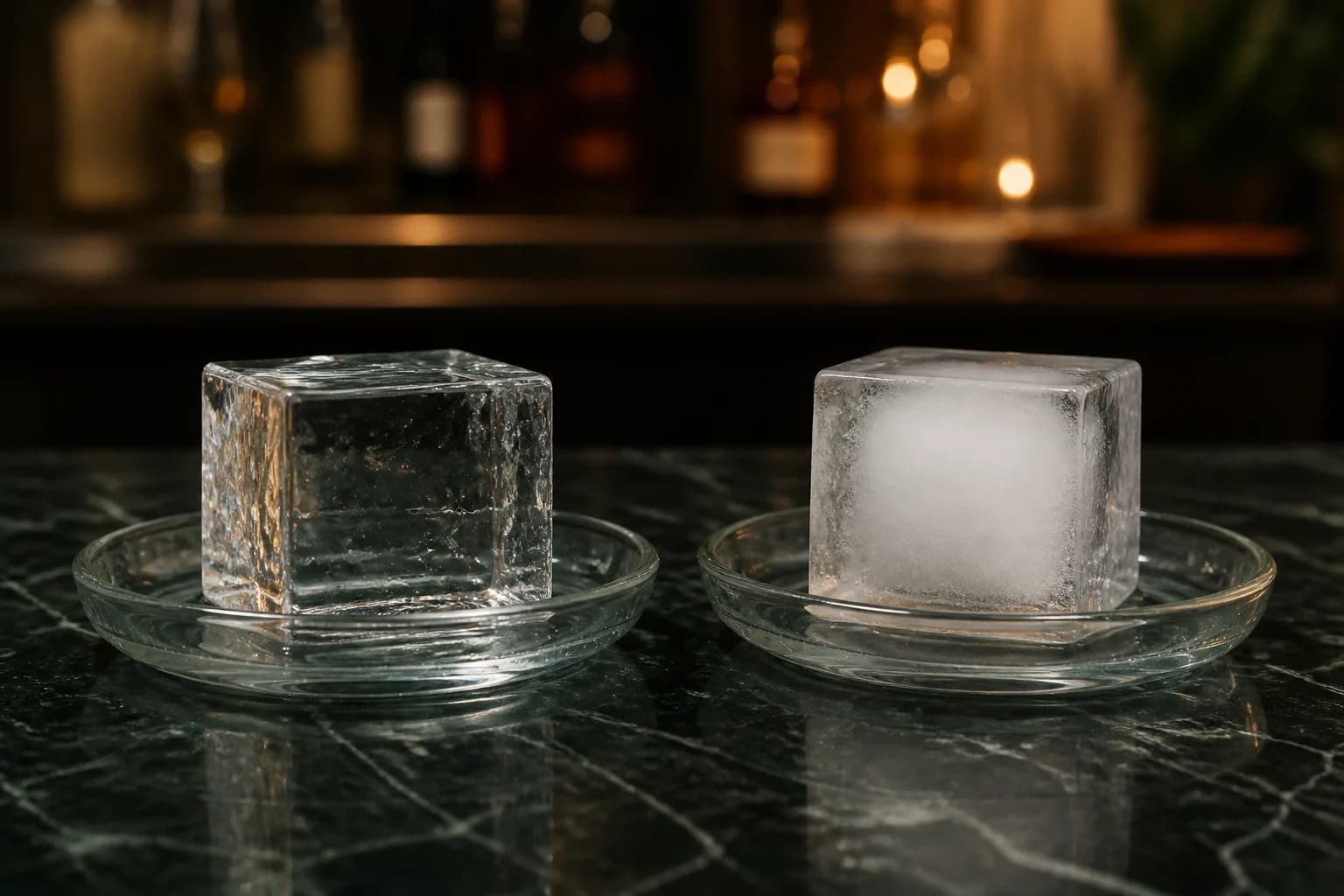
Clear ice is visually impressive and often denser, but clarity alone does not guarantee better flavour. Freshness, size and fit matter more. Cloudy home ice can make an excellent cocktail if it is cold and free of freezer odours.
How much ice for a party?
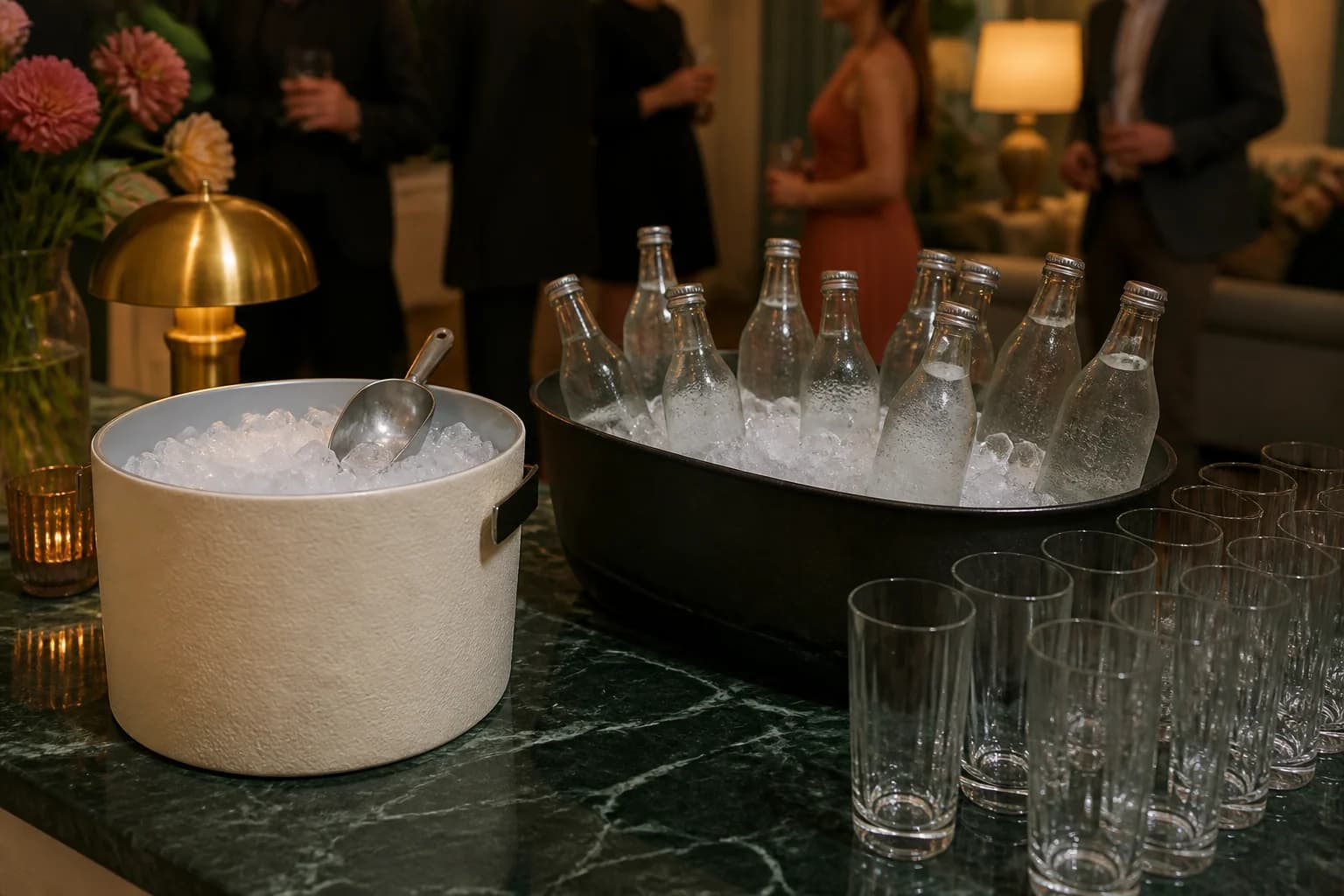
For mixing, serving and keeping bottles cold, plan roughly 0.5 to 0.7 kg (1 to 1.5 lb) per guest. Store serving ice separately from ice used to chill cans and bottles.
Common questions
What people usually ask
Does more ice dilute a drink more?
Not automatically. A full glass of cold ice often stays colder and melts more slowly than a few cubes that warm quickly.
Can I use the same ice for shaking and serving?
Use fresh ice in the serving glass. Shaken ice is chipped, wet and already part of the drink’s measured dilution.