Classic cocktail · Guided recipe
Death in the Afternoon
Start makingHemingway’s own: absinthe topped with champagne until it turns opalescent. “Drink three to five slowly,” he wrote.
In the glassAbsinthe · Champagne
See exact amounts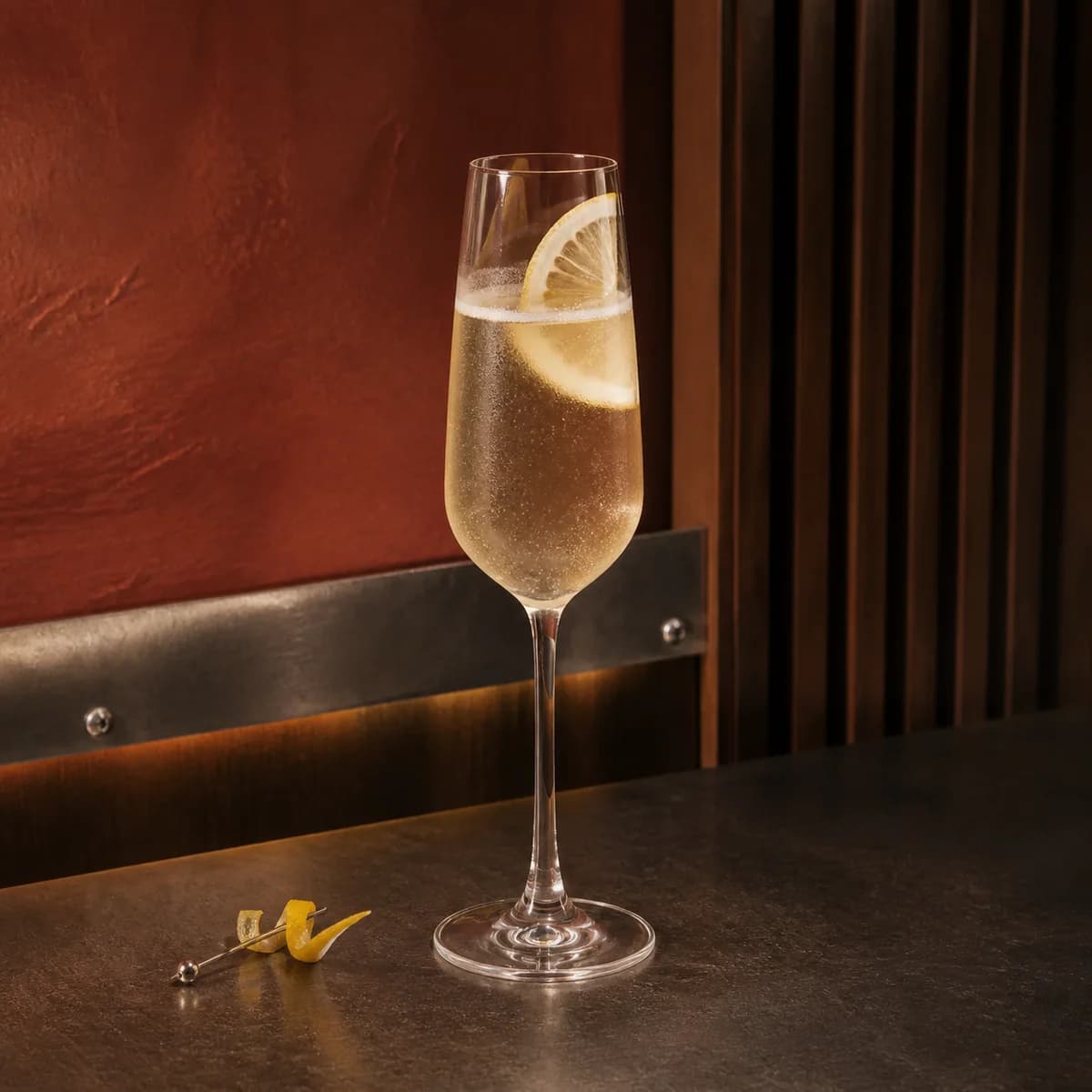
What goes in
Ingredients
Set up before you pour
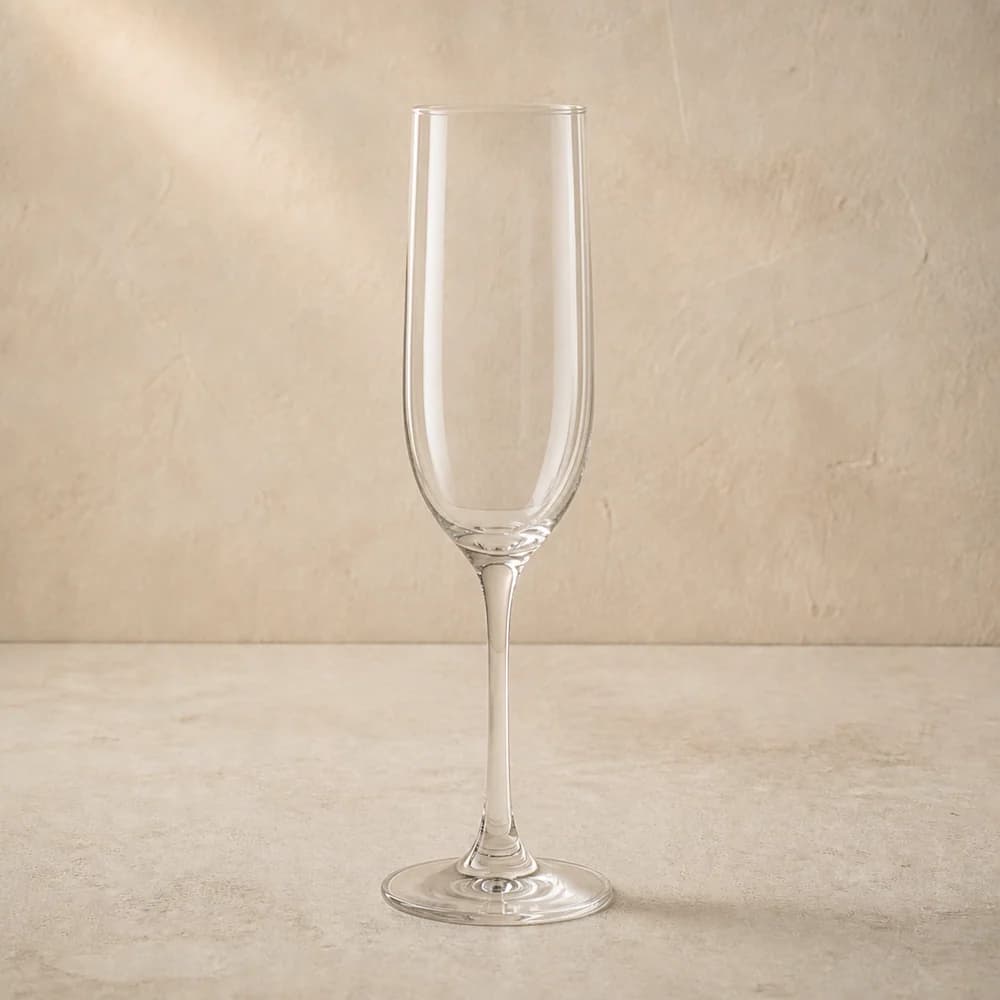
Use a champagne flute.
The narrow bowl slows the loss of bubbles and keeps sparkling cocktails bright for longer.
- Standard size
- 180 ml6 oz
- Ice & serve
- Chill it first; serve without ice.
- If you don’t own one
- Use a small white-wine glass if a flute is unavailable.
- jigger or measuring spoon
- Absinthe30 ml
- Champagne100 ml
From bottle to glass
Method
- 01
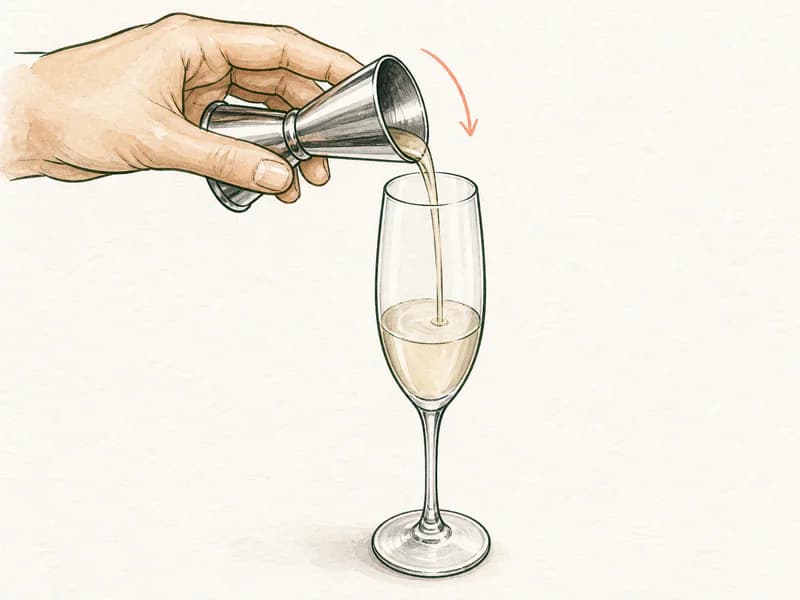
Measure and pour Pour 30 ml absinthe
 Absinthe
- 02
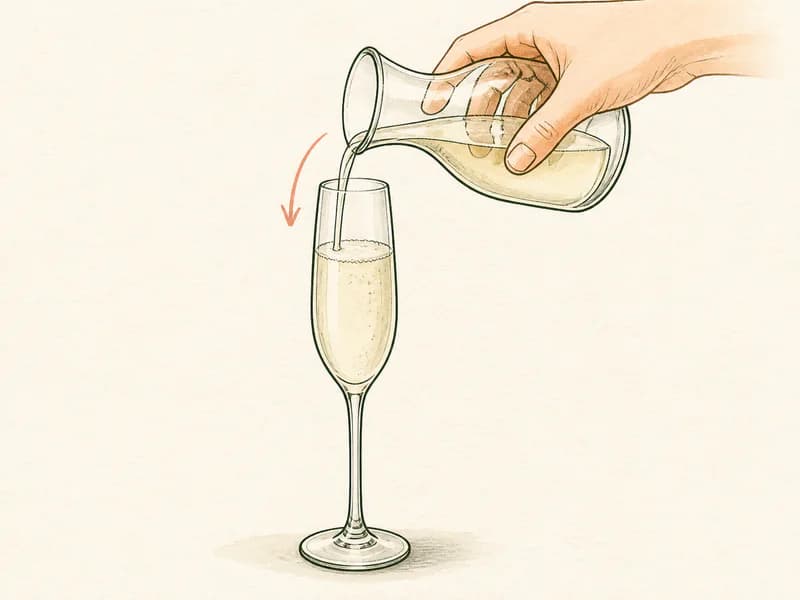
Top gently Top with 100 ml champagne
 Champagne
- 03
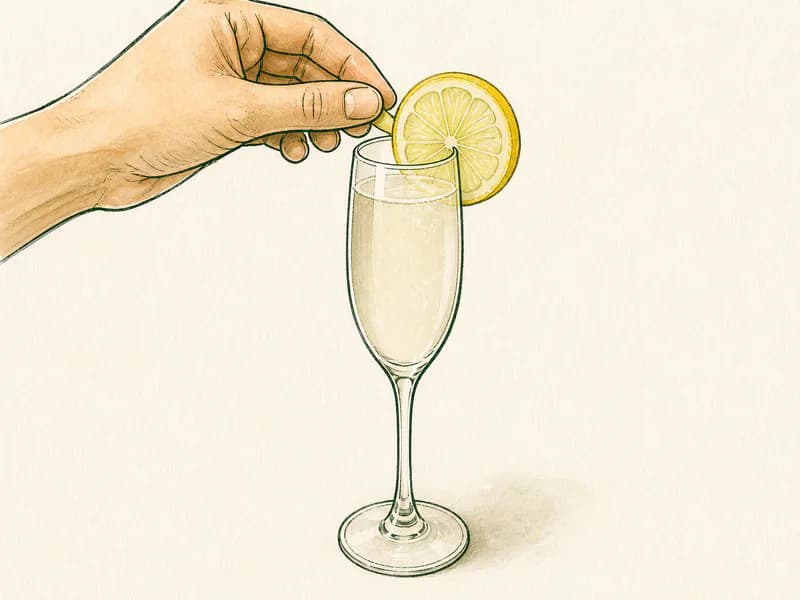
Finish the drink Finish it — add a lemon slice
Know your drink
About the Death in the Afternoon
Hemingway's own instructions
Hemingway gave the recipe to a 1935 celebrity cocktail collection, and his wording beats any description anyone has managed since: pour a jigger of absinthe into a champagne glass, add iced champagne until it attains the proper opalescent milkiness, and drink three to five of these slowly. The last clause is the part everybody ignores.
Common questions
Death in the Afternoon FAQ
Why does it turn milky?
That is the louche. Anise oils dissolve in high-proof alcohol but not in water, so once the champagne drops the strength below roughly 45 percent they fall out of solution and scatter light. The same thing happens when you pour water into pastis.
Is 30 ml of absinthe a lot?
It is. That is a full jigger of something bottled at 60 percent or higher, and champagne does very little to soften it. Start at 15 ml if this is your first one. You can always add more absinthe to the glass; you cannot take it back out.
What can I use if I have no absinthe?
Herbsaint or a French pastis will louche the same way and taste close, though both are sweeter and the drink loses some of its edge. Ouzo works at a push but brings a rounder anise. Whatever goes in, keep the pour under 30 ml.
Does the sparkling wine have to be brut?
Brut or extra brut, yes. Most absinthe carries sugar of its own, and a demi-sec turns the whole glass sticky within two sips. Cheap and bone dry beats expensive and soft here. Serve it very cold, because it gets harder to drink as it warms.
What ingredients are in a Death in the Afternoon?
A classic Death in the Afternoon calls for 30 ml (1 oz) Absinthe, 100 ml (3.5 oz) Champagne. That single-serve spec scales cleanly — the recipe above converts it to oz and multiplies it for 2–4 drinks.
How strong is a Death in the Afternoon?
A standard Death in the Afternoon is roughly 23% ABV once mixed (before ice melt softens it further). That makes it spirit-forward — closer to a Martini than to a beer, so sip it slowly.
Is a Death in the Afternoon shaken or stirred?
A Death in the Afternoon is built directly in the glass over ice — no shaker required. Add the ingredients in order and give it a brief, gentle stir.
Sharpen the technique