Classic cocktail · Guided recipe
Dry Martini
Start makingCold gin, a whisper of dry vermouth and a lemon twist. The most elemental cocktail there is — the quality of the gin is the whole drink.
In the glassGin · Dry vermouth · Orange bitters
See exact amounts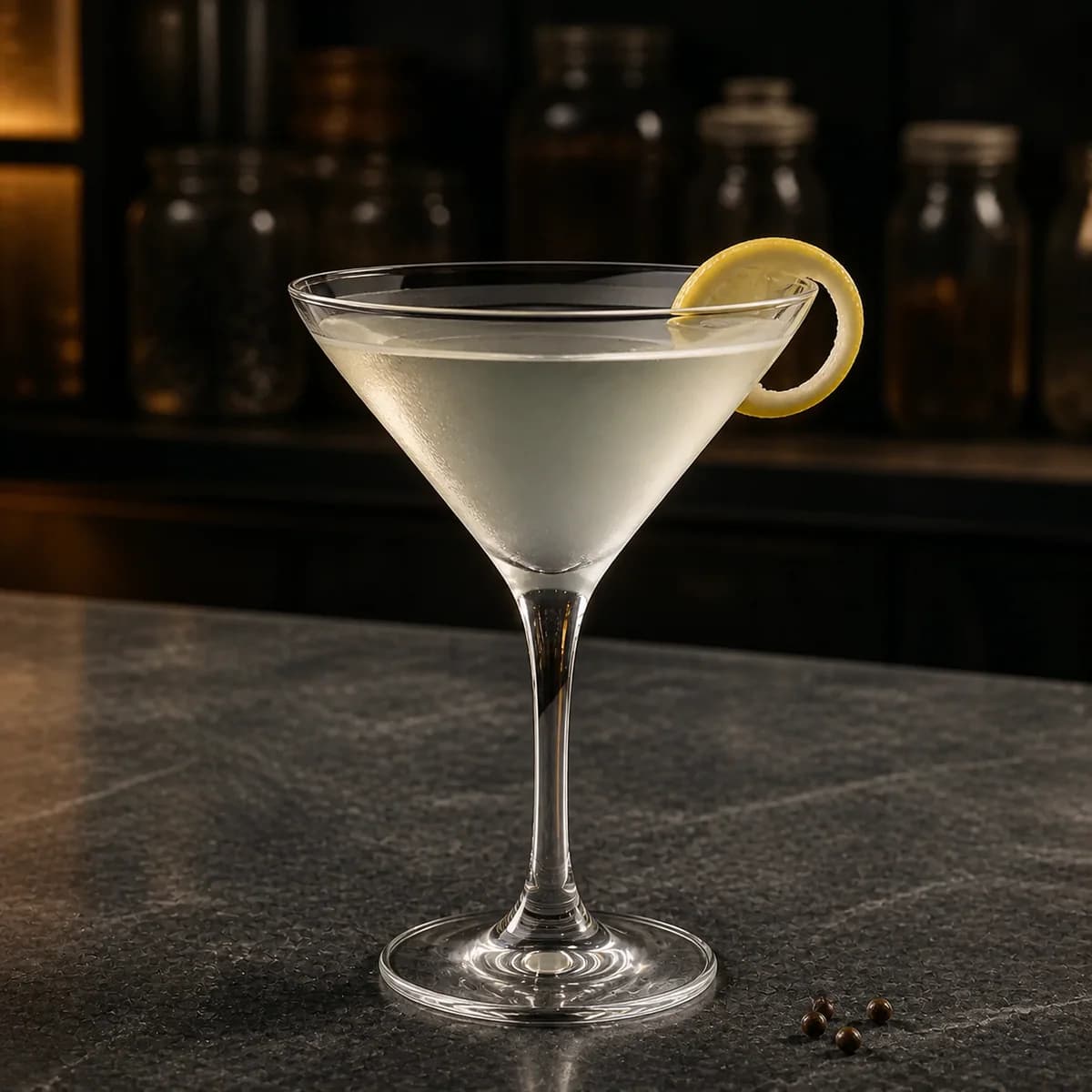
What goes in
Ingredients
Set up before you pour
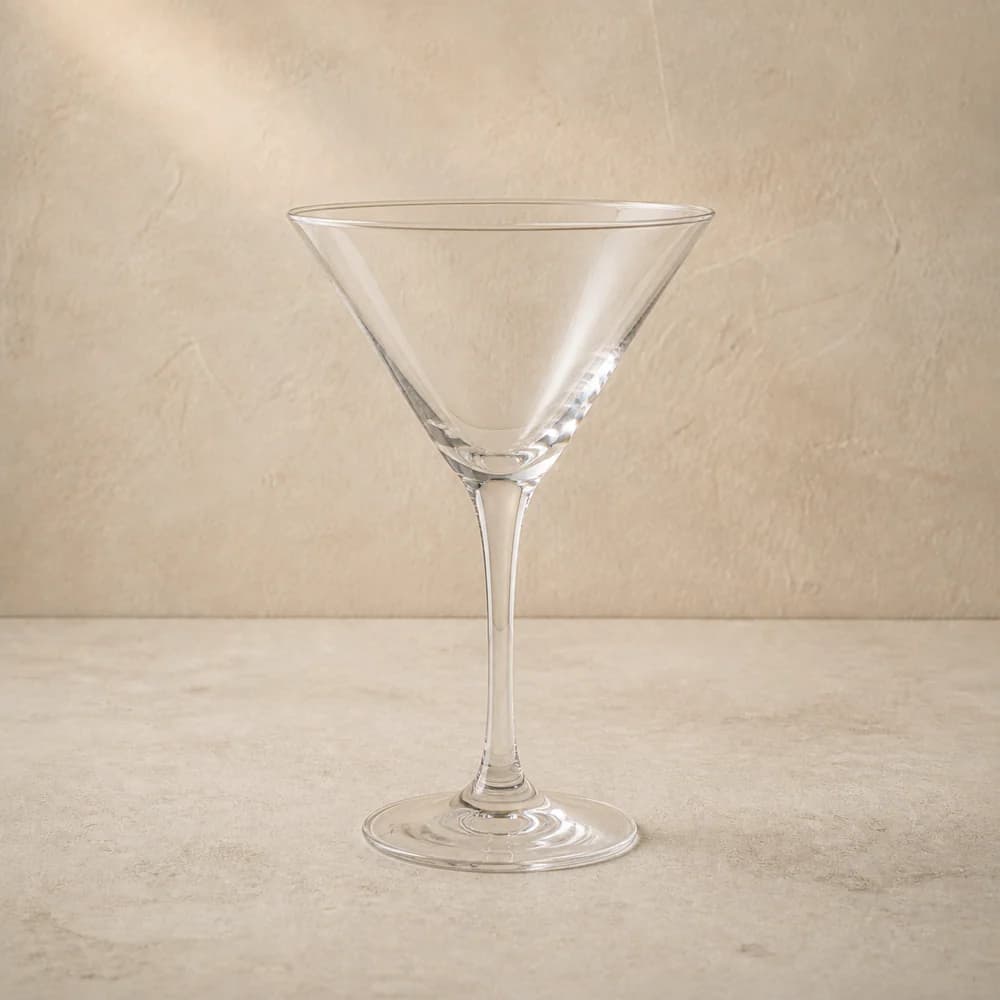
Use a martini glass.
The stem protects a cold up drink from your hand; the open V-shaped bowl presents its aroma immediately.
- Standard size
- 180 ml6 oz
- Ice & serve
- Chill it first; serve without ice.
- If you don’t own one
- Use a coupe or another small stemmed cocktail glass.
- cocktail shaker
- strainer (or a small sieve)
- jigger or measuring spoon
- Gin60 ml
- Dry vermouth10 ml
- Orange bitters1 dash
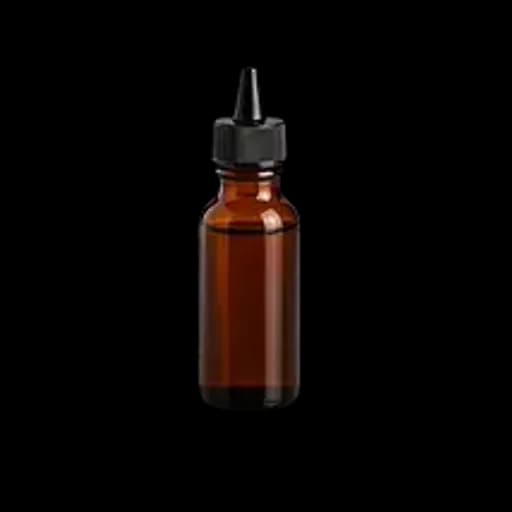
From bottle to glass
Method
- 01
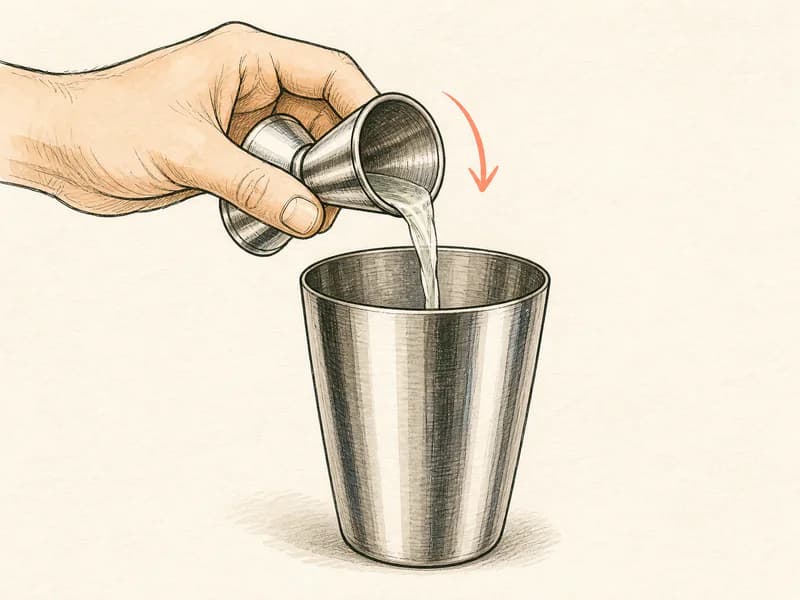
Measure into the shaker Pour 60 ml gin into your shaker
 Gin
Gin
- 02
Measure into the shaker Add 10 ml dry vermouth
 Dry vermouth
- 03
Measure into the shaker Add 1 dash orange bitters
 Orange bitters
- 04
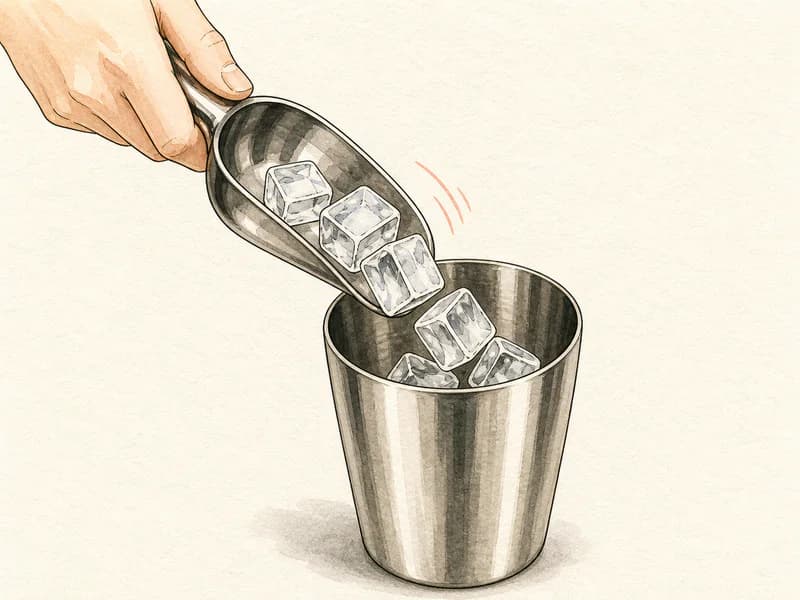
Ice the shaker Fill the shaker with ice
- 05
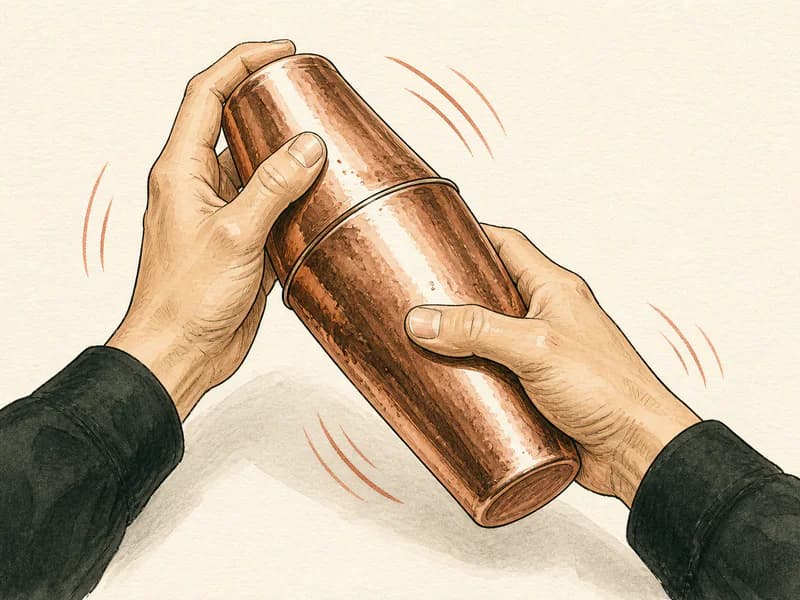
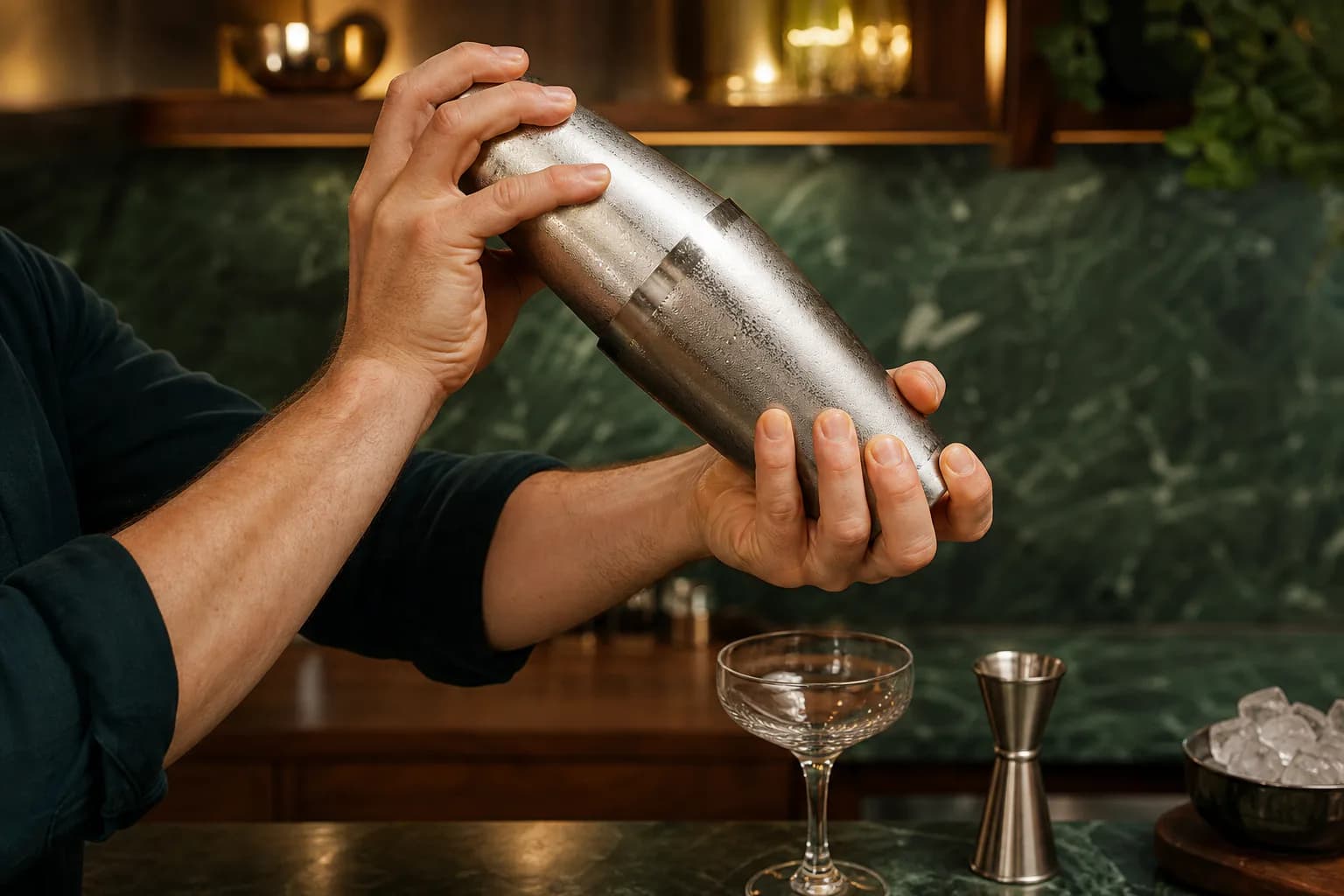
Seal and shake Seal and shake hard
- 06
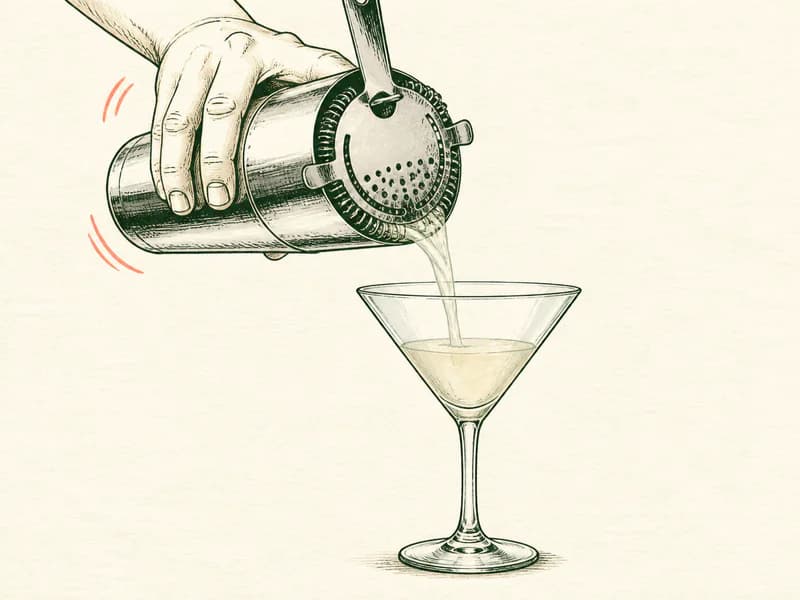
Strain cleanly Strain into a chilled glass — no ice
- 07
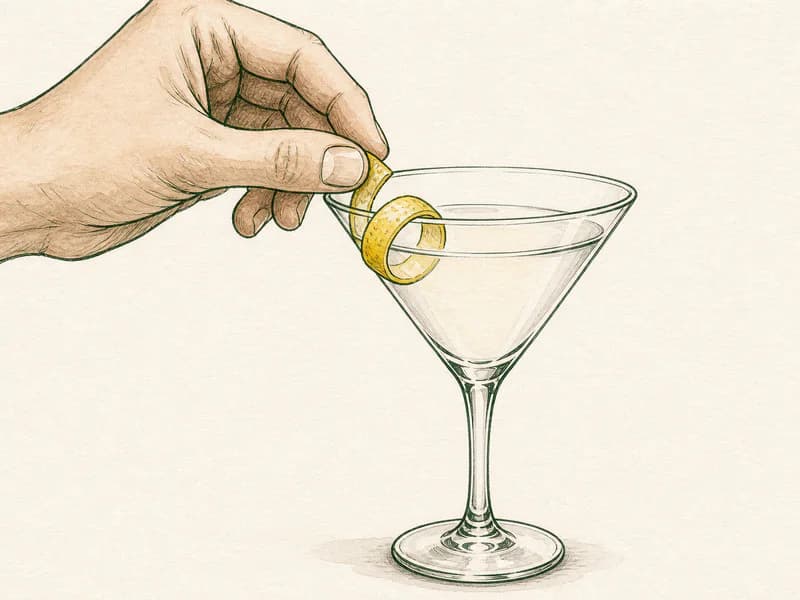
Finish the drink Finish it — add a lemon twist
Know your drink
About the Dry Martini
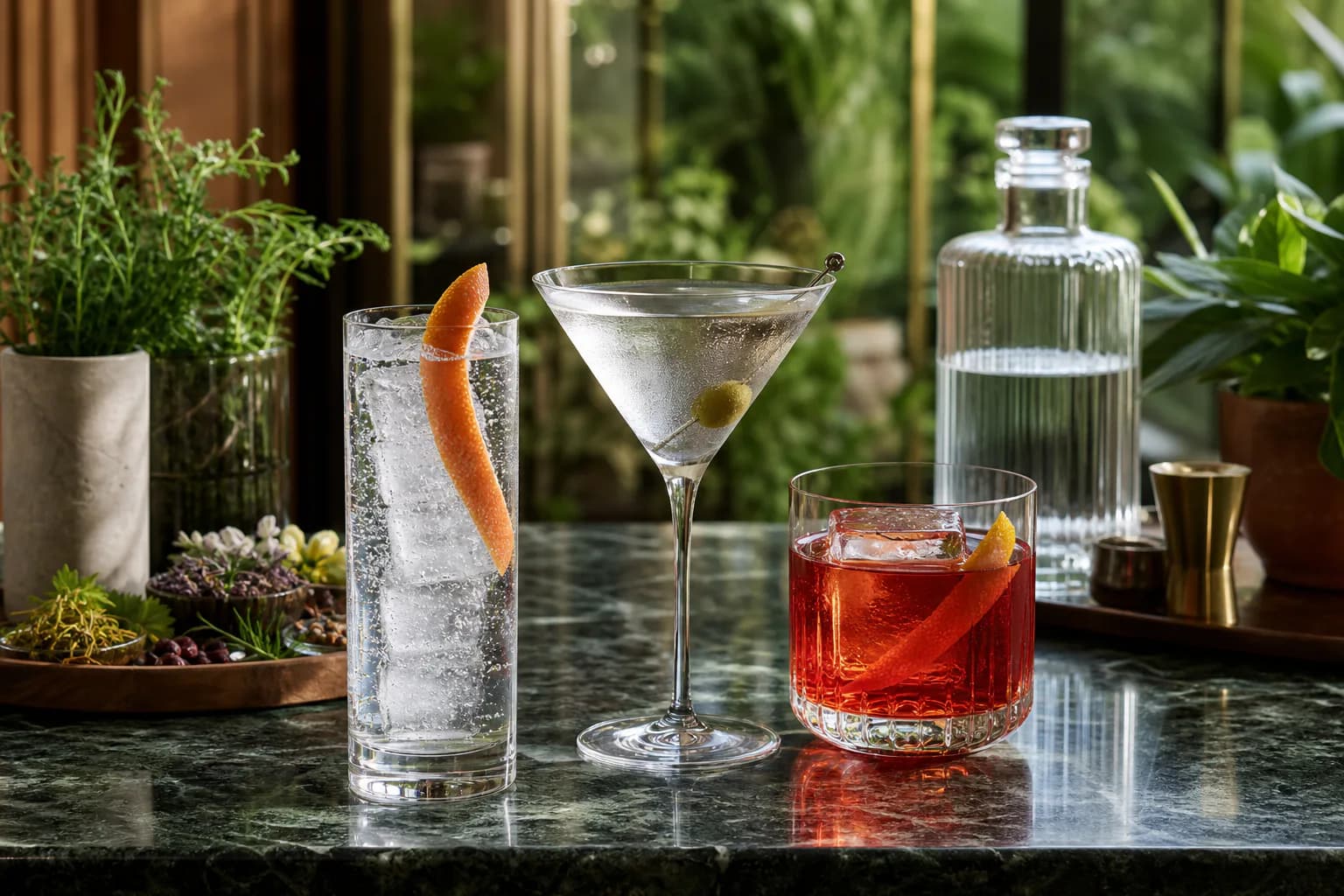
The sharpest object in the bar
The martini evolved out of the sweeter 1880s Martinez as dry French vermouth and London dry gin took over — by the 1900s the "dry martini" was the sophisticate’s order, and it has never left. H.L. Mencken called it "the only American invention as perfect as the sonnet".
Everything matters at this proof: freezer-cold gin, fresh vermouth, a properly chilled glass, and a decision — twist or olive — made with conviction.
Common questions
Dry Martini FAQ
What is the right gin-to-vermouth ratio?
Modern "dry" sits around 6:1 (our spec: 60 ml gin, 10 ml dry vermouth). A 3:1 "fifty-fifty adjacent" martini is wetter, softer and very fashionable again; a rinse-only martini is basically cold gin. Start 6:1 and move toward the ratio you keep finishing.
Shaken or stirred — was Bond right?
Stirred, honestly. Shaking chills harder but clouds the drink and sheds ice chips; a martini’s beauty is its icy clarity and silky weight, which stirring preserves. (Bond’s Vesper is its own drink — shaken, with vodka and blanc vermouth.)
Twist or olive?
A lemon twist sprays bright citrus oil over the surface and flatters aromatic gins; olives make it savory and pair with briny moods (add a spoon of brine and it’s a Dirty Martini). Keep both on hand; the drink changes character completely.
What ingredients are in a Dry Martini?
A classic Dry Martini calls for 60 ml (2 oz) Gin, 10 ml (0.25 oz) Dry vermouth, 1 dash orange bitters Orange bitters. That single-serve spec scales cleanly — the recipe above converts it to oz and multiplies it for 2–4 drinks.
How strong is a Dry Martini?
A standard Dry Martini is roughly 37% ABV once mixed (before ice melt softens it further). That makes it spirit-forward — closer to a Martini than to a beer, so sip it slowly.
What glass do you serve a Dry Martini in?
Serve a Dry Martini in a martini glass, well chilled — this drink is served without ice, so a cold glass keeps it cold.
How many calories are in a Dry Martini?
One Dry Martini has approximately 150 calories, estimated from the standard spec above. Bigger pours, extra syrup or sweetened mixers raise that number quickly.
Sharpen the technique
Skills used in this recipe
Where to go next
If you like the Dry Martini, try these.
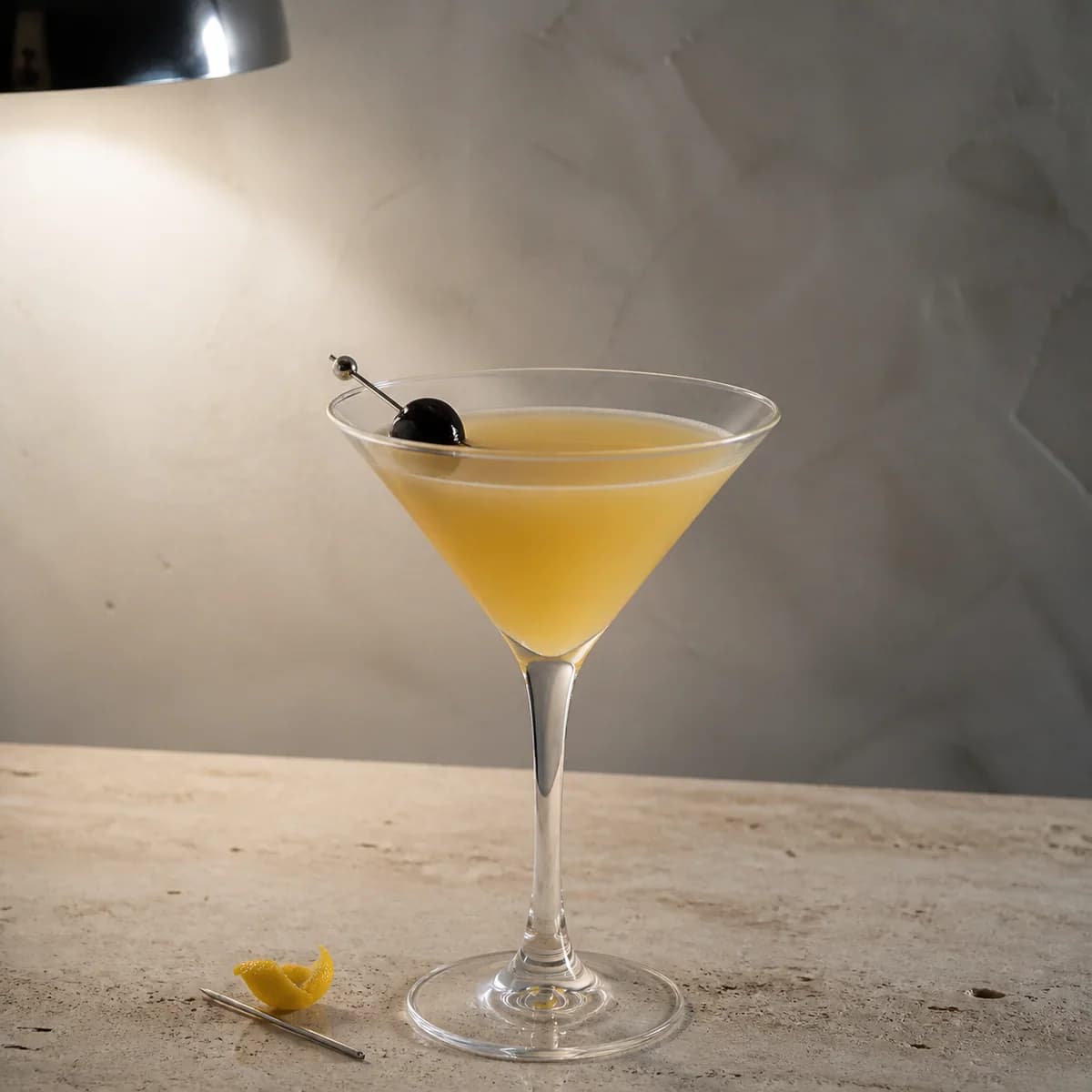
French Martini
Vodka, raspberry liqueur and pineapple juice, shaken to a silky foam. Fruity, elegant and very easy to like.
View recipe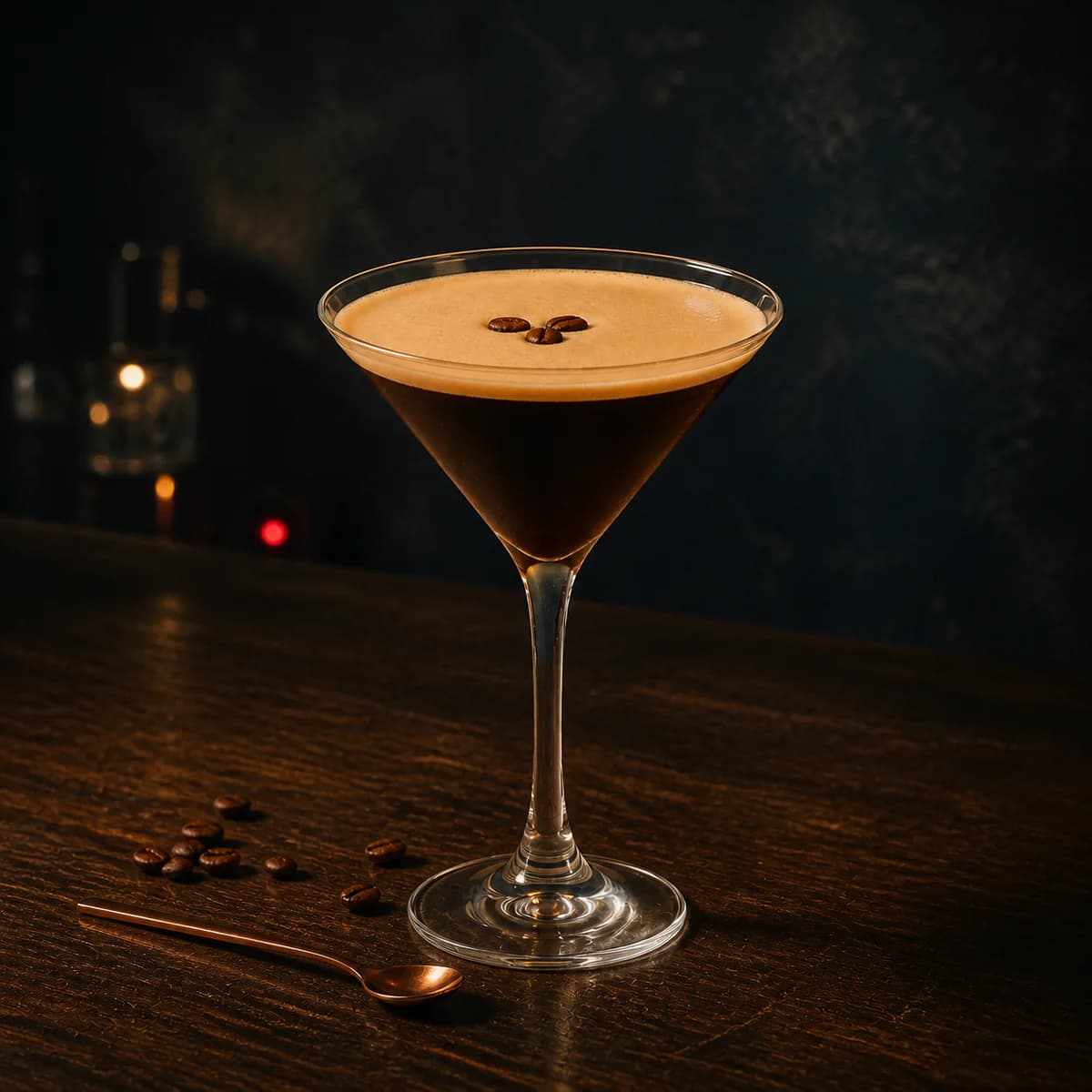
Espresso Martini
Vodka, coffee liqueur and a shot of fresh espresso, shaken to a thick foam. The drink that wakes you up and sits you down at once.
View recipe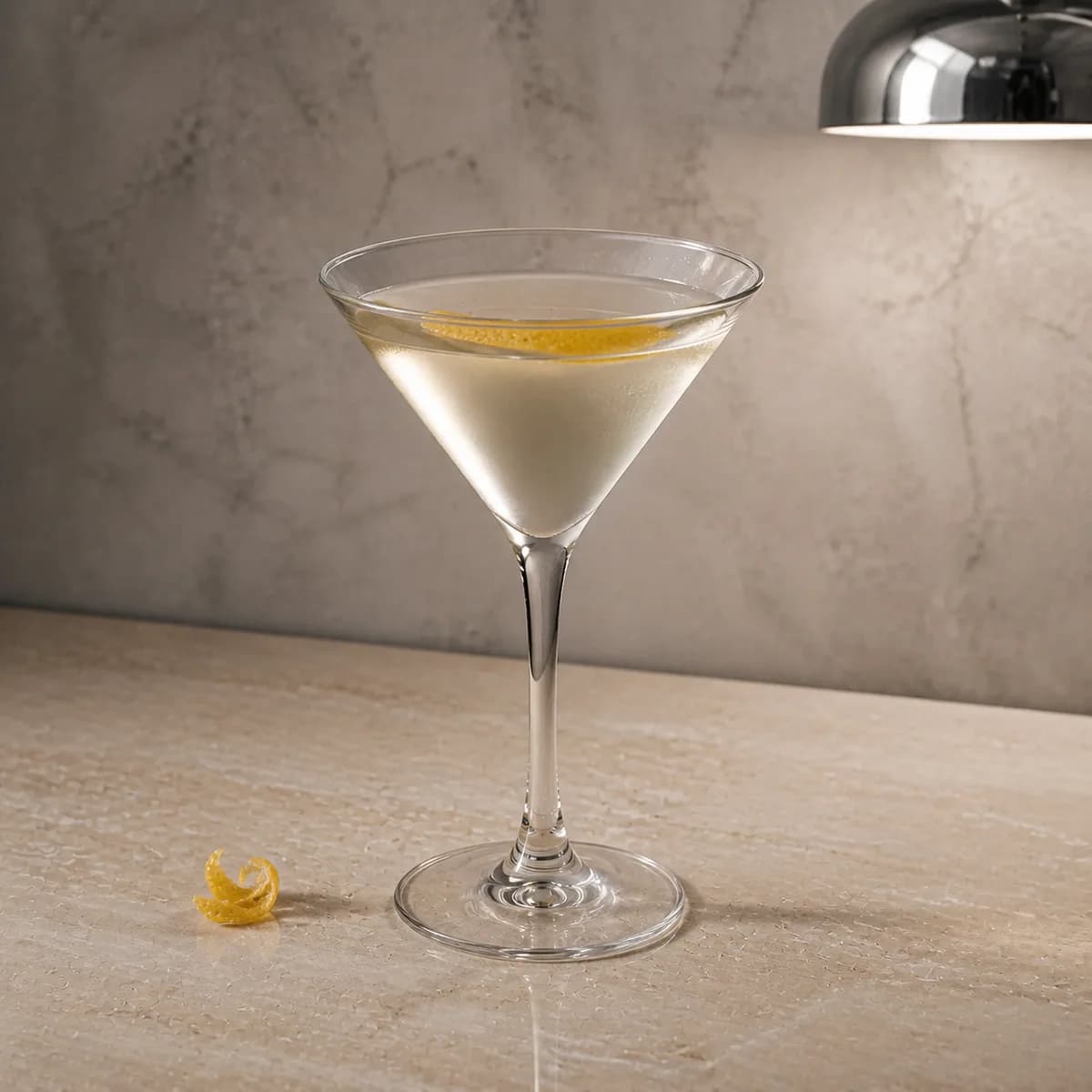
Vodka Martini
Cold vodka with a whisper of dry vermouth — the shaken, ice-cold Martini Bond made famous.
View recipe