Classic cocktail · Guided recipe
Gin Swizzle
Start makingBuilt in the glass rather than shaken: gin, lime and sugar over crushed ice, churned with a stick until the outside of the glass frosts white. Angostura goes on last and works its way down, so the first sips are spiced and the final ones are clean.
In the glassGin · Fresh lime juice · Simple syrup · Angostura bitters
See exact amounts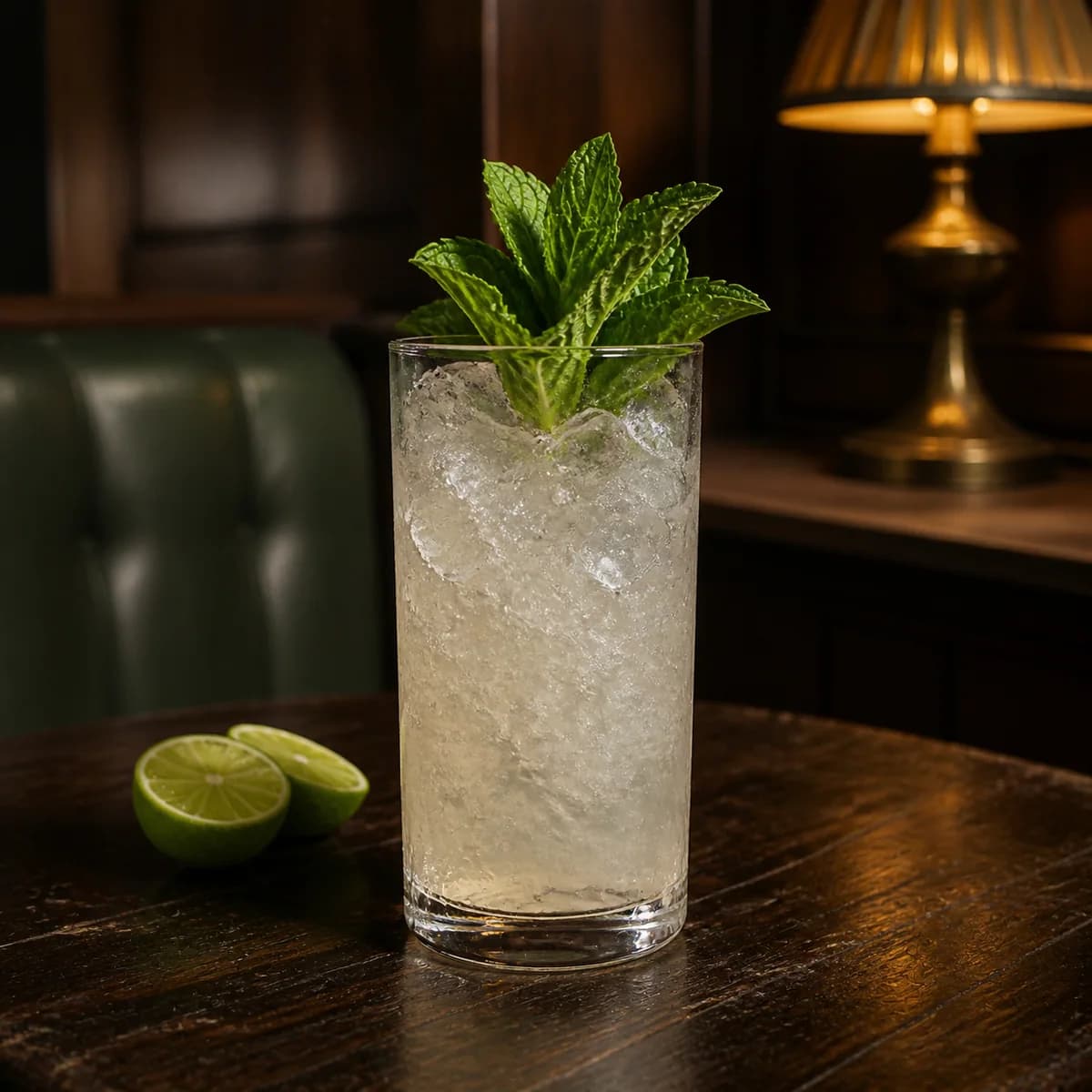
What goes in
Ingredients
Set up before you pour
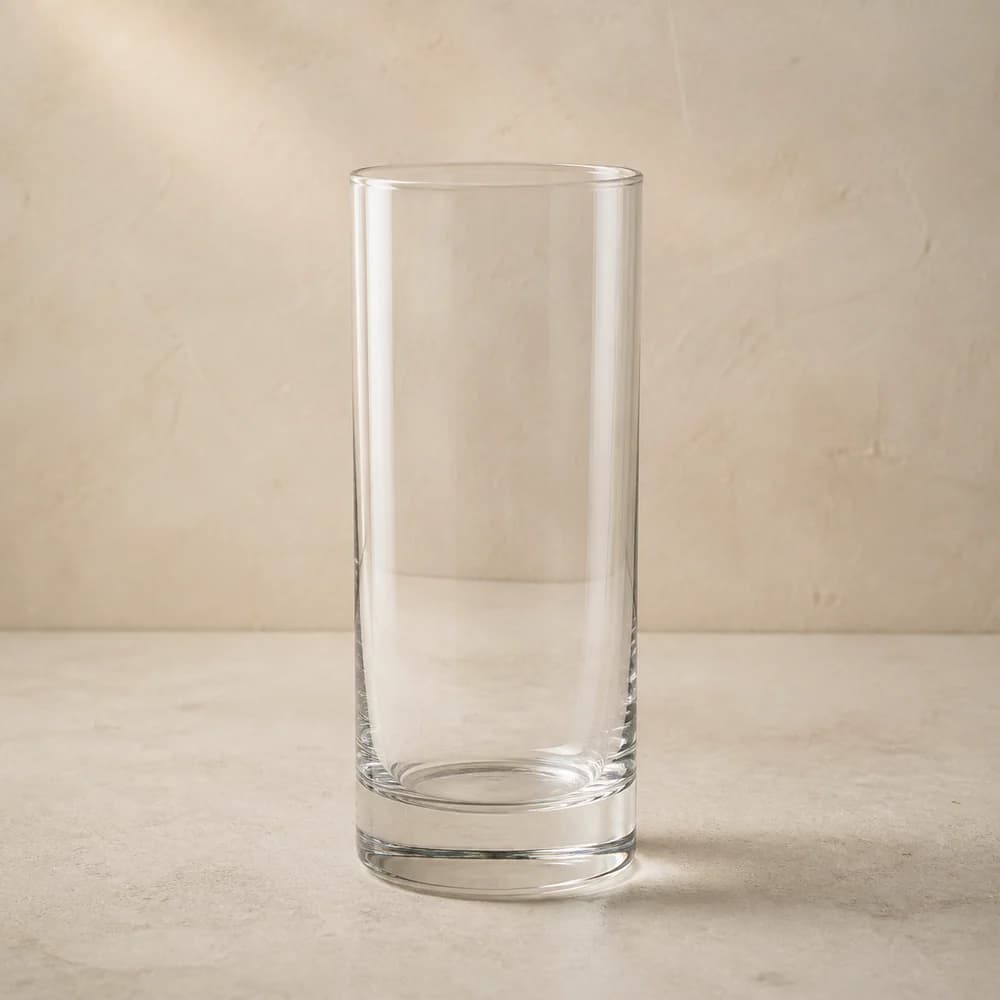
Use a highball glass.
The tall, straight shape leaves room for plenty of ice and mixer while keeping a long drink lively.
- Standard size
- 350 ml11¾ oz
- Ice & serve
- Pack it generously with crushed ice.
- If you don’t own one
- Use a Collins glass or any tall, straight-sided tumbler.
- jigger or measuring spoon
- Gin60 ml
- Fresh lime juice22 ml
- Simple syrup15 ml
- Angostura bitters2 dashes
From bottle to glass
Method
- 01
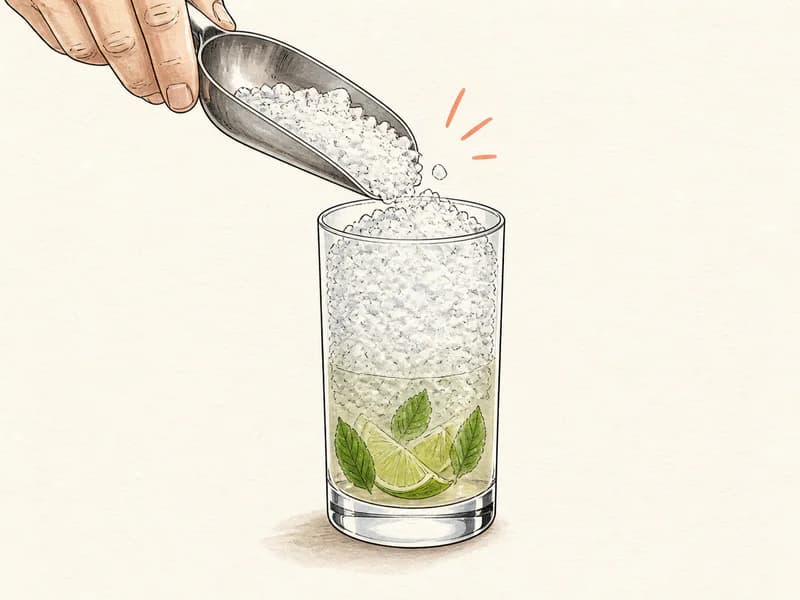
Ice the glass Fill the glass with crushed ice
- 02
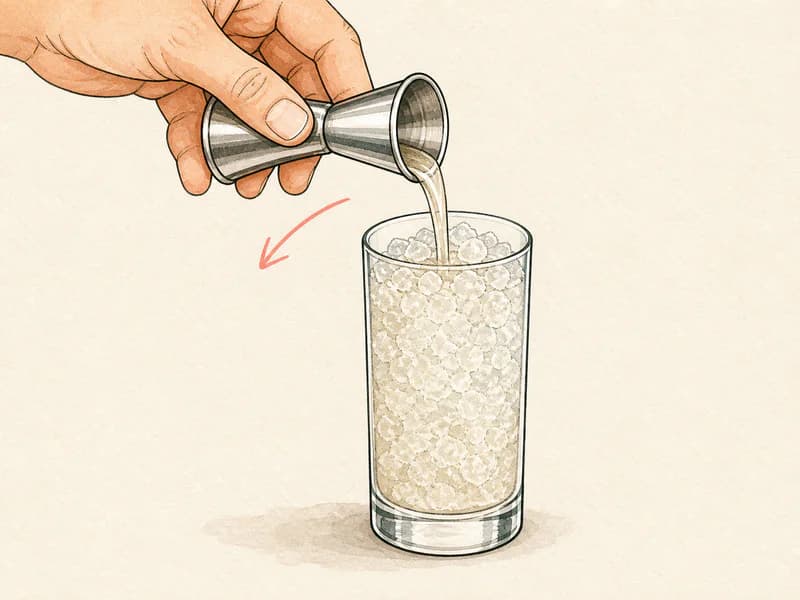
Measure and pour Pour 60 ml gin
 Gin
Gin
- 03
Measure and pour Add 22 ml fresh lime juice
 Fresh lime juice
- 04
Measure and pour Add 15 ml simple syrup
 Simple syrup
- 05
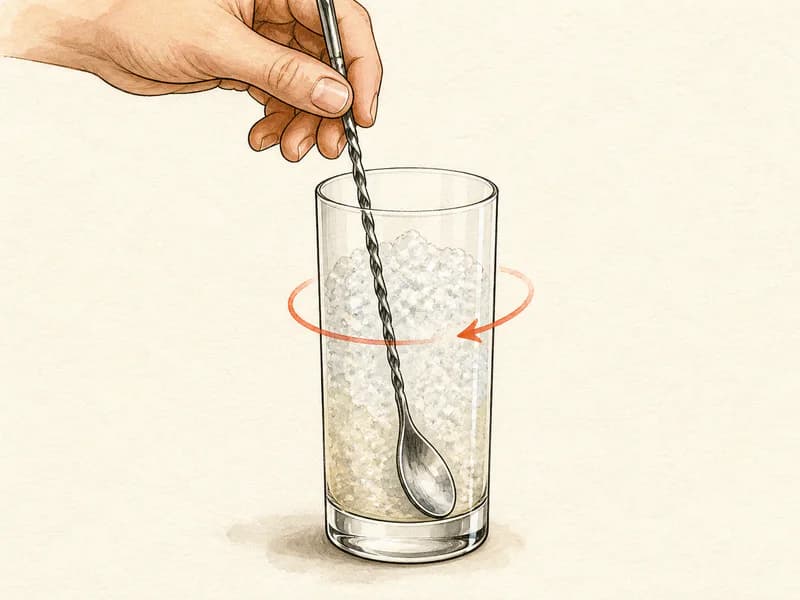
Stir around the ice Stir gently to combine
- 06
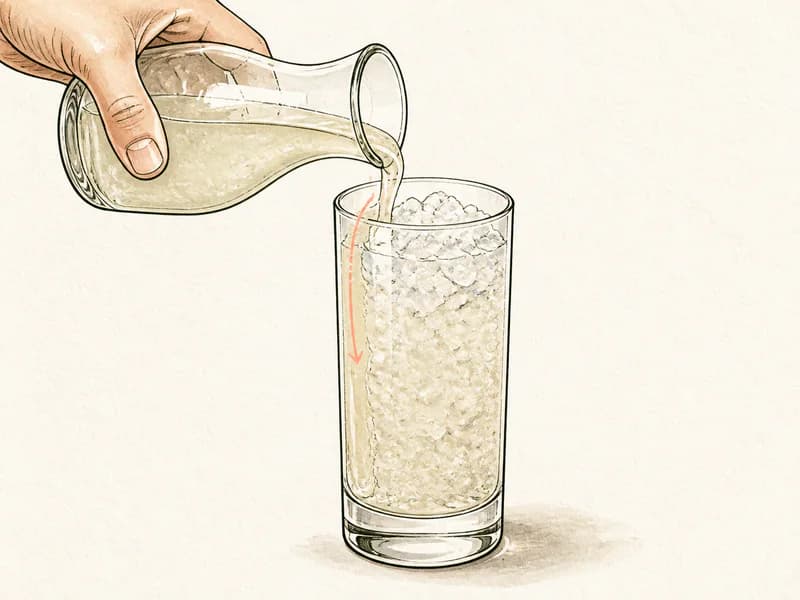
Top gently Top with 2 dashes Angostura
 Angostura bitters
- 07
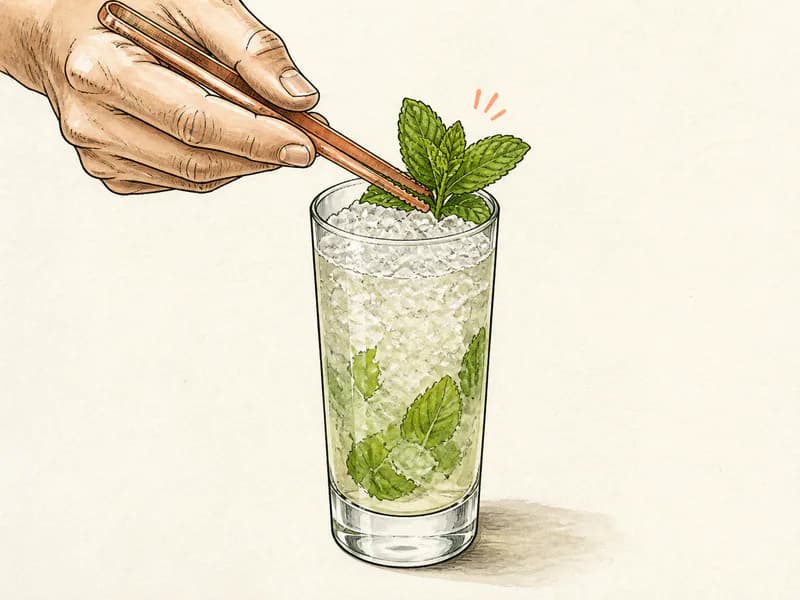
Finish the drink Finish it — add a sprig of mint
Know your drink
About the Gin Swizzle
Why swizzling beats stirring
Churning is not stirring. A swizzle stick spun between the palms drives crushed ice through the liquid in every direction at once, chilling and aerating far faster than a bar spoon moving in a circle. That speed is the point in the Caribbean, where the original sticks were cut from a small tree whose branches grow in a natural whorl at one end.
Any long implement with something at the bottom will do the job. A slim wooden spoon works, so does a chopstick with a fork jammed crossways, and electric swizzles exist for people making a lot of them. What does not work is a straight bar spoon, which cuts through the ice without moving much of it.
Common questions
Gin Swizzle FAQ
Why won't the outside of my glass frost?
Three usual causes: the ice is cracked rather than properly crushed, the glass started warm, or you stopped churning too early. Fine ice with a lot of surface area is what pulls the heat out. Twenty seconds of vigorous work between your palms should do it.
What separates this from a Southside?
A Southside is shaken with mint in the tin and strained, so the mint flavor goes into the drink. Here the mint is aroma only, sitting above the ice where you smell it as you drink. Add Angostura and crushed ice and you have a longer, spicier, colder proposition.
The Angostura sank straight through. Should I add it earlier?
No, sinking is normal and part of the design. Dash it over the top of the finished ice and it seeps down gradually, so the drink changes as you get through it. If you want it even through, dash it in with the lime and syrup before churning.
How much crushed ice, and do I keep adding it?
Fill about three-quarters, churn, then top up to the rim once the level drops. Two additions over the life of the drink is normal. A packed glass melts slower than a half-empty one, so being generous at the start actually keeps the drink stronger for longer.
What ingredients are in a Gin Swizzle?
A classic Gin Swizzle calls for 60 ml (2 oz) Gin, 22 ml (0.75 oz) Fresh lime juice, 15 ml (0.5 oz) Simple syrup, 2 dashes Angostura Angostura bitters. That single-serve spec scales cleanly — the recipe above converts it to oz and multiplies it for 2–4 drinks.
How strong is a Gin Swizzle?
A standard Gin Swizzle is roughly 25% ABV once mixed (before ice melt softens it further). That makes it spirit-forward — closer to a Martini than to a beer, so sip it slowly.
Is a Gin Swizzle shaken or stirred?
A Gin Swizzle is built directly in the glass over ice — no shaker required. Add the ingredients in order and give it a brief, gentle stir.
Sharpen the technique
Skills used in this recipe
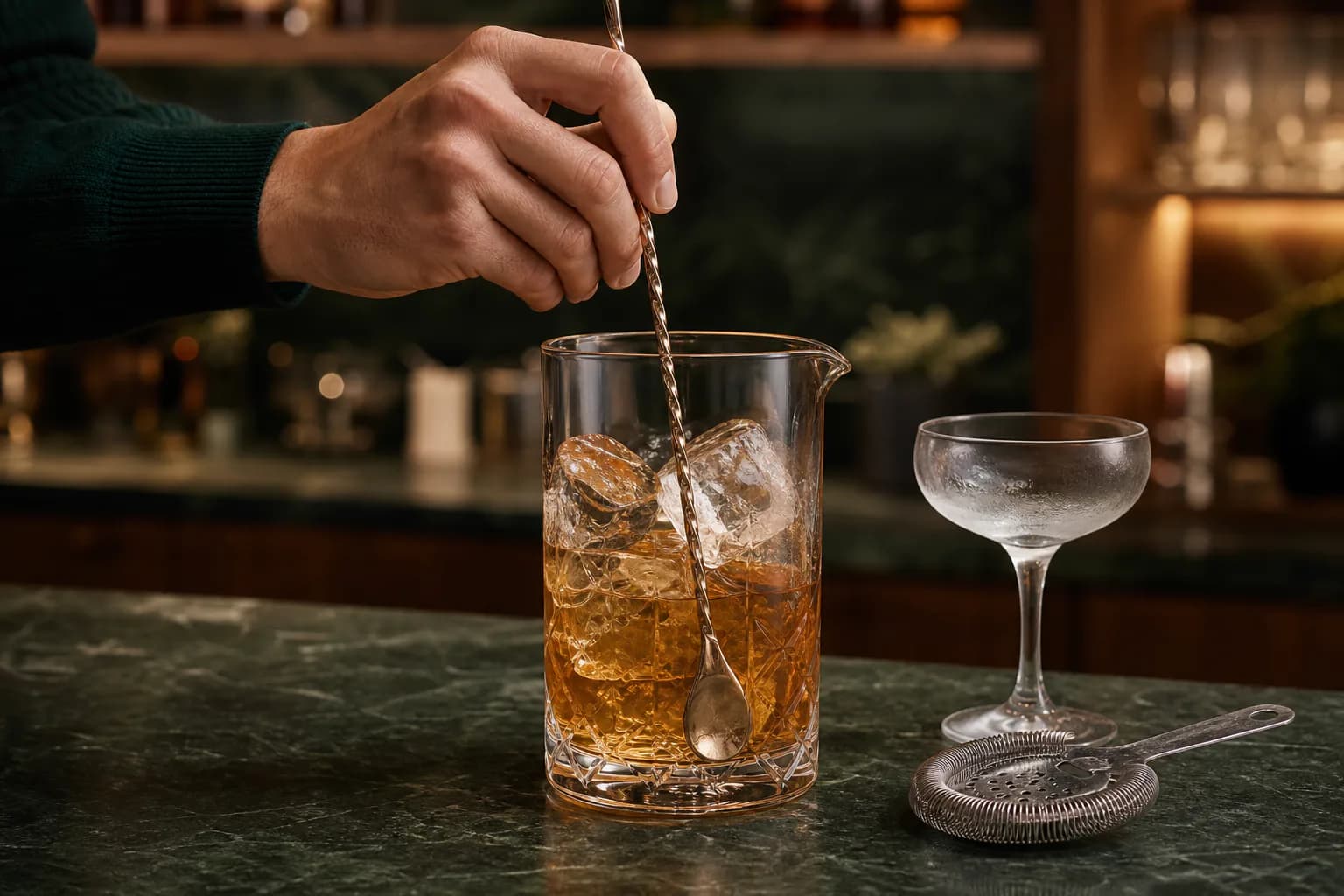
How to stir a cocktail for a silky finish
Control chilling and dilution without adding the bubbles and texture of a shake.
Read the guide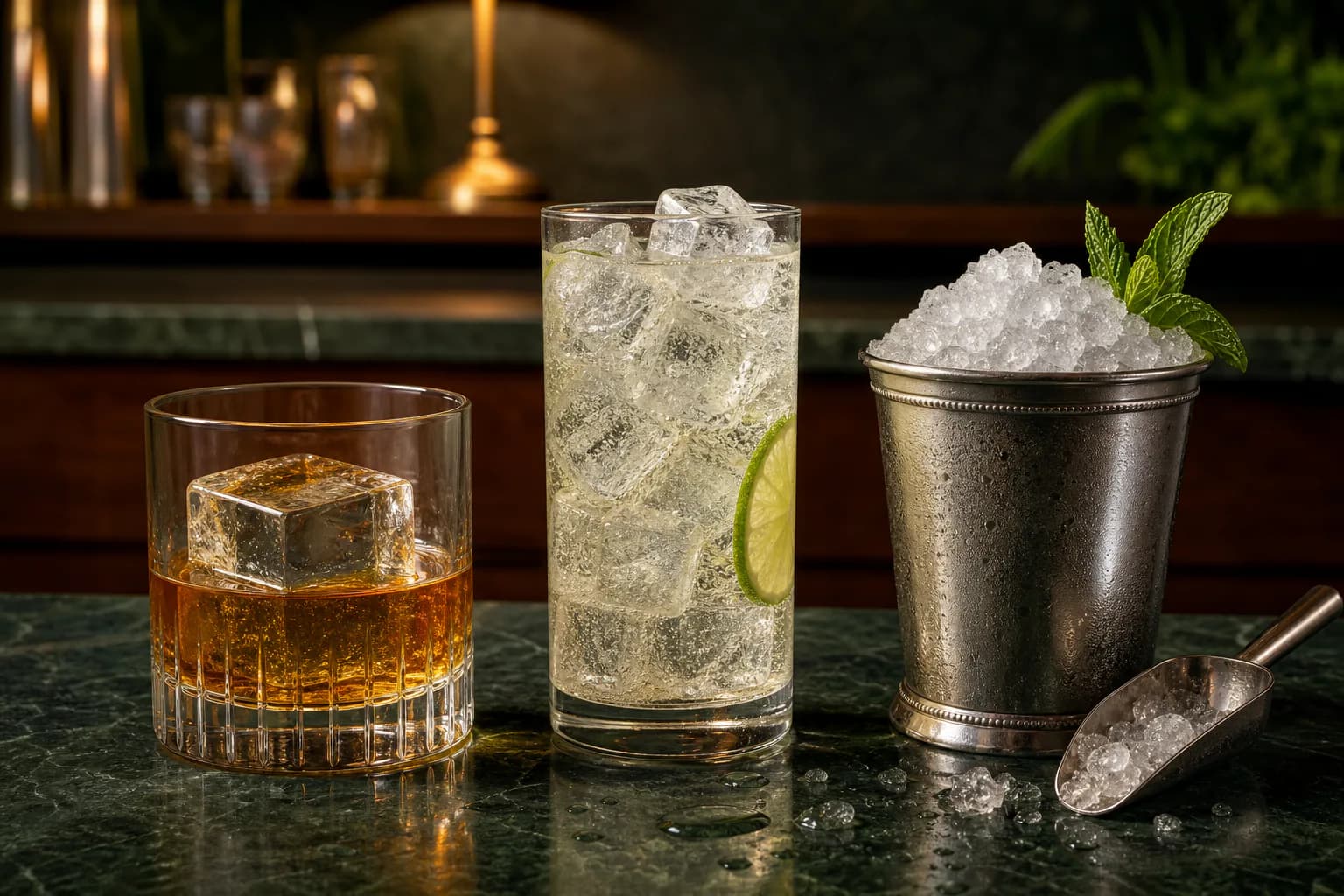
Cocktail ice: cubes, crushed ice and dilution
Understand why ice is an ingredient—and choose the right shape for every drink.
Read the guide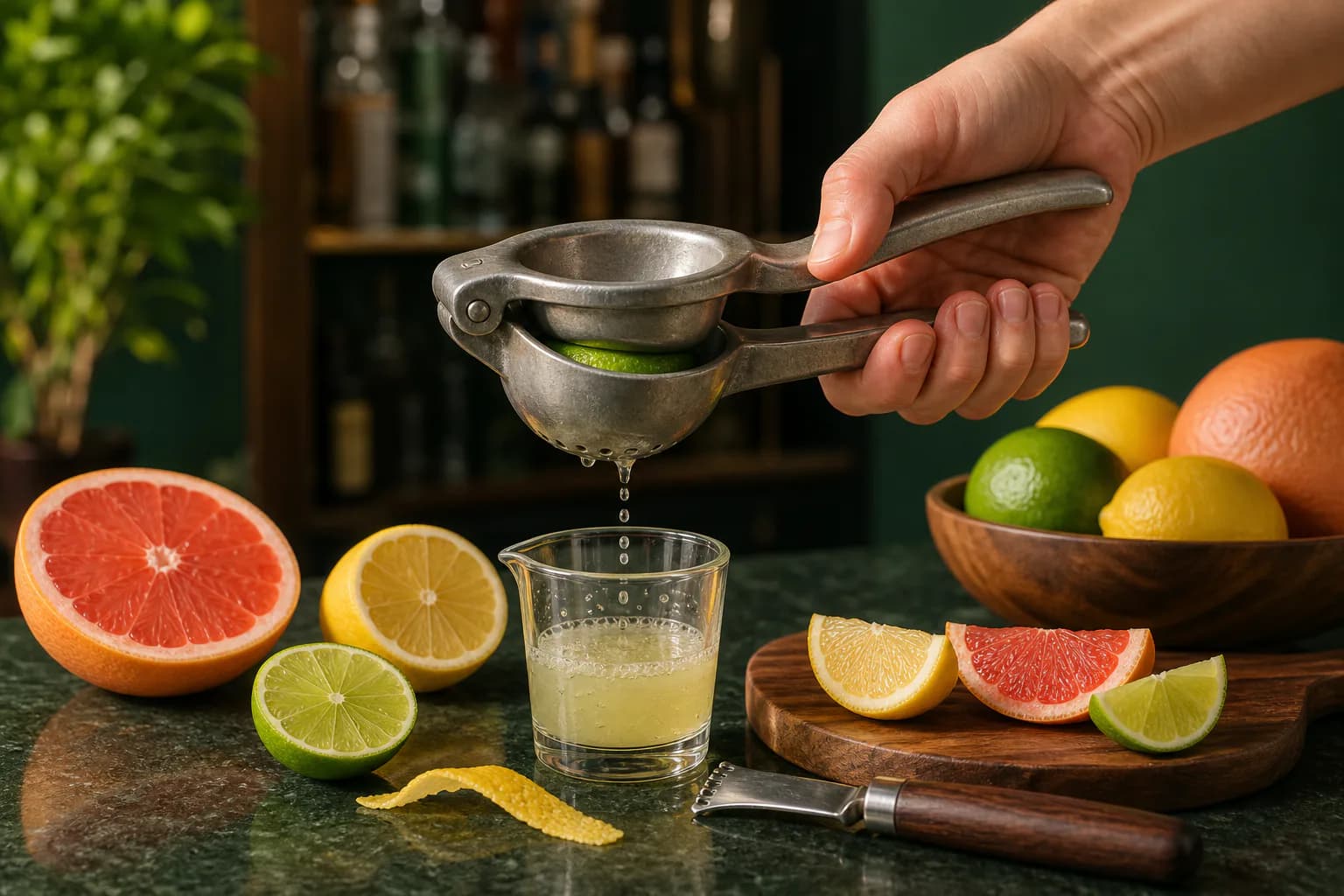
Fresh citrus for cocktails: juice, wedges and balance
Get brighter lime, lemon and grapefruit flavor with better prep and storage.
Read the guideWhere to go next
If you like the Gin Swizzle, try these.
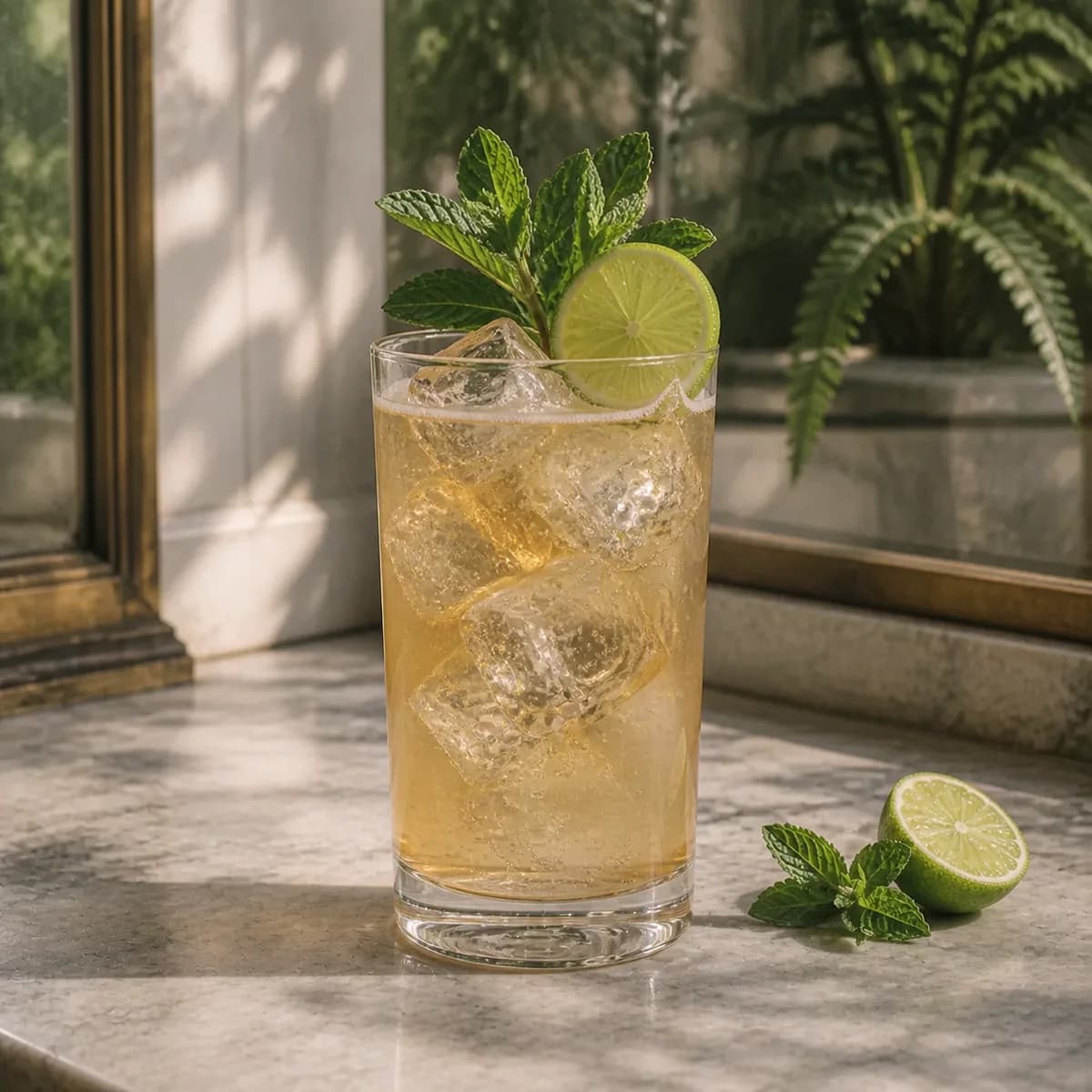
Gin-Gin Mule
Audrey Saunders’ modern classic: a mojito-mule hybrid — gin and mint muddled with lime and sugar, lengthened with ginger beer.
View recipe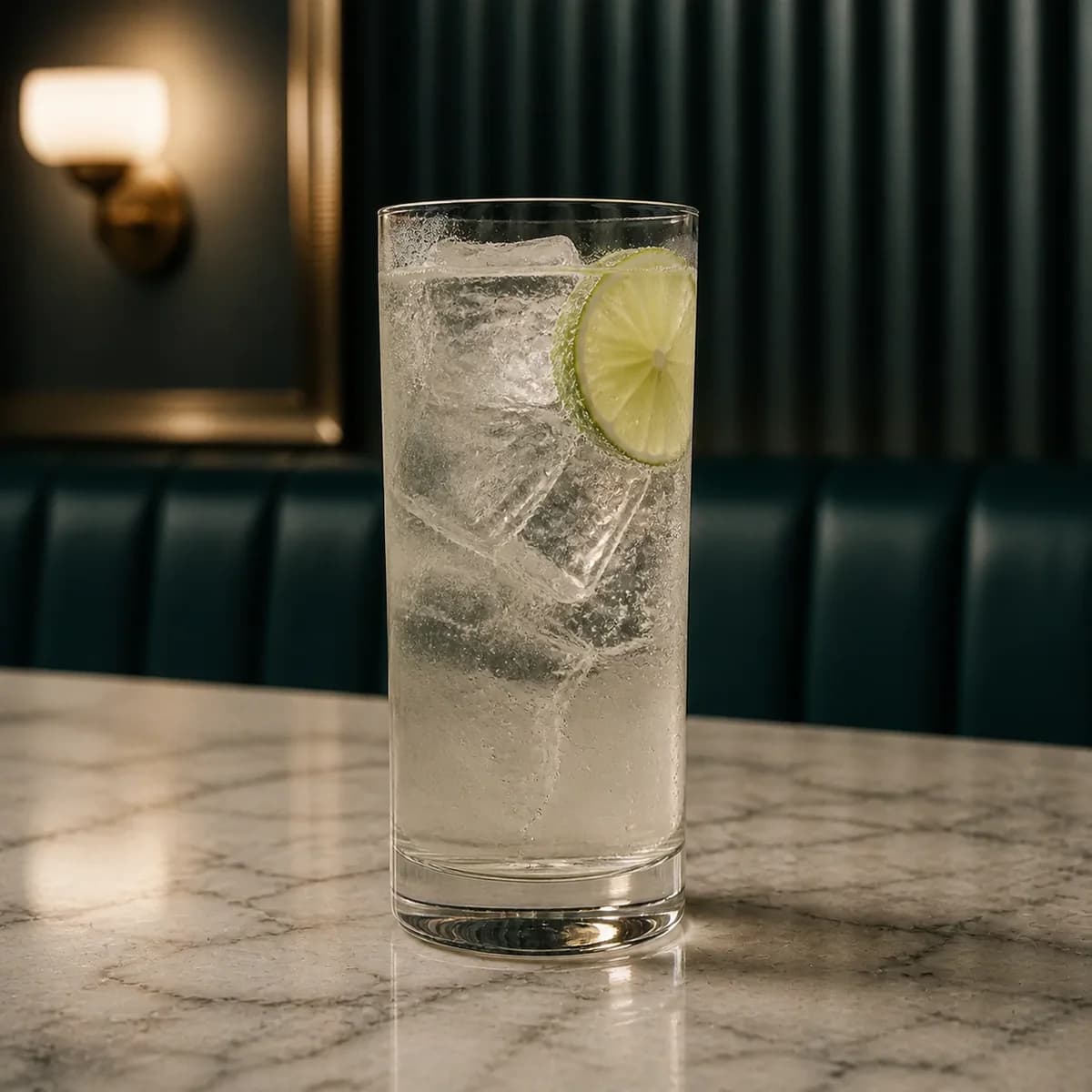
Gin Rickey
Gin, fresh lime and soda — no sugar at all. Crisp, dry and one of the most refreshing long drinks ever built.
View recipe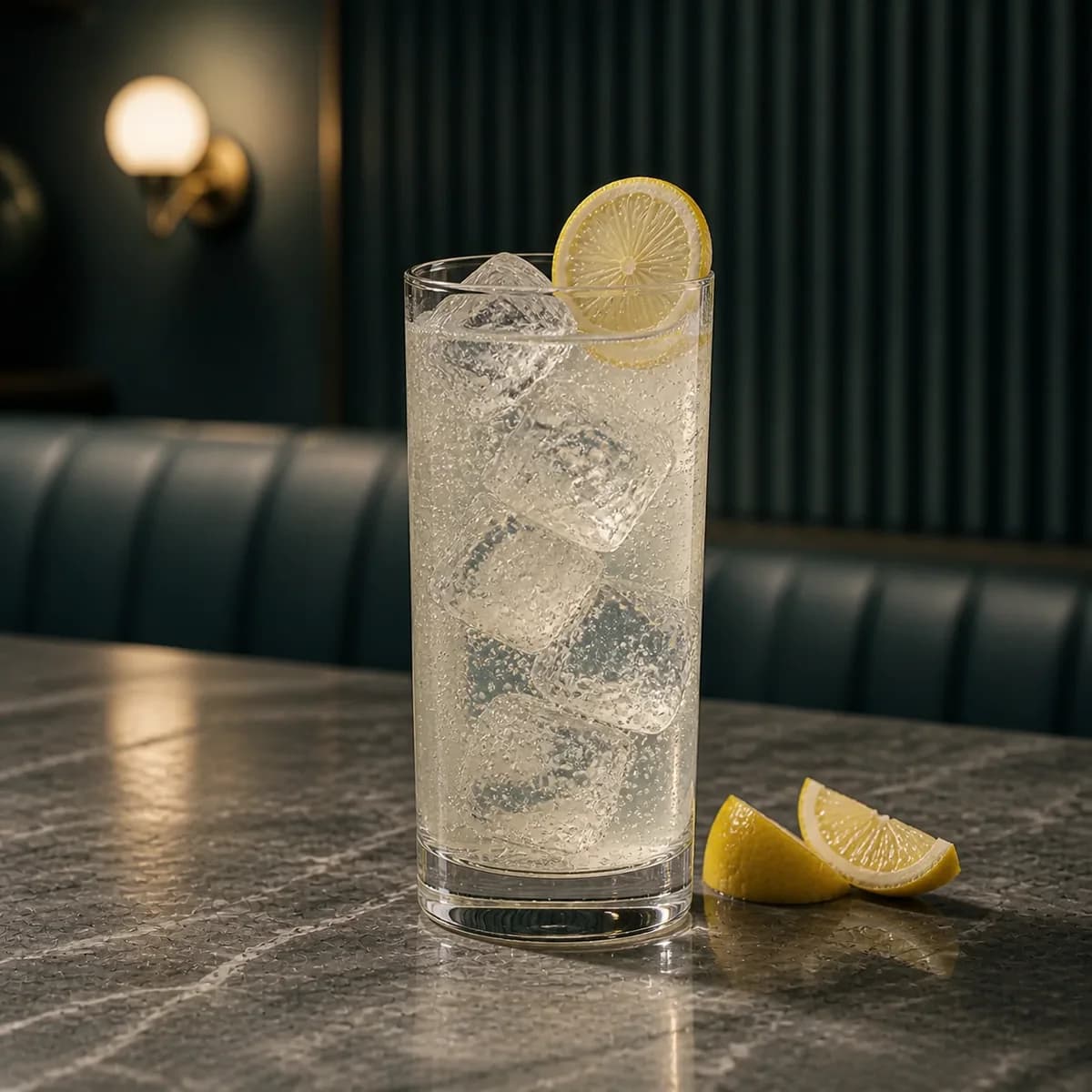
Gin Cooler
Lighter than a Tom Collins by design. Same gin, lemon and sugar, but only 8 ml of syrup and a shorter pour of soda, which leaves it dry and sharply citrusy rather than lemonade-sweet.
View recipe