Classic cocktail · Guided recipe
Green Room
Start makingMore vermouth than brandy, and that ratio is the whole drink: a light, winey aperitif with cognac warmth underneath and a few drops of orange liqueur doing the seasoning. Dry, but not austere.
In the glassBrandy · Dry vermouth · Triple sec / Cointreau
See exact amounts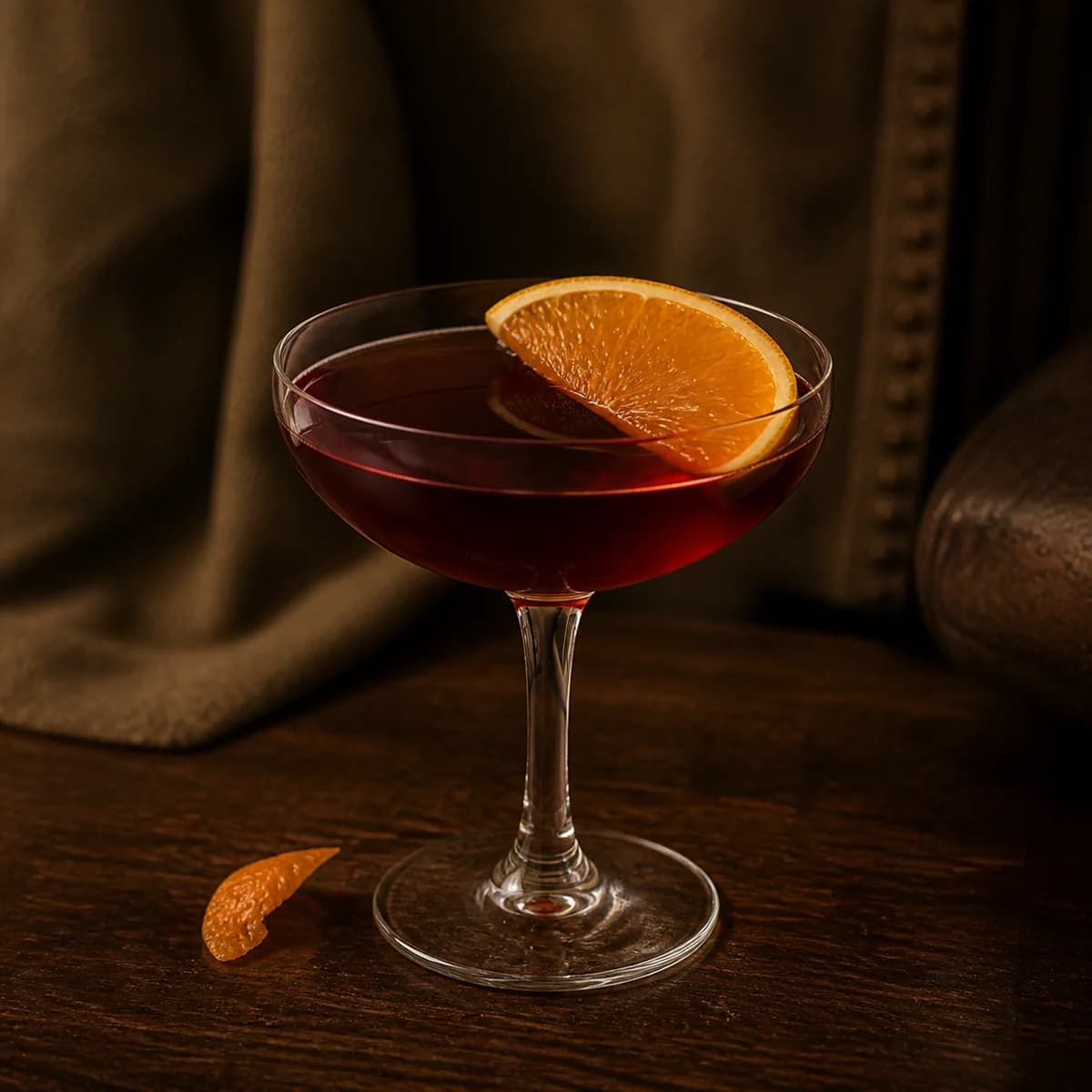
What goes in
Ingredients
Set up before you pour
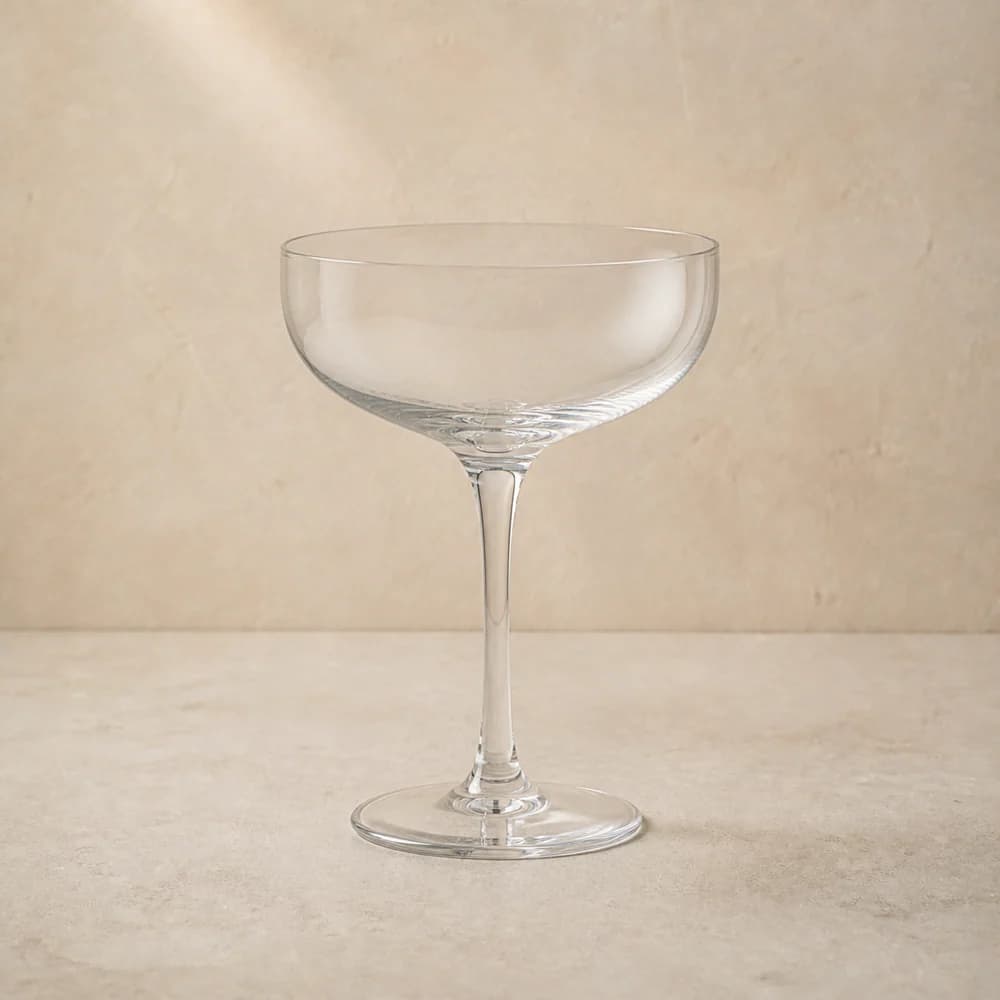
Use a coupe glass.
The stem keeps your hand away from a cold drink, while the rounded bowl makes an up serve easy to sip.
- Standard size
- 200 ml6¾ oz
- Ice & serve
- Chill it first; serve without ice.
- If you don’t own one
- Use a small martini glass or stemmed dessert glass.
- cocktail shaker
- strainer (or a small sieve)
- jigger or measuring spoon
- Brandy30 ml
- Dry vermouth45 ml
- Triple sec / Cointreau4 ml
From bottle to glass
Method
- 01
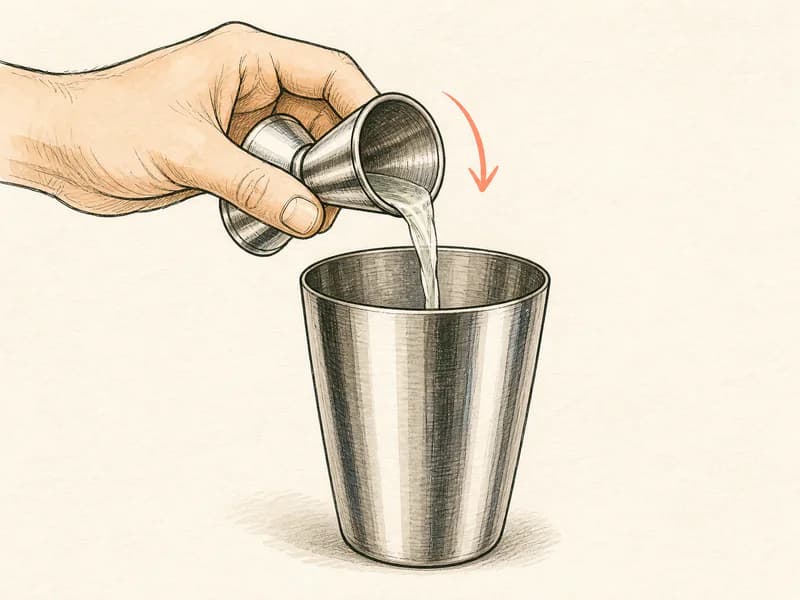
Measure into the shaker Pour 30 ml brandy into your shaker
 Brandy
- 02
Measure into the shaker Add 45 ml dry vermouth
 Dry vermouth
- 03
Measure into the shaker Add 4 ml triple sec / cointreau
- Triple sec / Cointreau
- 04
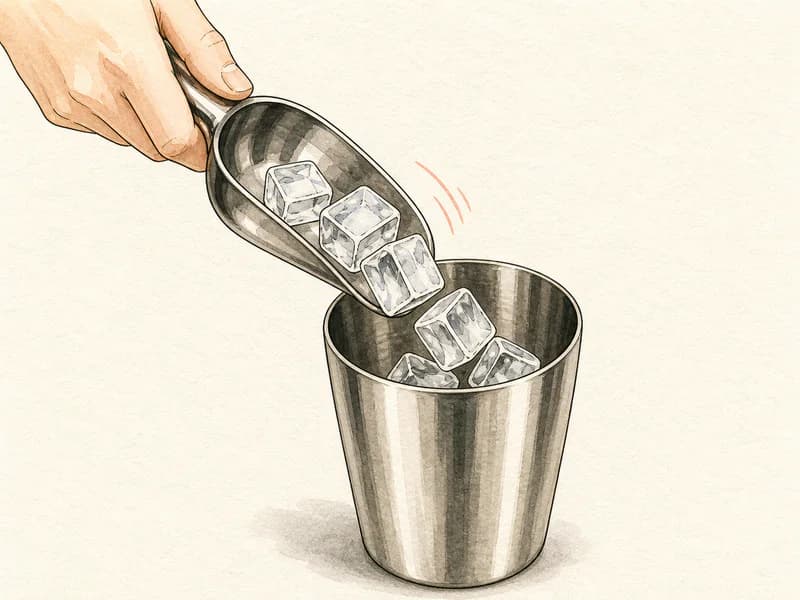
Ice the shaker Fill the shaker with ice
- 05
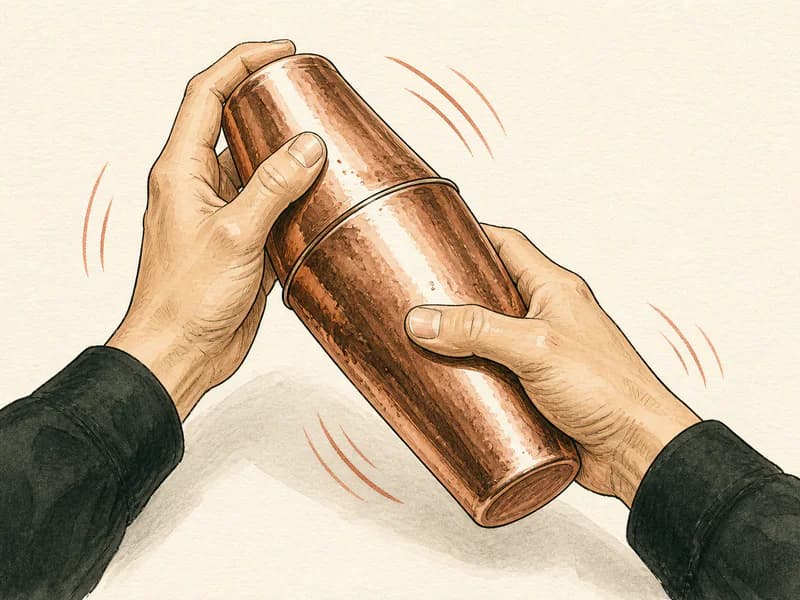
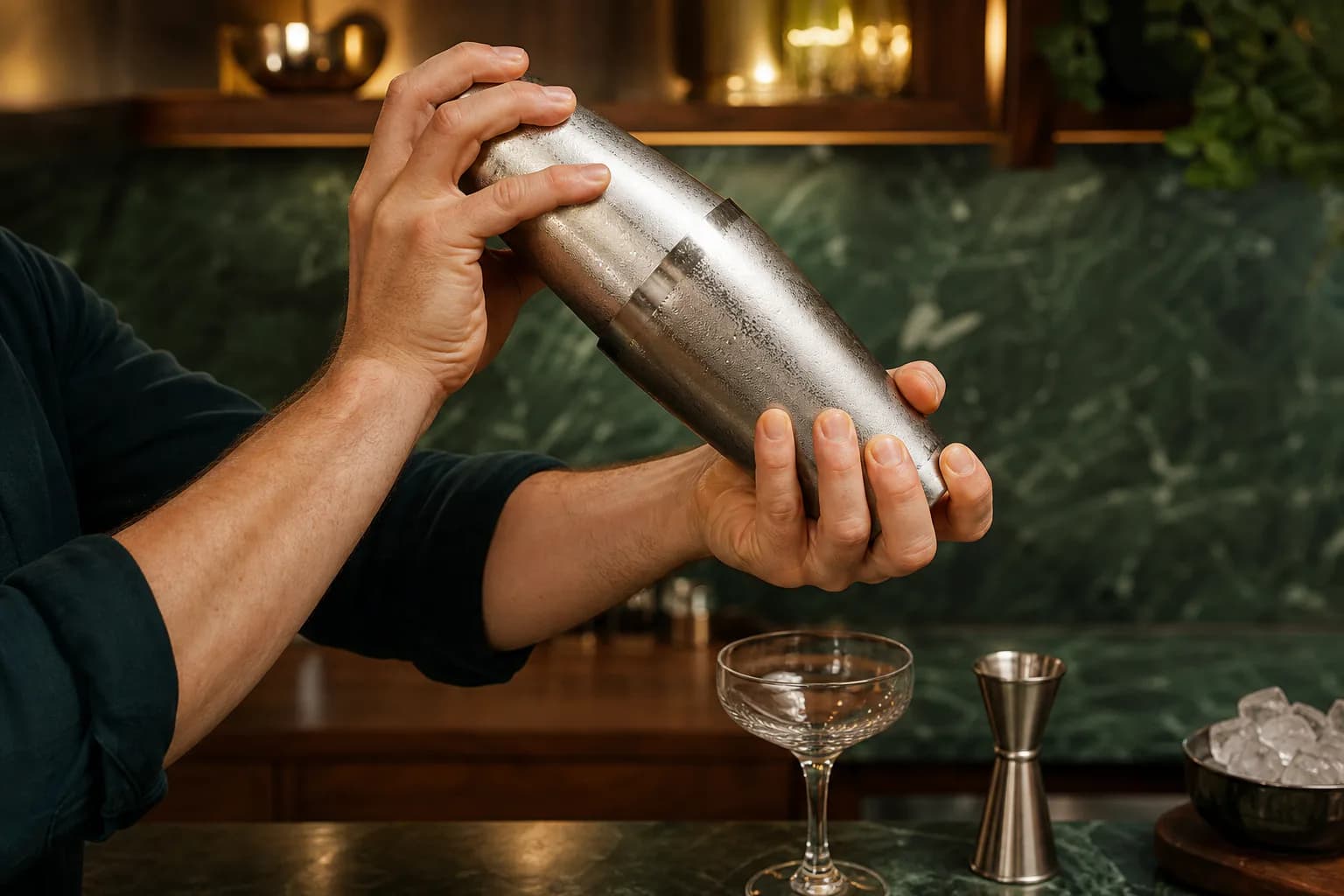
Seal and shake Seal and shake hard
- 06
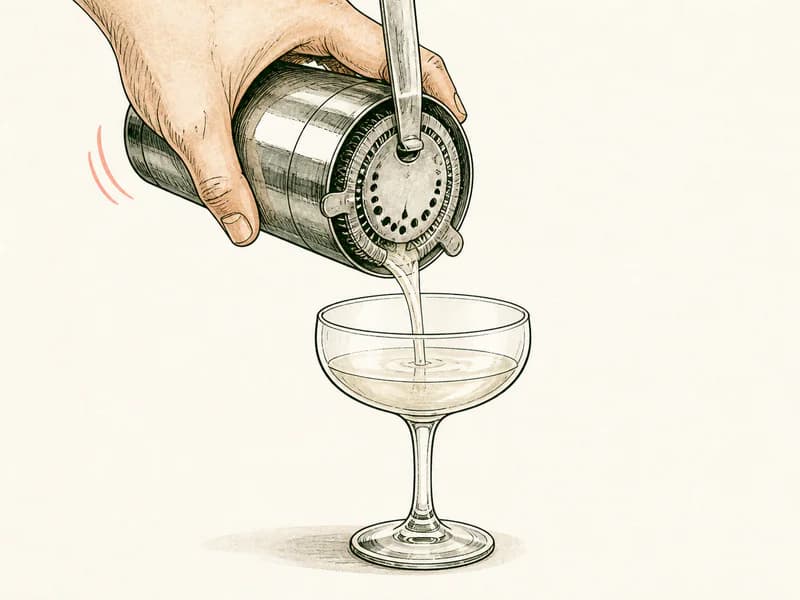
Strain cleanly Strain into a chilled glass — no ice
- 07
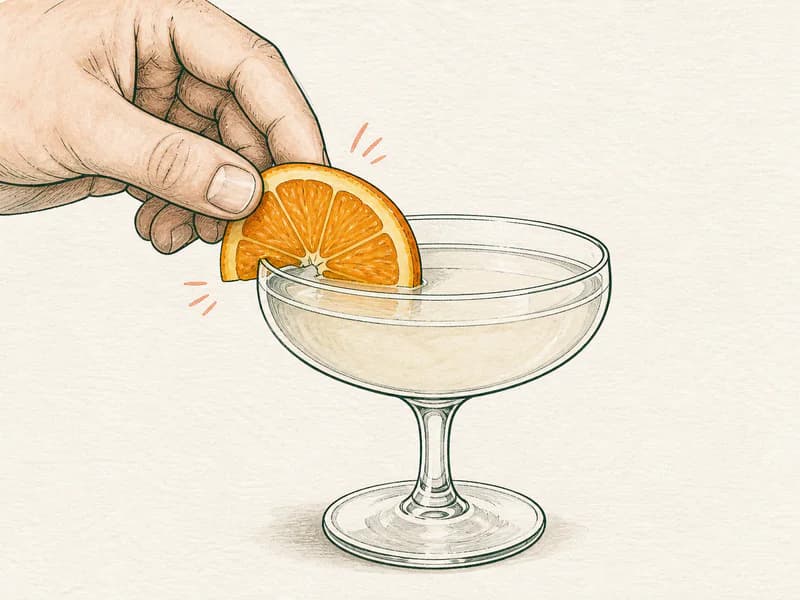
Finish the drink Finish it — add an orange slice
Know your drink
About the Green Room
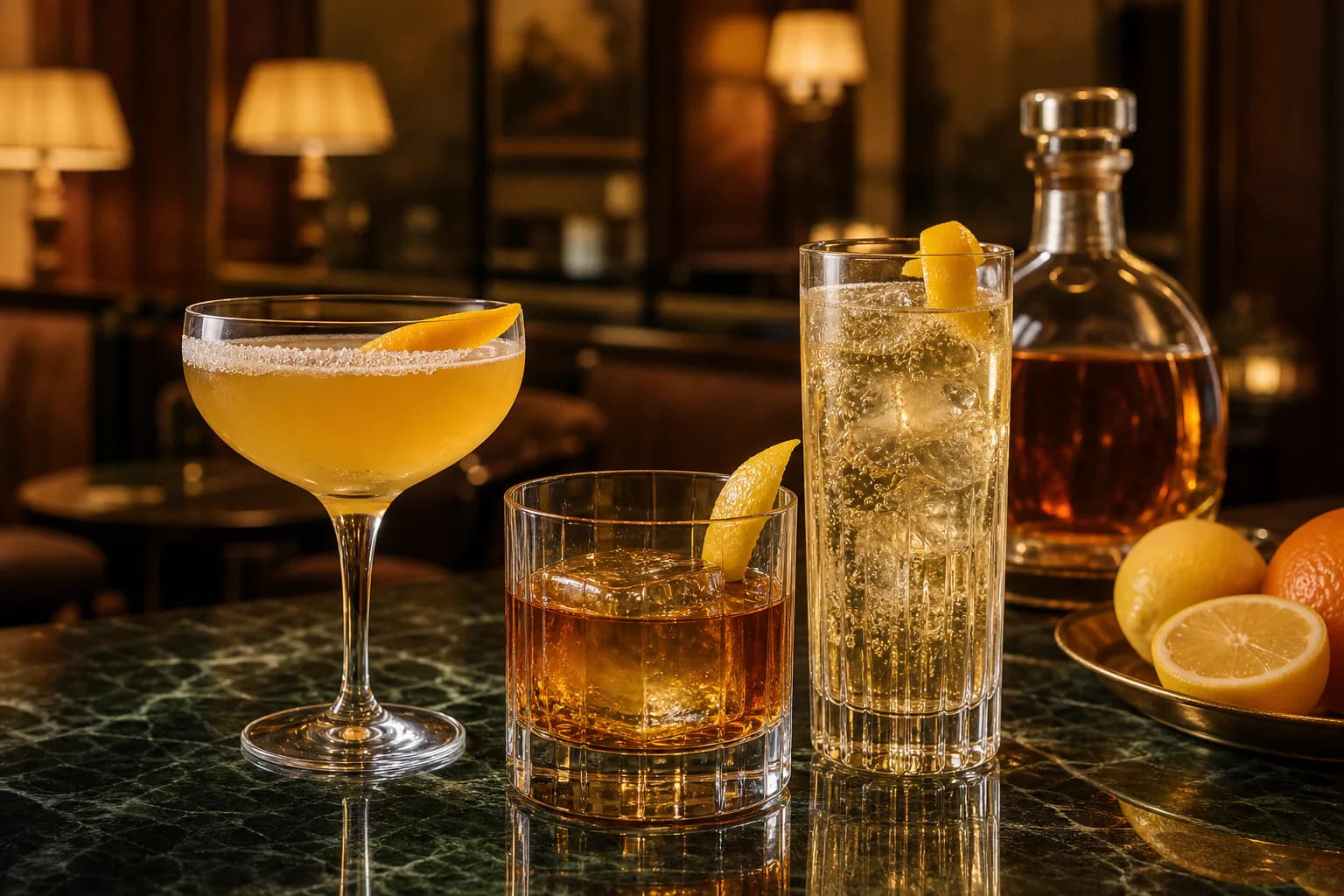
Two-thirds vermouth by design
Craddock's Savoy Cocktail Book prints this as two dashes of curaçao, one third brandy and two thirds French vermouth, and the modern 45/30 split follows it closely. Bar books of that era are full of these vermouth-led drinks, built for late afternoon rather than late night, at a strength people could sit with for an hour.
Common questions
Green Room FAQ
Which brandy suits a drink this vermouth-heavy?
Something with fruit rather than oak. A decent VSOP cognac has the weight to be noticed at 30 ml without turning the glass woody. Armagnac works if you want more rusticity. Skip anything heavily caramelized, since the vermouth already brings sweetness of its own.
It tastes like chilled wine with a splash in it. Is that the idea?
Largely, yes. At 45 ml of vermouth against 30 of brandy this lands closer to an aperitif than a cocktail, somewhere near the strength of a big glass of sherry. Flip the numbers to 45 brandy and 30 vermouth if you want it to drink like a proper stiff one.
Would a fino sherry stand in for half the vermouth?
It works, and it moves the drink toward a Bamboo. Fino brings salt and almond but none of the vermouth's herbs, so swap half rather than all of it: 22 ml fino, 22 ml dry vermouth. Manzanilla goes saltier still, which suits the orange liqueur better than it suits the brandy.
Can I leave out the orange liqueur? It is barely there.
It is seasoning rather than an ingredient, and the drink goes flat without it. Two dashes of curaçao lift the orange note already sitting in the vermouth and give the brandy something to hang on. Pour more than a bar spoon and it turns sweet fast.
What ingredients are in a Green Room?
A classic Green Room calls for 30 ml (1 oz) Brandy, 45 ml (1.5 oz) Dry vermouth, 4 ml (0.25 oz) Triple sec / Cointreau. That single-serve spec scales cleanly — the recipe above converts it to oz and multiplies it for 2–4 drinks.
How strong is a Green Room?
A standard Green Room is roughly 27% ABV once mixed (before ice melt softens it further). That makes it spirit-forward — closer to a Martini than to a beer, so sip it slowly.
Is a Green Room shaken or stirred?
A Green Room is shaken. About 13 seconds with plenty of ice chills and dilutes it correctly.
Sharpen the technique
Skills used in this recipe
Where to go next
If you like the Green Room, try these.
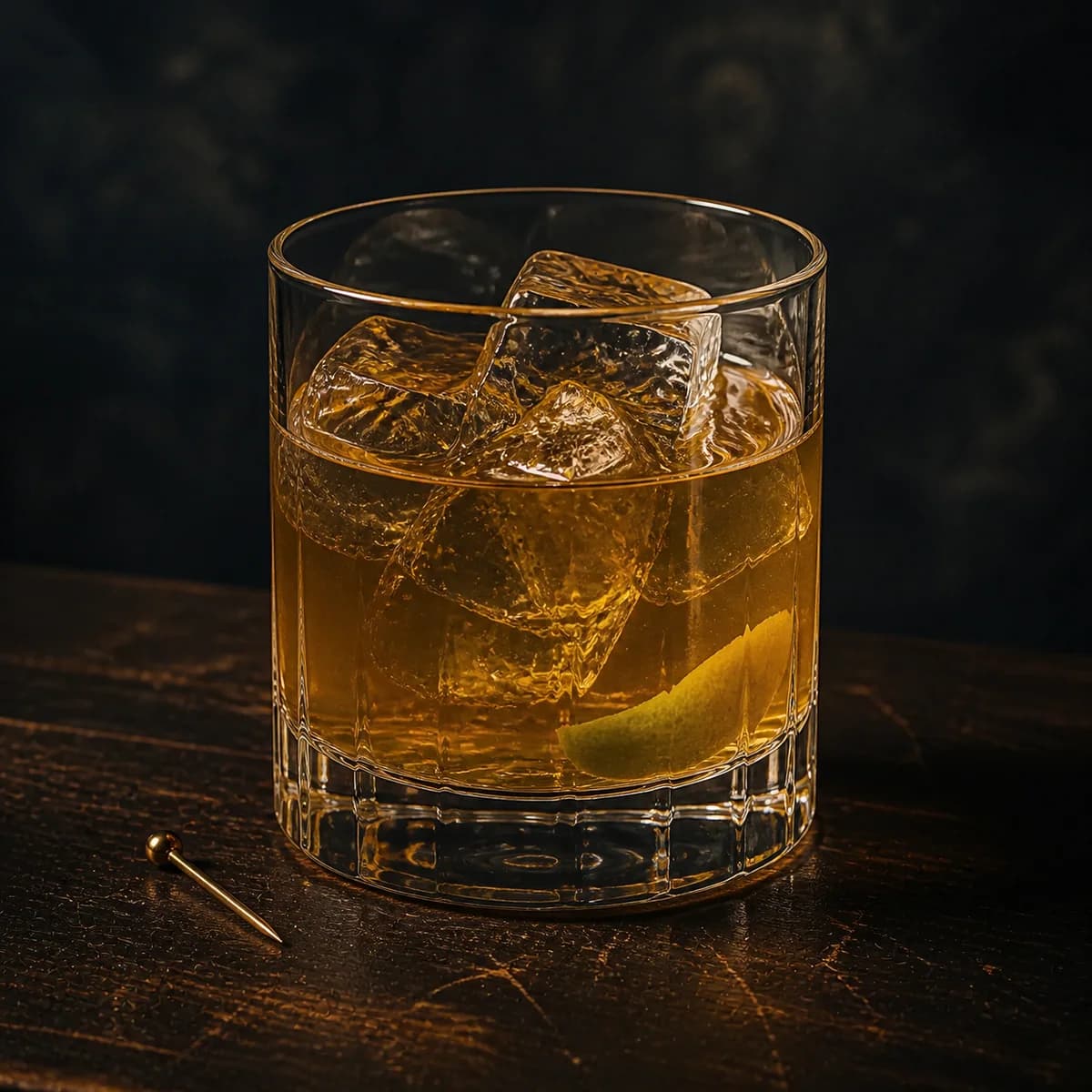
Green Russian
Honeydew, and a lot of it. Thirty milliliters of melon liqueur against 45 of vodka gives you a rocks glass that glows green and tastes frankly of candy, with just enough spirit underneath to keep it from reading as a soda.
View recipe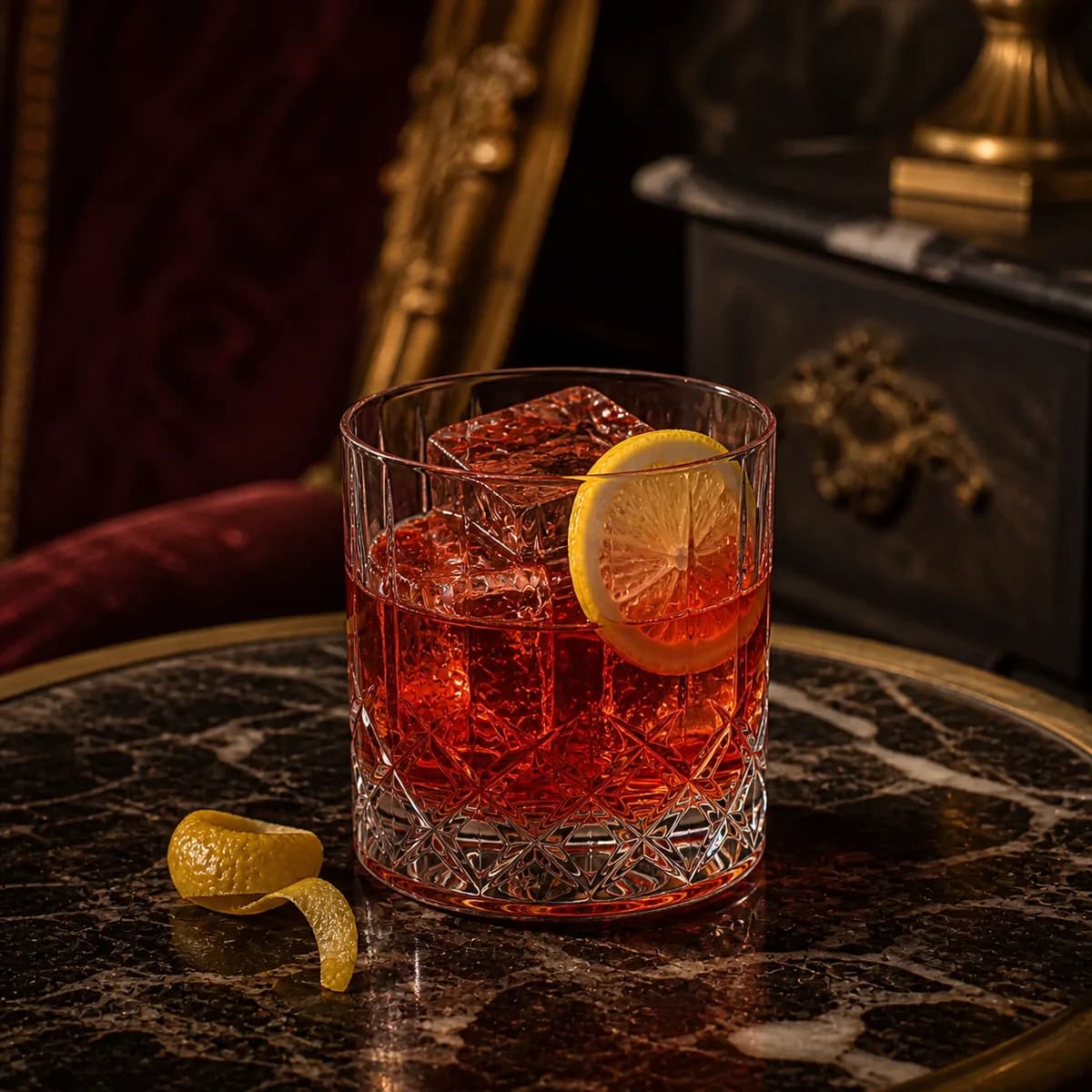
Brandy Daisy
Older than its vodka cousin by the better part of a century, and it shows in how the grenadine sits on brandy's own fruit rather than filling a hole. Lemon keeps it upright. A little orange liqueur ties the ends together.
View recipe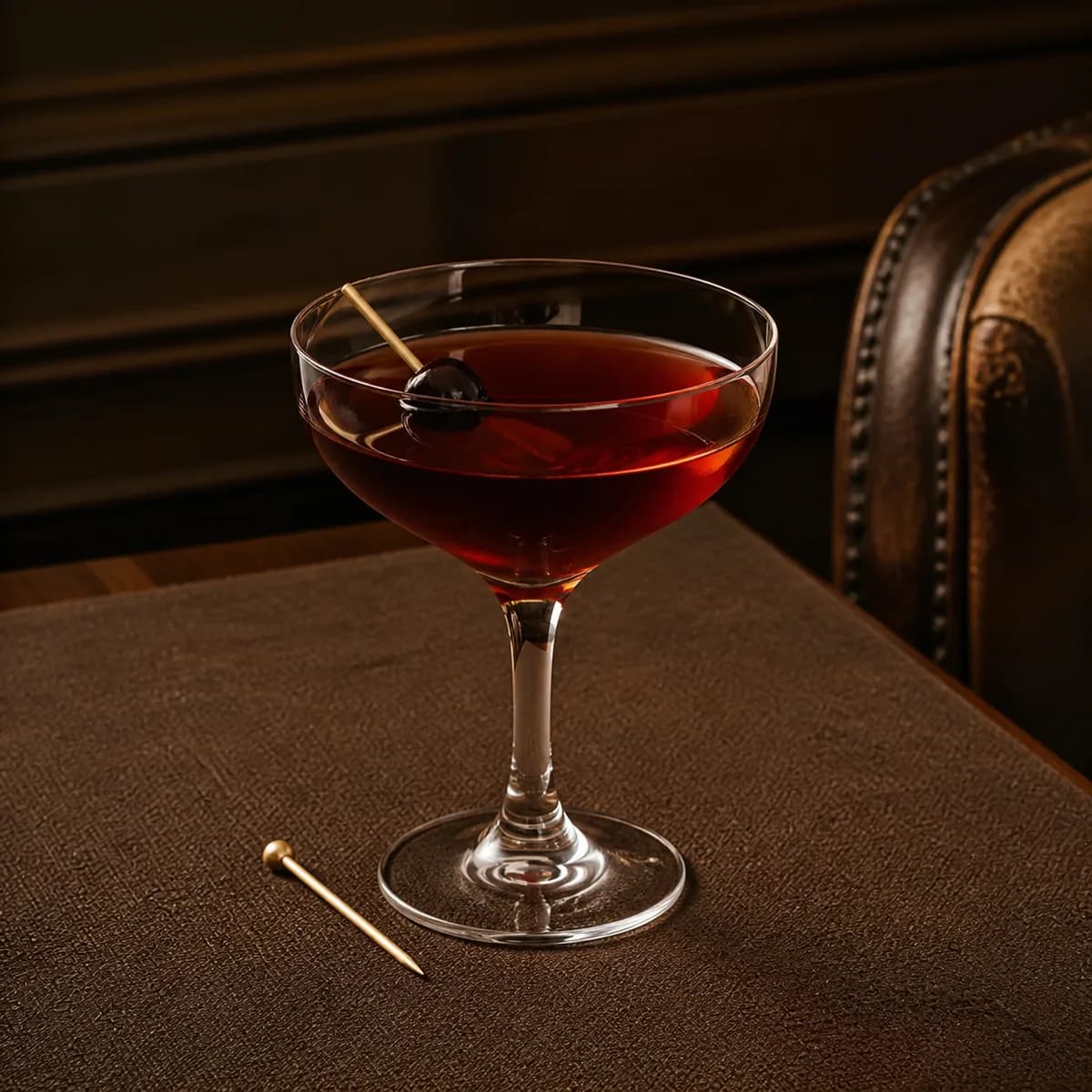
Metropolitan
Brandy takes the Manhattan's chair, with sweet vermouth and a couple of dashes of bitters behind it. Rounder and more grape-forward than the rye version, softer through the finish, and easier to drink at the wrong hour of the afternoon.
View recipe