Classic cocktail · Guided recipe
Hoffman House
Start makingA Martini carrying orange bitters and more vermouth than the modern habit allows. Eight parts gin to three of dry vermouth, with the bitters supplying a warm citrus-peel edge that a lemon twist alone can't reach.
In the glassGin · Dry vermouth · Orange bitters
See exact amounts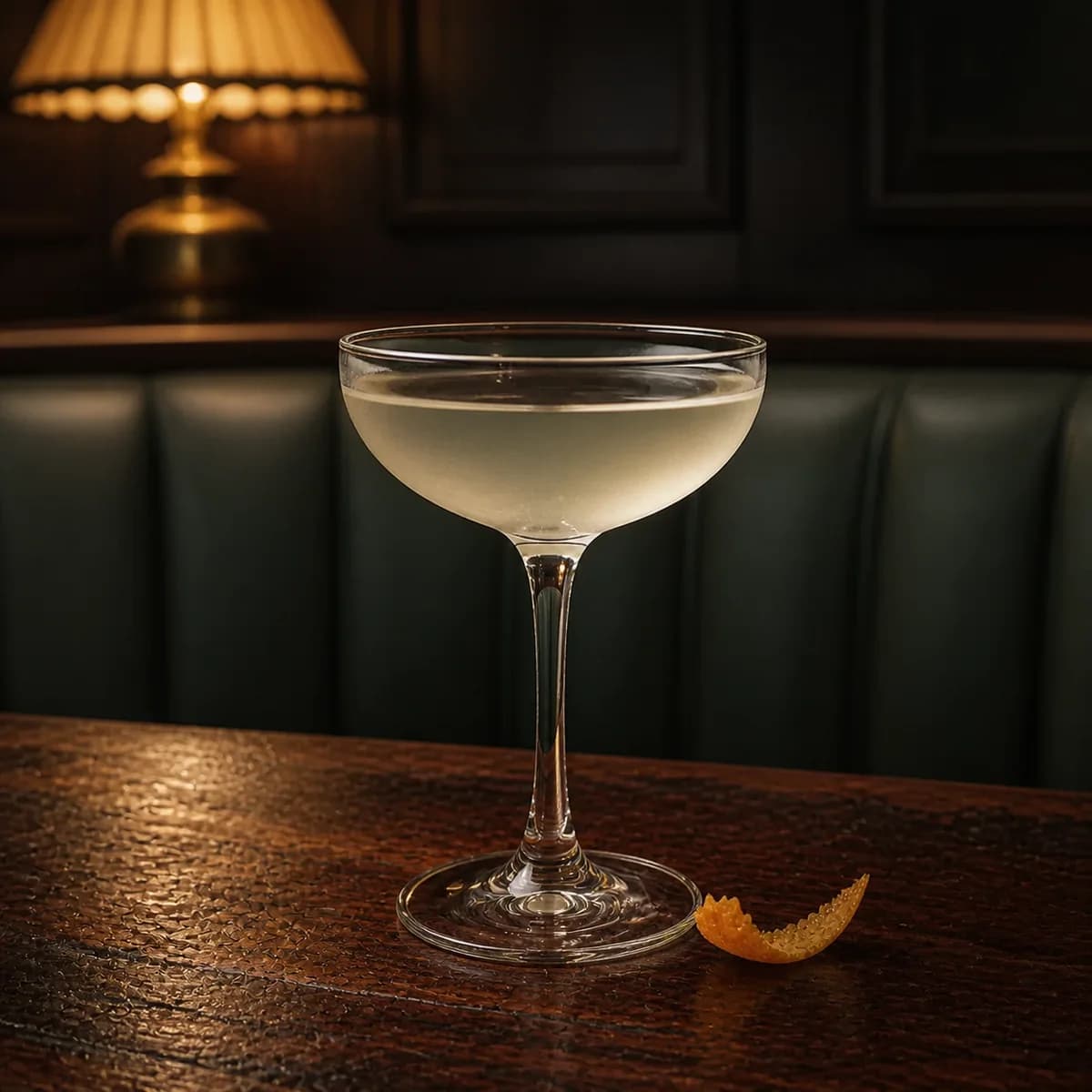
What goes in
Ingredients
Set up before you pour
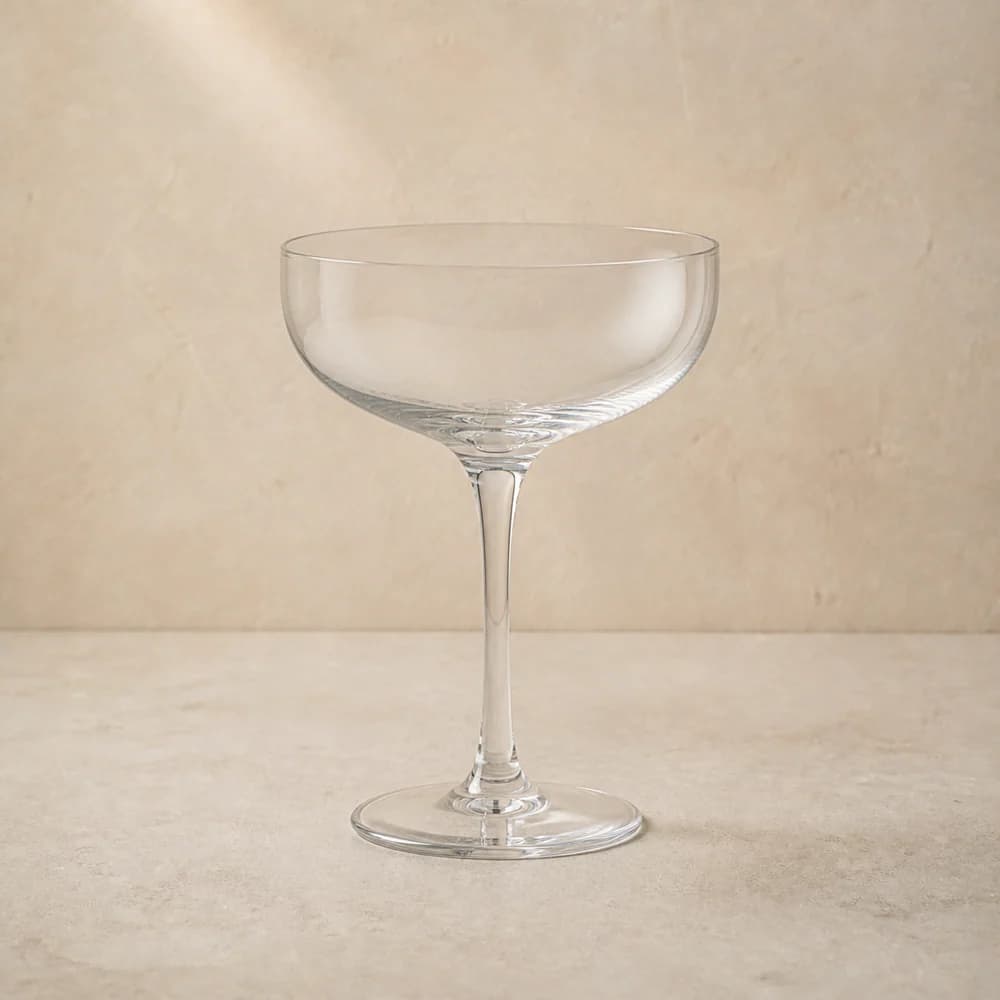
Use a coupe glass.
The stem keeps your hand away from a cold drink, while the rounded bowl makes an up serve easy to sip.
- Standard size
- 200 ml6¾ oz
- Ice & serve
- Chill it first; serve without ice.
- If you don’t own one
- Use a small martini glass or stemmed dessert glass.
- cocktail shaker
- strainer (or a small sieve)
- jigger or measuring spoon
- Gin60 ml
- Dry vermouth22 ml
- Orange bitters2 dashes
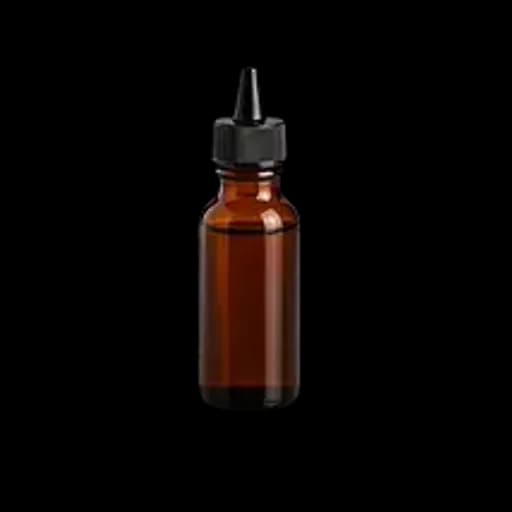
From bottle to glass
Method
- 01
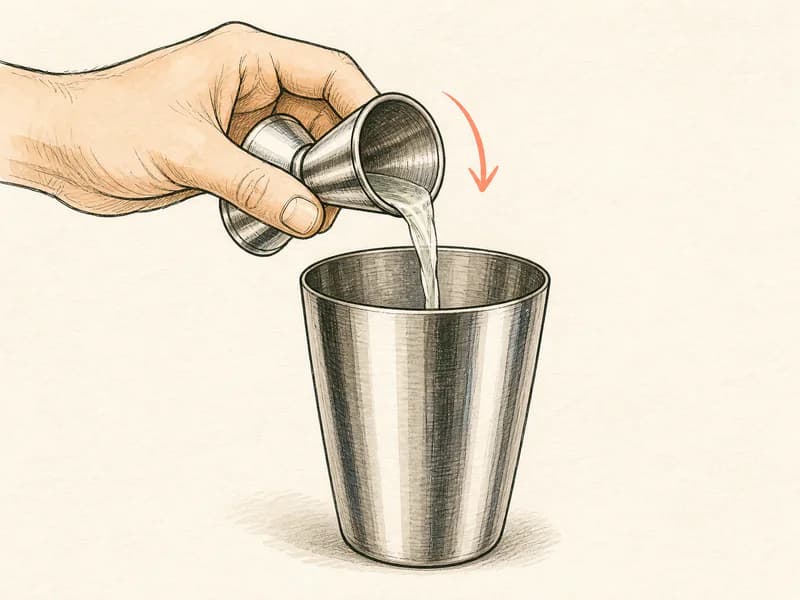
Measure into the shaker Pour 60 ml gin into your shaker
 Gin
Gin
- 02
Measure into the shaker Add 22 ml dry vermouth
 Dry vermouth
- 03
Measure into the shaker Add 2 dashes orange bitters
 Orange bitters
- 04
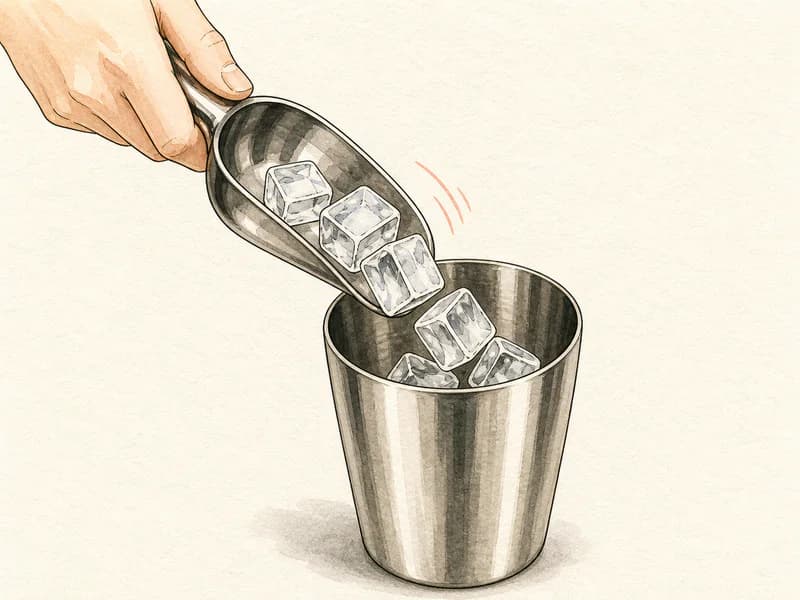
Ice the shaker Fill the shaker with ice
- 05
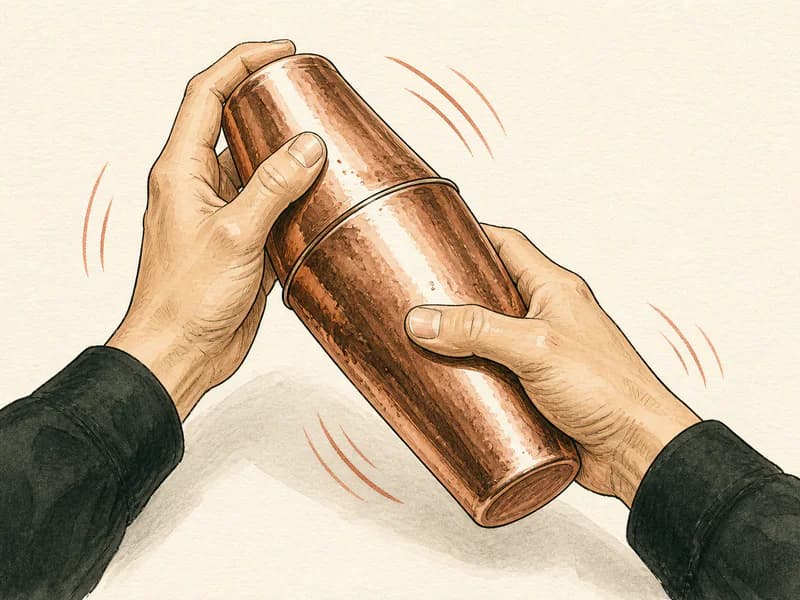
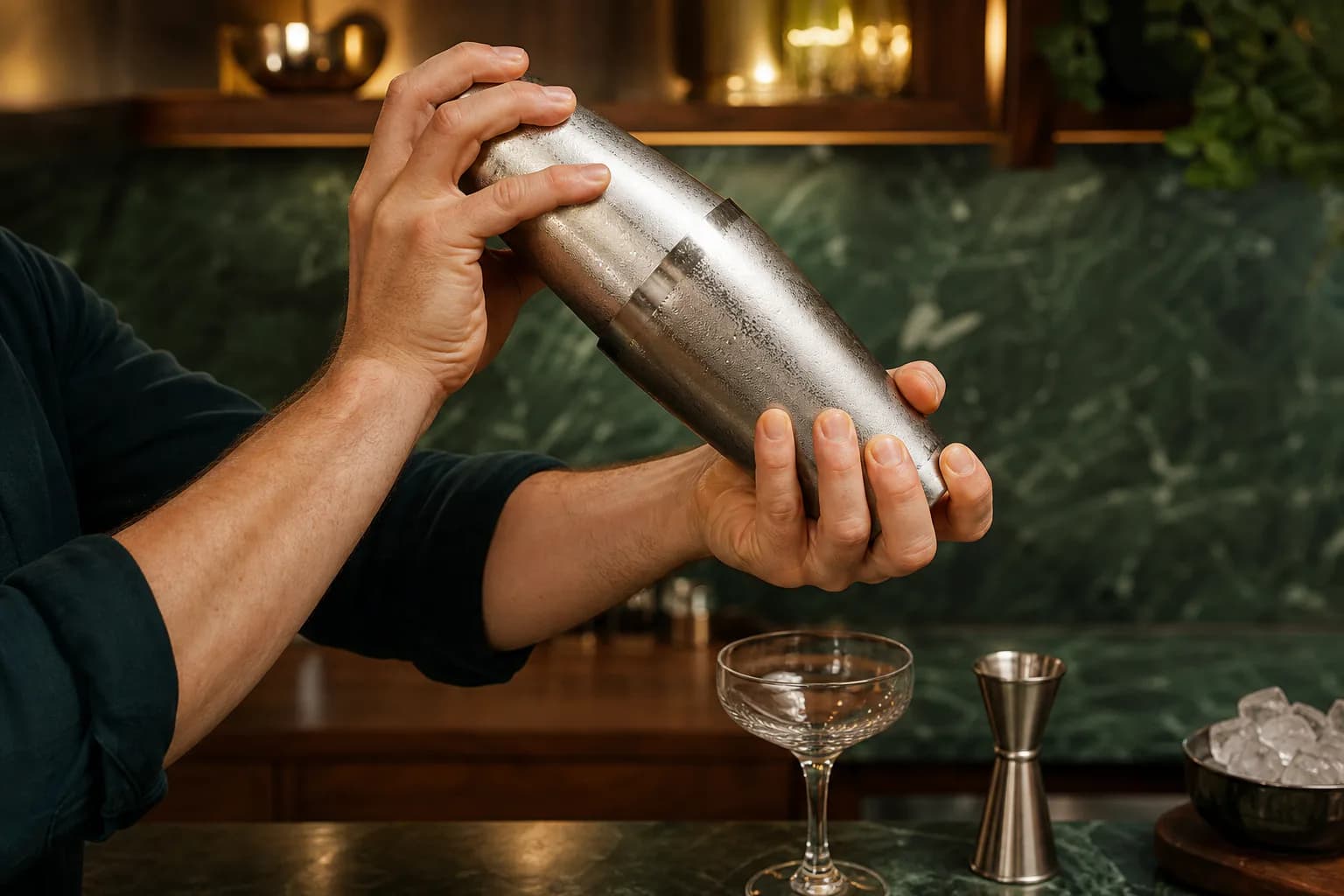
Seal and shake Seal and shake hard
- 06
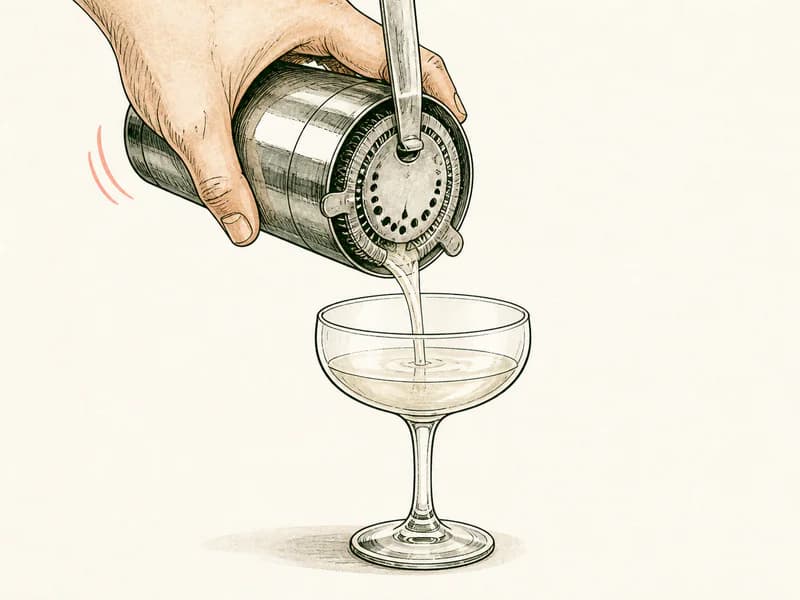
Strain cleanly Strain into a chilled glass — no ice
Know your drink
About the Hoffman House
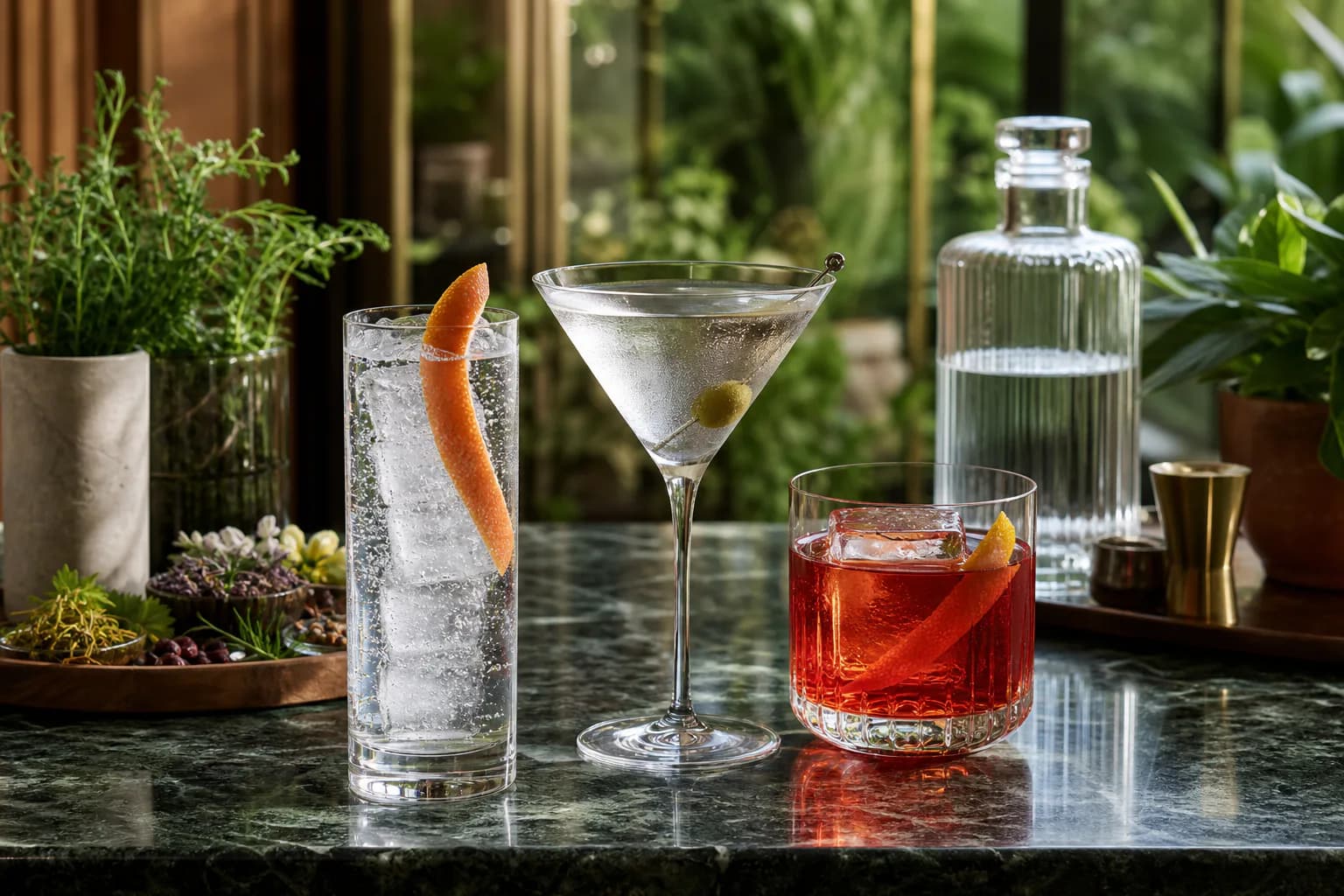
A Madison Square barroom
Hoffman House was a Broadway hotel facing Madison Square whose bar was famous enough in the 1880s and 90s that its name got attached to cigars, glassware and this cocktail. Nobody can say whether the drink was actually poured there, since house-named cocktails traveled fast in that era, but the spec that survived is a generously vermouthed Martini with orange bitters.
Common questions
Hoffman House FAQ
Orange bitters or Angostura?
Orange, and they aren't interchangeable. Angostura's clove and cinnamon fight juniper and tint the drink brown at the edges. Two dashes of a Seville-style orange bitters is the target; if yours is heavily perfumed, one dash is enough against 60 ml of gin.
Is 22 ml of vermouth too much?
It's roughly what people drank before the 1950s dried everything out. If it reads winey to you, step down to 15 ml rather than skipping it altogether. Vermouth is what stops a gin drink from tasting like cold gin in a stem glass.
Should there be a garnish at all?
A lemon twist earns its place. Its oils land in the same register as the orange bitters and lift the whole glass, while an olive pulls in the opposite direction and muddies the citrus. Express the peel over the surface, then drop it in or discard it.
Do old orange bitters still taste of orange?
They don't spoil, but the peel oil is the first thing to go. A bottle that's been half empty for three years smells of wood and dust rather than fruit, and two dashes will read as nothing here. Sniff the cap. If there's no lift, use three.
What ingredients are in a Hoffman House?
A classic Hoffman House calls for 60 ml (2 oz) Gin, 22 ml (0.75 oz) Dry vermouth, 2 dashes orange bitters Orange bitters. That single-serve spec scales cleanly — the recipe above converts it to oz and multiplies it for 2–4 drinks.
How strong is a Hoffman House?
A standard Hoffman House is roughly 34% ABV once mixed (before ice melt softens it further). That makes it spirit-forward — closer to a Martini than to a beer, so sip it slowly.
Is a Hoffman House shaken or stirred?
A Hoffman House is shaken. About 13 seconds with plenty of ice chills and dilutes it correctly.
Sharpen the technique
Skills used in this recipe
Where to go next
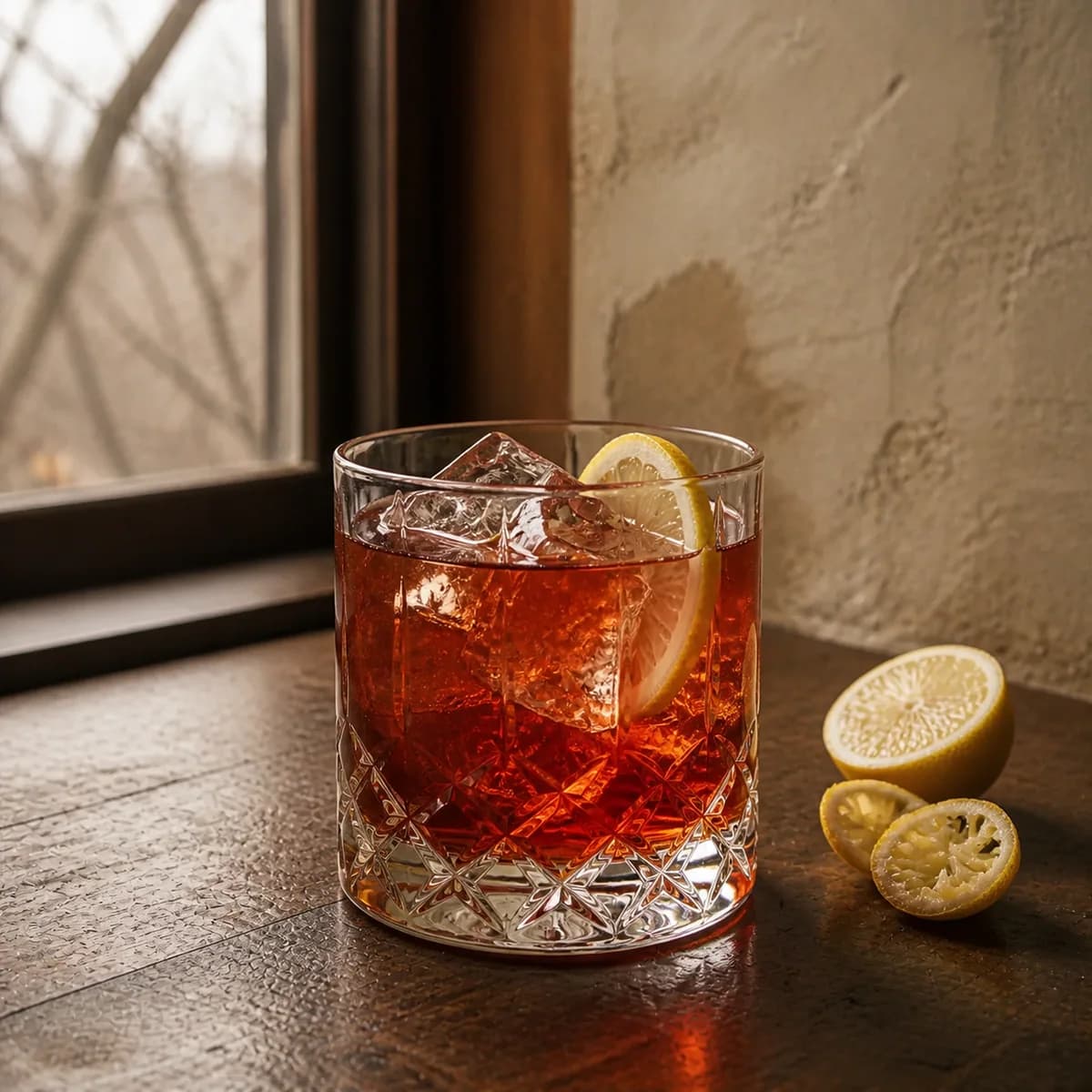
If you like the Hoffman House, try these.
Fish House Punch
A colonial Philadelphia punch scaled to one glass: cognac and dark rum with peach, lemon and sugar. Historic and dangerously smooth.
View recipe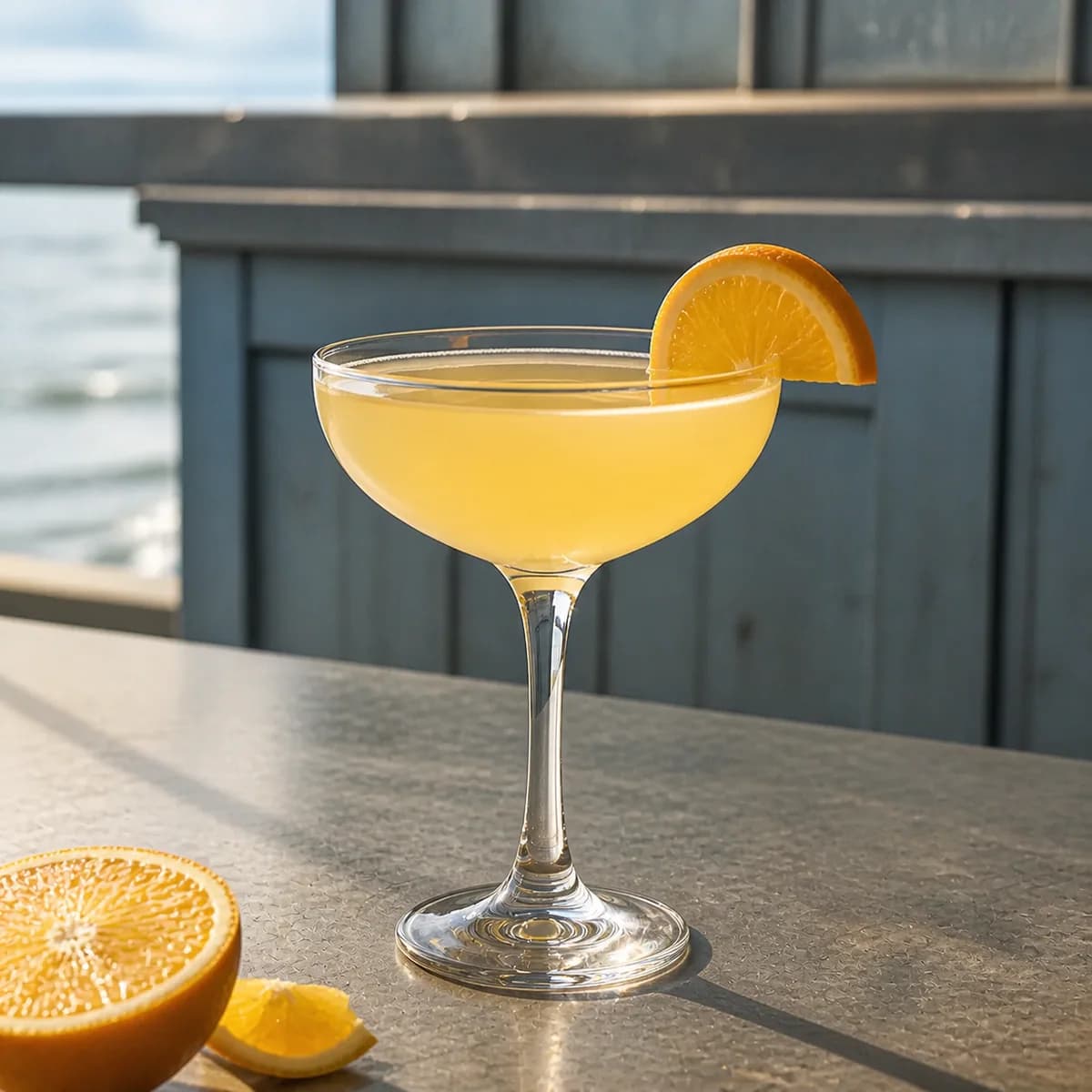
Satan's Whiskers
Five ingredients in equal measure, which sounds like a mess and isn't. Gin, both vermouths, orange juice and Grand Marnier land somewhere between a Bronx and marmalade. Orange bitters are what keep it from sliding into fruit punch.
View recipe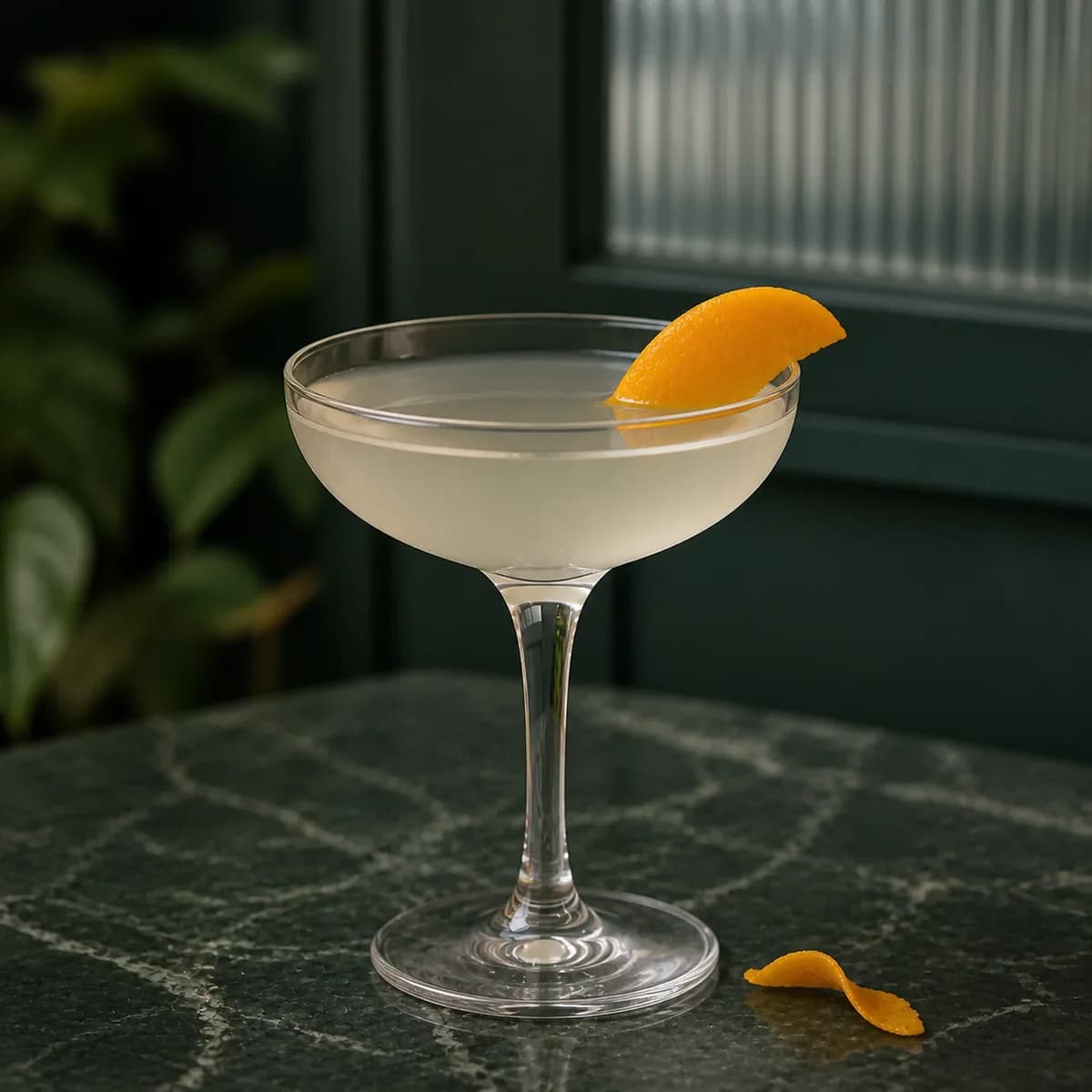
Racquet Club
Orange bitters over equal parts gin and dry vermouth. Half the glass is wine, which makes it gentler and much more fragrant than a modern Martini. Serve it small and very cold.
View recipe