Classic cocktail · Guided recipe
Racquet Club
Start makingOrange bitters over equal parts gin and dry vermouth. Half the glass is wine, which makes it gentler and much more fragrant than a modern Martini. Serve it small and very cold.
In the glassGin · Dry vermouth · Orange bitters
See exact amounts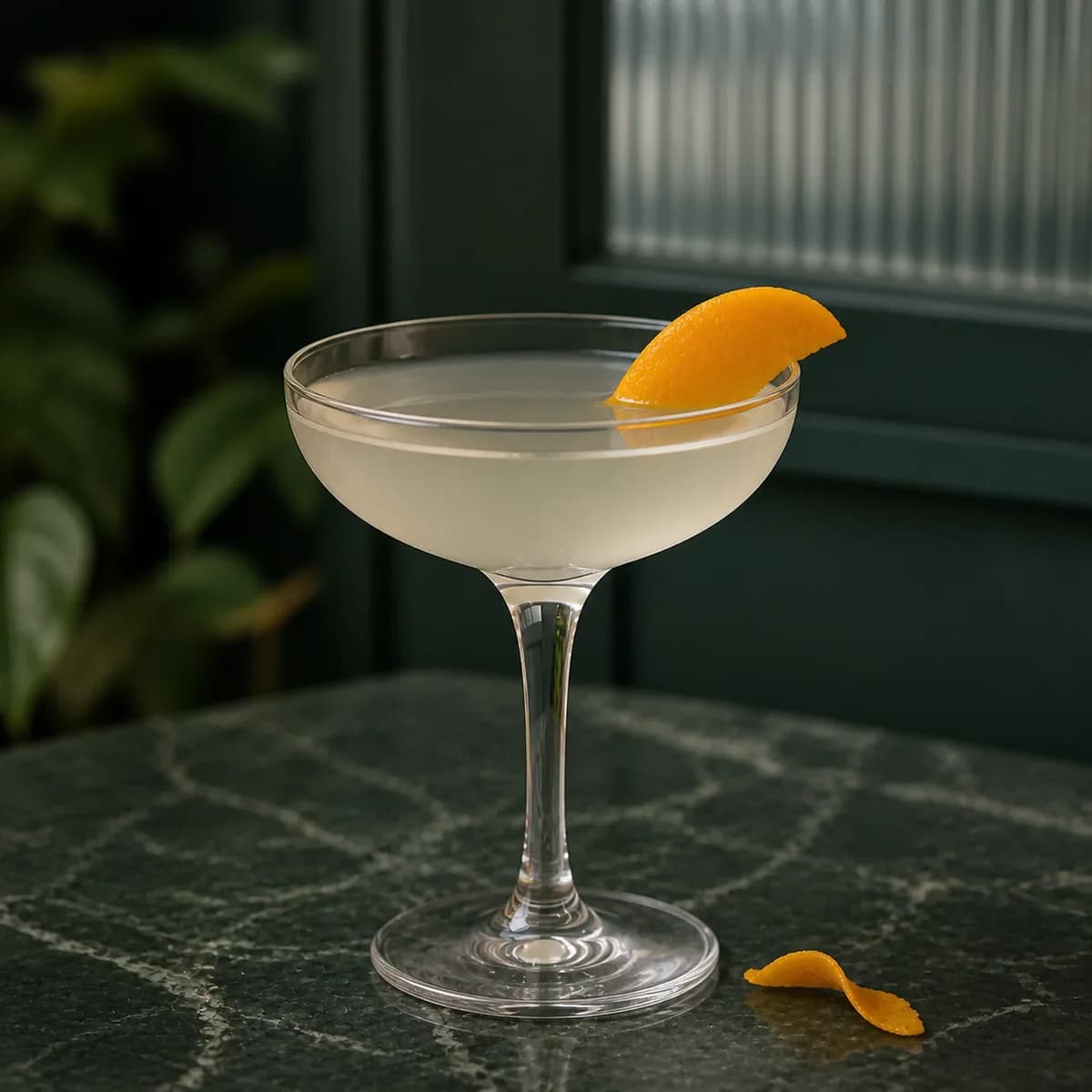
What goes in
Ingredients
Set up before you pour
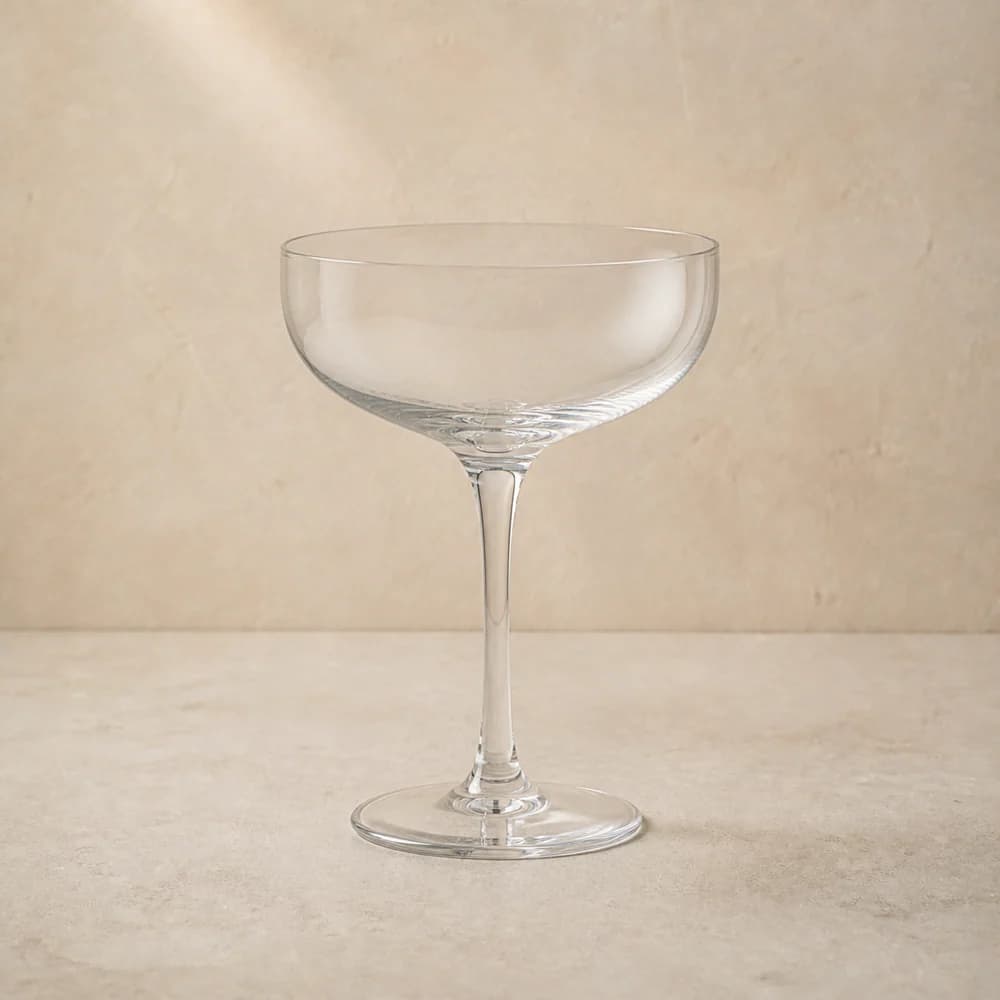
Use a coupe glass.
The stem keeps your hand away from a cold drink, while the rounded bowl makes an up serve easy to sip.
- Standard size
- 200 ml6¾ oz
- Ice & serve
- Chill it first; serve without ice.
- If you don’t own one
- Use a small martini glass or stemmed dessert glass.
- cocktail shaker
- strainer (or a small sieve)
- jigger or measuring spoon
- Gin45 ml
- Dry vermouth45 ml
- Orange bitters2 dashes
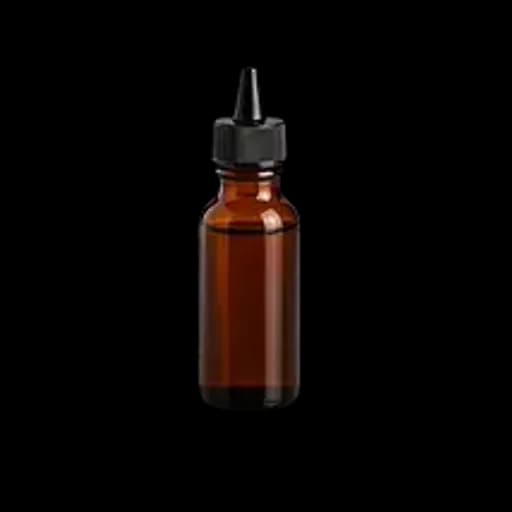
From bottle to glass
Method
- 01
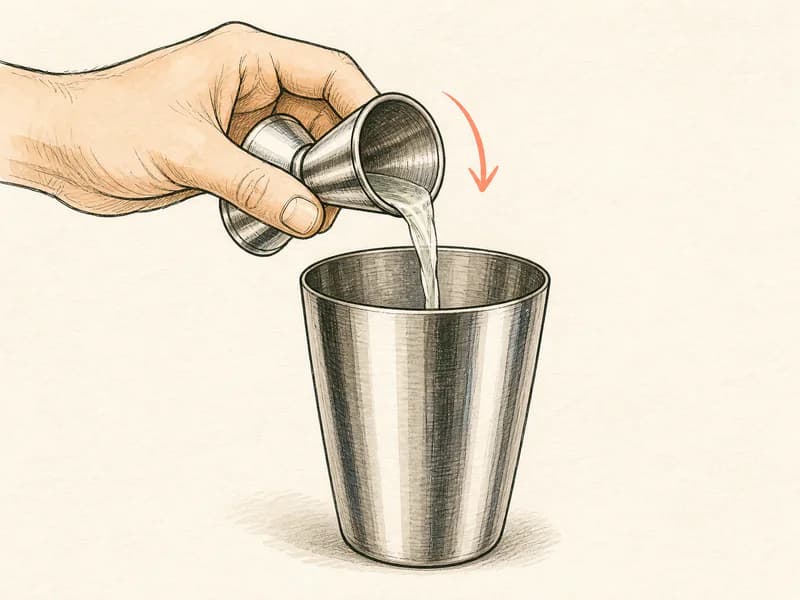
Measure into the shaker Pour 45 ml gin into your shaker
 Gin
Gin
- 02
Measure into the shaker Add 45 ml dry vermouth
 Dry vermouth
- 03
Measure into the shaker Add 2 dashes orange bitters
 Orange bitters
- 04
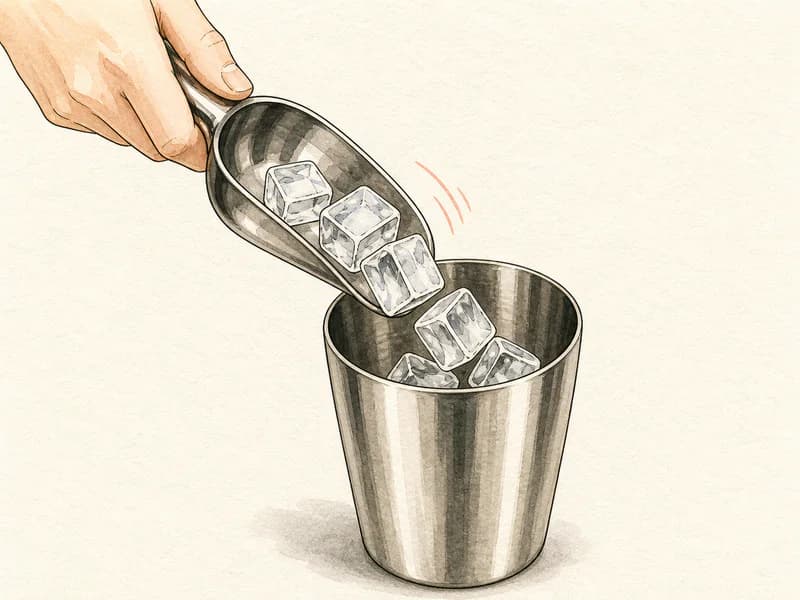
Ice the shaker Fill the shaker with ice
- 05
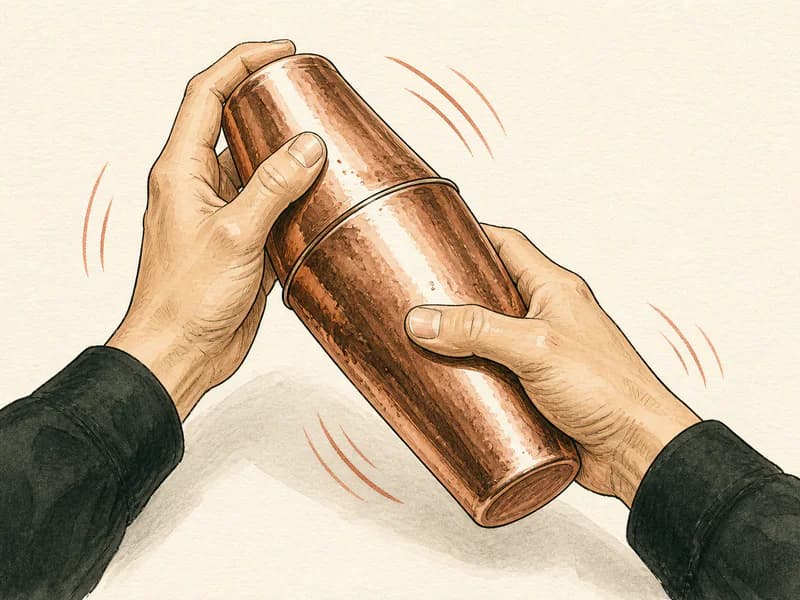
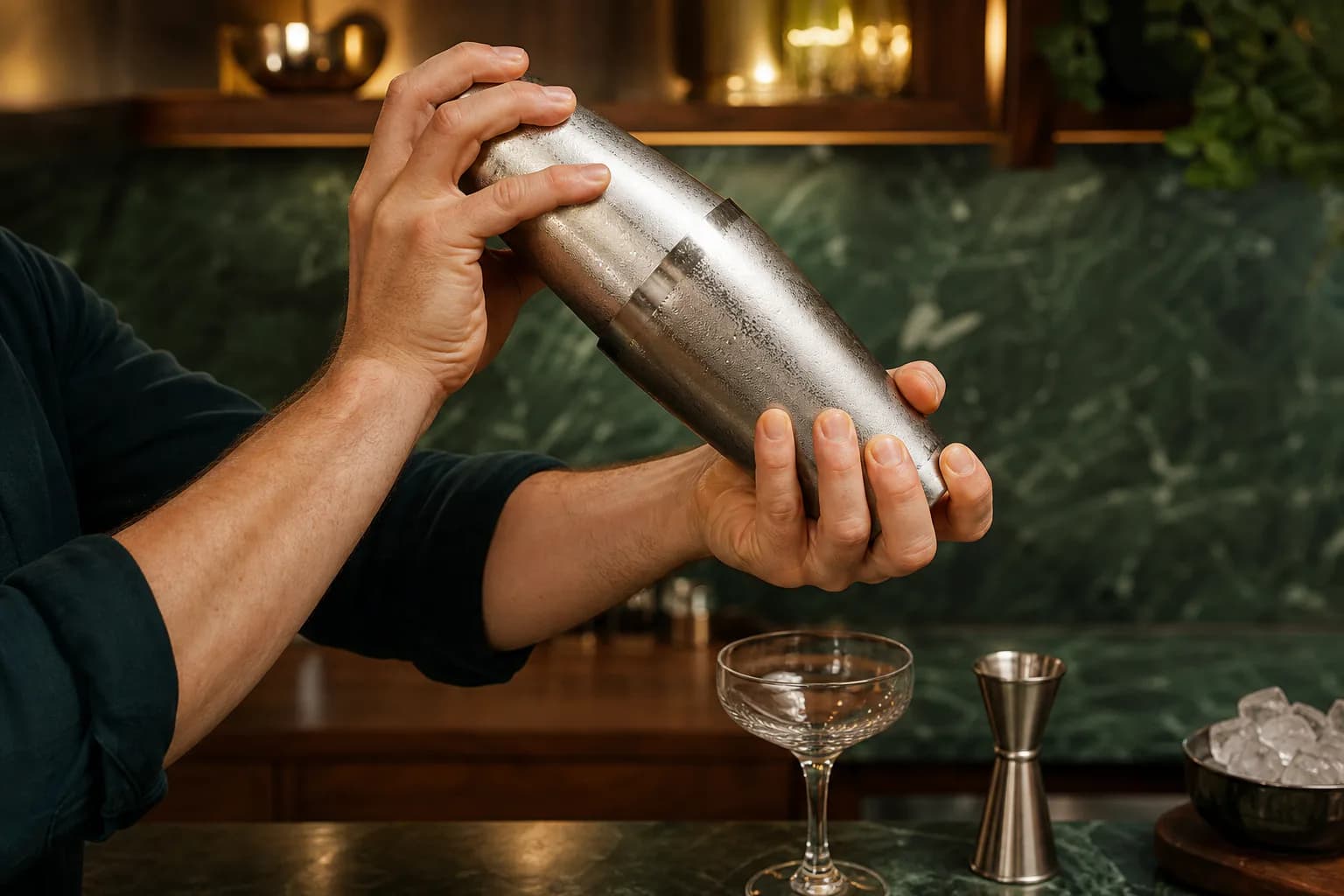
Seal and shake Seal and shake hard
- 06
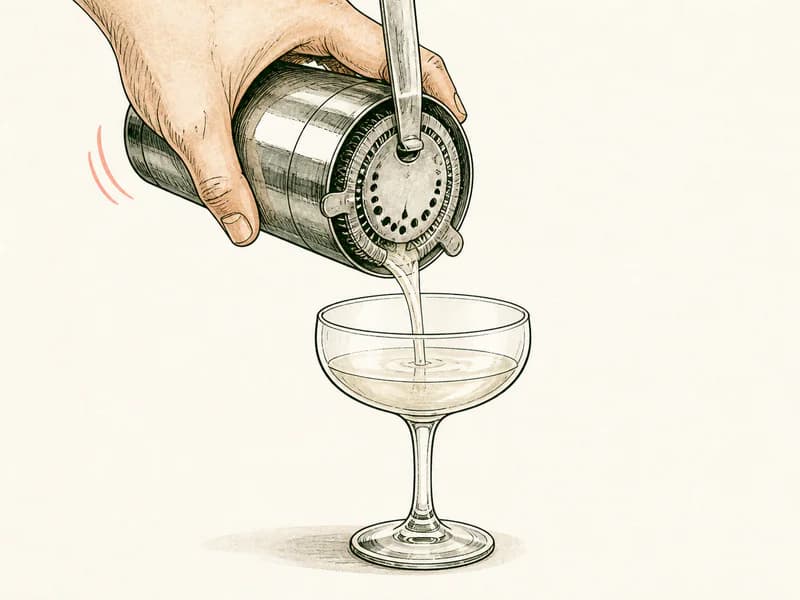
Strain cleanly Strain into a chilled glass — no ice
- 07
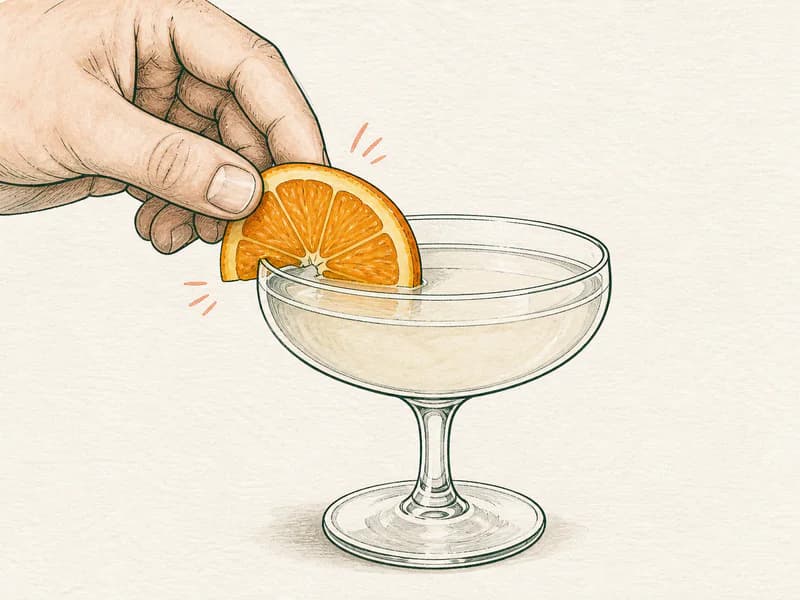
Finish the drink Finish it — add an orange slice
Know your drink
About the Racquet Club
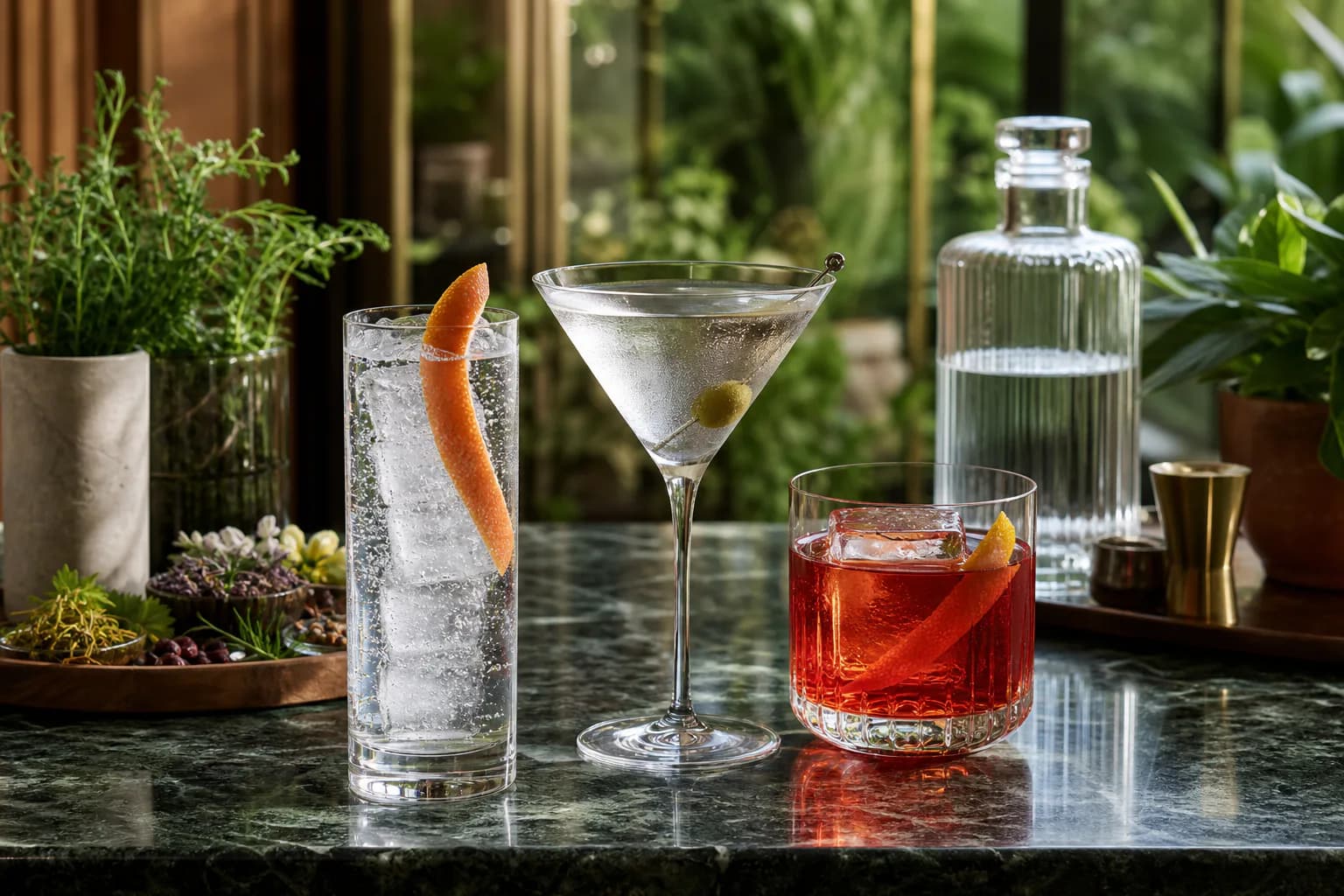
Vermouth as half the drink
Vermouth is wine, and it behaves like wine once the bottle is open. Left on a shelf for three months it oxidizes into something flat and stewed, and where it makes up half the drink there is nowhere for that to hide. Sealed and refrigerated, expect a month of good drinking, less once the bottle is mostly empty.
Fifty-fifty was ordinary once. Martini recipes printed before Prohibition routinely ran two parts gin to one of vermouth, or closer still, and the bone-dry version most people picture is a mid-century development. Drinks like this one preserve the older ratio, which drinks less like cold spirit and more like a light aperitif.
Common questions
Racquet Club FAQ
At equal parts, which bottle should I spend money on?
The vermouth. Half the glass is wine, and a tired bottle tastes of stewed apples that no gin can cover. Dolin Dry is clean and light; Noilly Prat Original Dry is nuttier and more savory and makes a bigger drink of it. Buy the small size and keep it in the fridge.
How dry can I take it before it stops being a Racquet Club?
Past about 2:1 you have simply made a Martini with orange bitters in it. The character here depends on vermouth being an equal partner rather than a rinse. If 50/50 tastes too winey for you, go to 60 ml gin and 30 ml vermouth and stop there.
Two dashes of orange bitters: can you actually taste them?
In a drink this quiet, yes, mostly as aroma. That is also why the garnish is orange rather than an olive, since brine would fight the bitters while orange oil reinforces them. Regans' is the bold cardamom-heavy bottle, Angostura's orange the softer marmalade one. Three dashes is not excessive.
What ingredients are in a Racquet Club?
A classic Racquet Club calls for 45 ml (1.5 oz) Gin, 45 ml (1.5 oz) Dry vermouth, 2 dashes orange bitters Orange bitters. That single-serve spec scales cleanly — the recipe above converts it to oz and multiplies it for 2–4 drinks.
How strong is a Racquet Club?
A standard Racquet Club is roughly 28% ABV once mixed (before ice melt softens it further). That makes it spirit-forward — closer to a Martini than to a beer, so sip it slowly.
Is a Racquet Club shaken or stirred?
A Racquet Club is shaken. About 13 seconds with plenty of ice chills and dilutes it correctly.
What glass do you serve a Racquet Club in?
Serve a Racquet Club in a chilled coupe glass, well chilled — this drink is served without ice, so a cold glass keeps it cold.
Sharpen the technique
Skills used in this recipe
Where to go next
If you like the Racquet Club, try these.
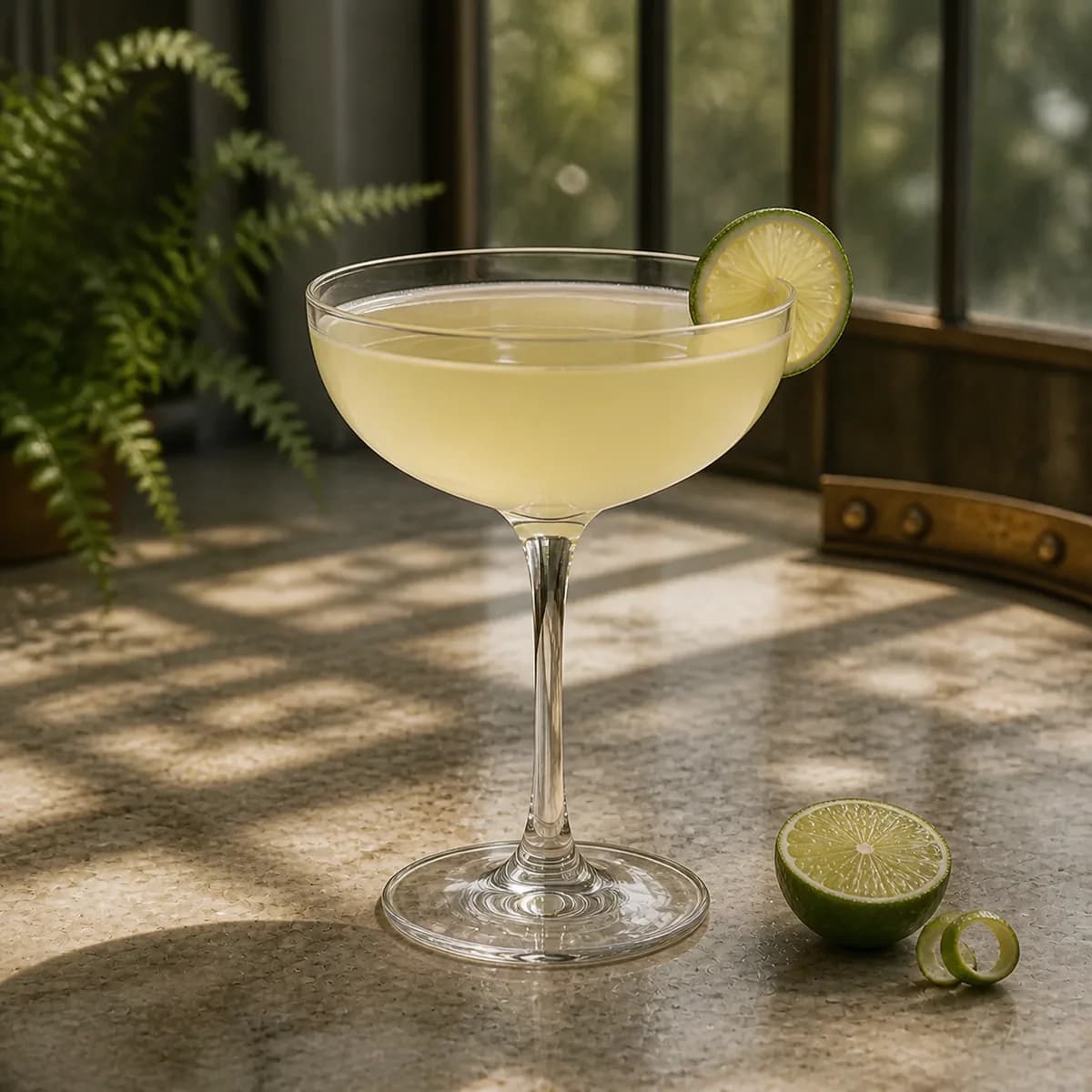
Pegu Club
Gin, orange liqueur and lime with two kinds of bitters — a colonial Burmese club classic, dry and aromatic.
View recipe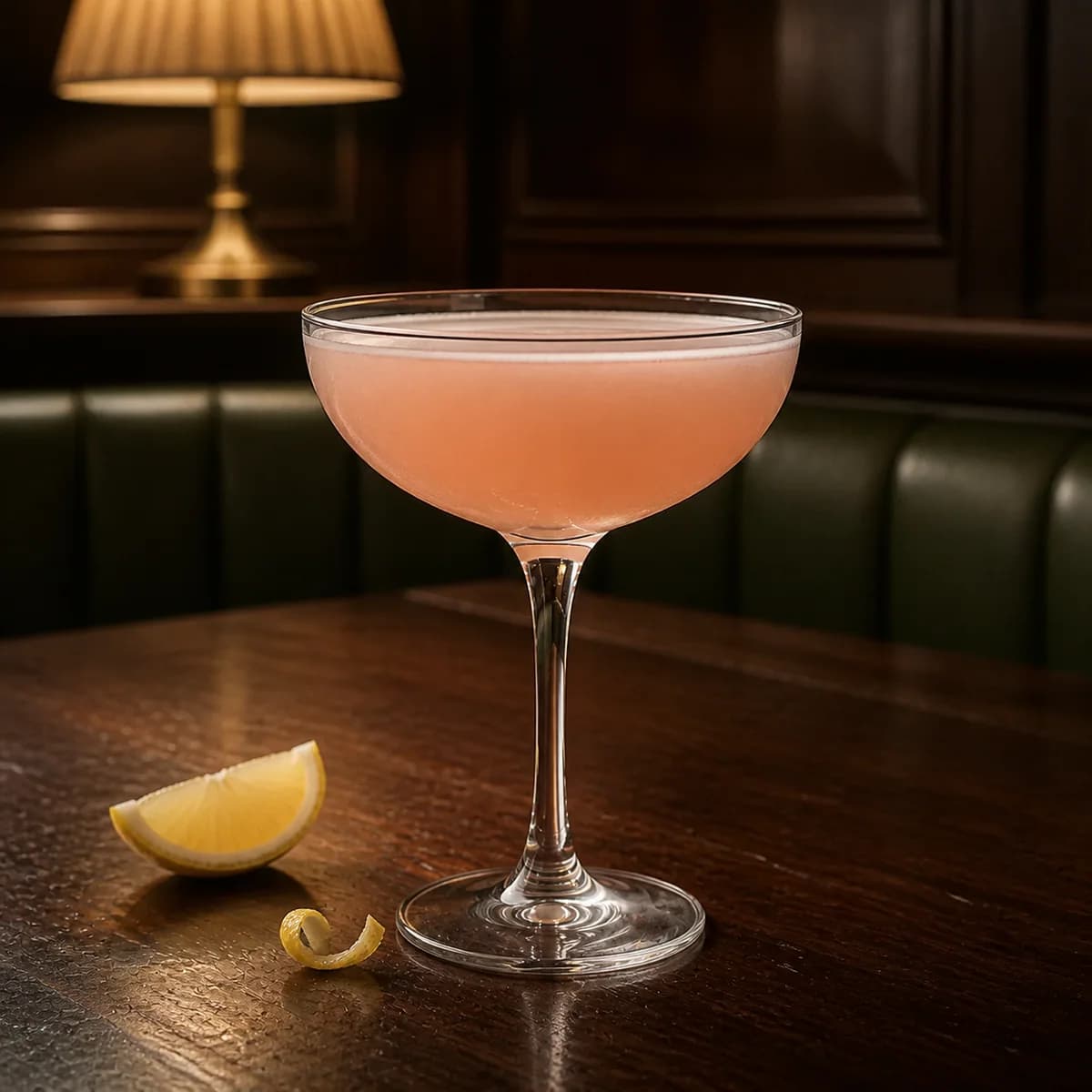
Clover Club
A pre-Prohibition gin sour with raspberry and egg white — pink, frothy and far more serious than it looks.
View recipe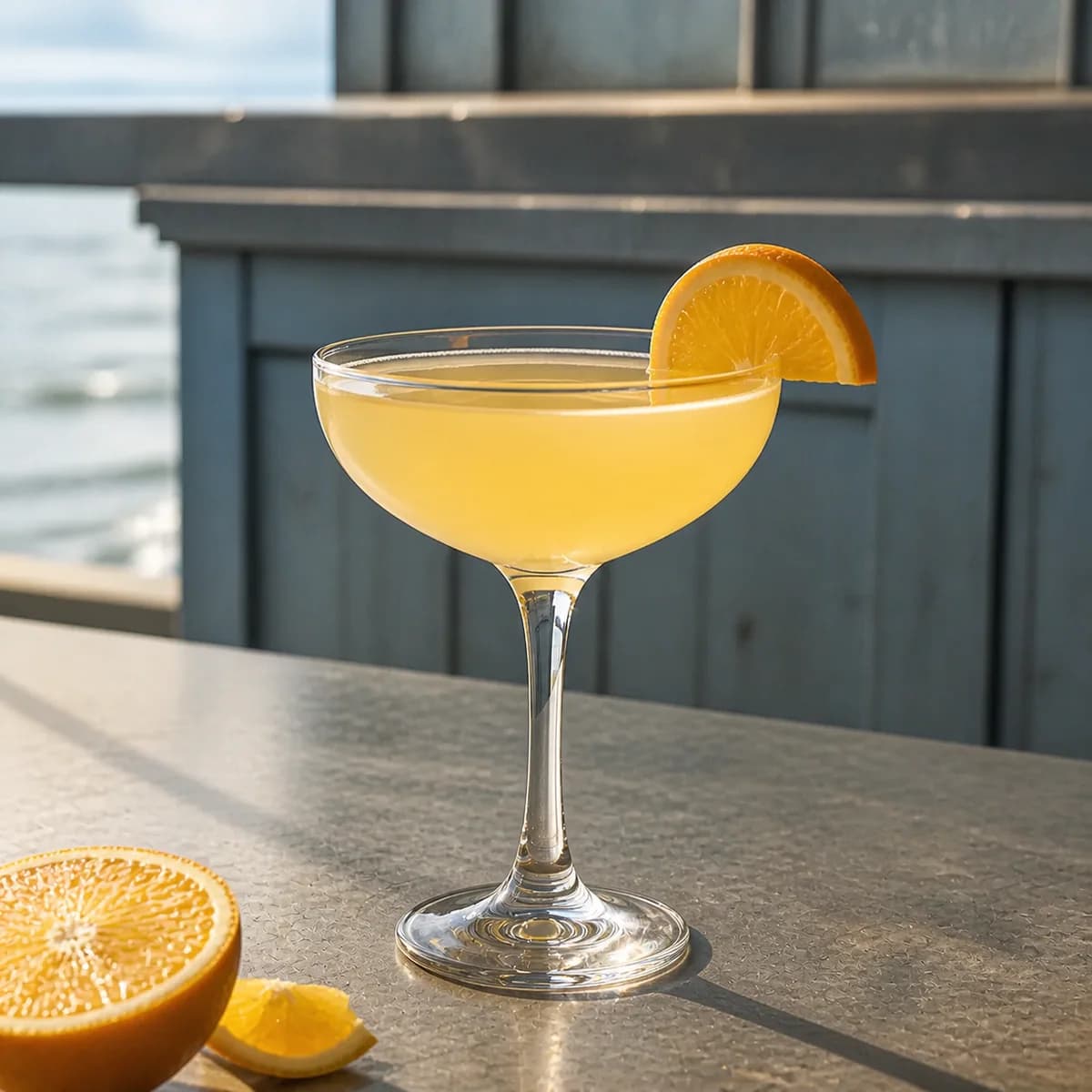
Satan's Whiskers
Five ingredients in equal measure, which sounds like a mess and isn't. Gin, both vermouths, orange juice and Grand Marnier land somewhere between a Bronx and marmalade. Orange bitters are what keep it from sliding into fruit punch.
View recipe