Classic cocktail · Guided recipe
Hunter
Start makingSixty milliliters of rye against 15 of raspberry liqueur is four to one, which is why the fruit shows up as a dark edge on the whiskey rather than as anything you would call sweet.
In the glassRye whiskey · Raspberry liqueur
See exact amounts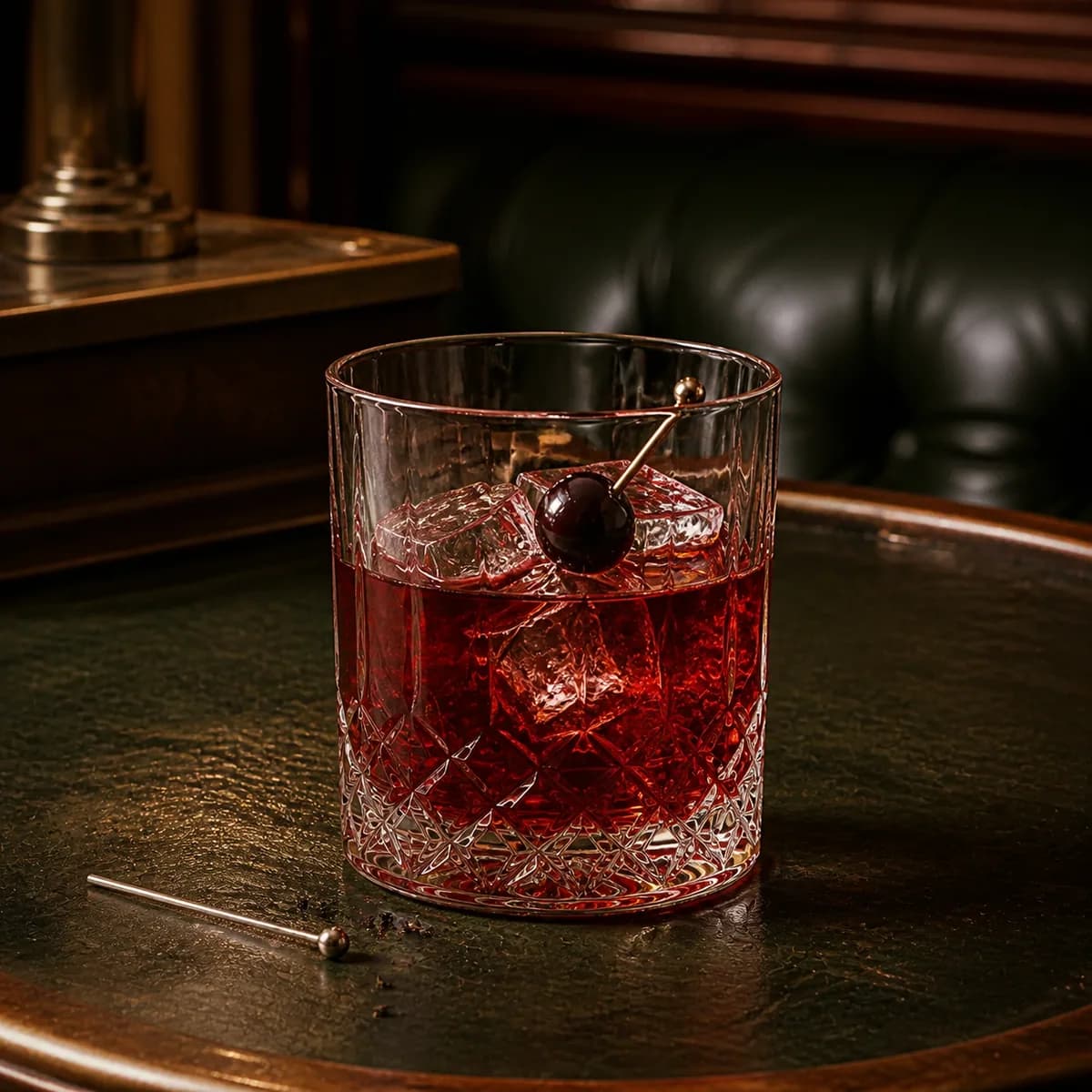
What goes in
Ingredients
Set up before you pour
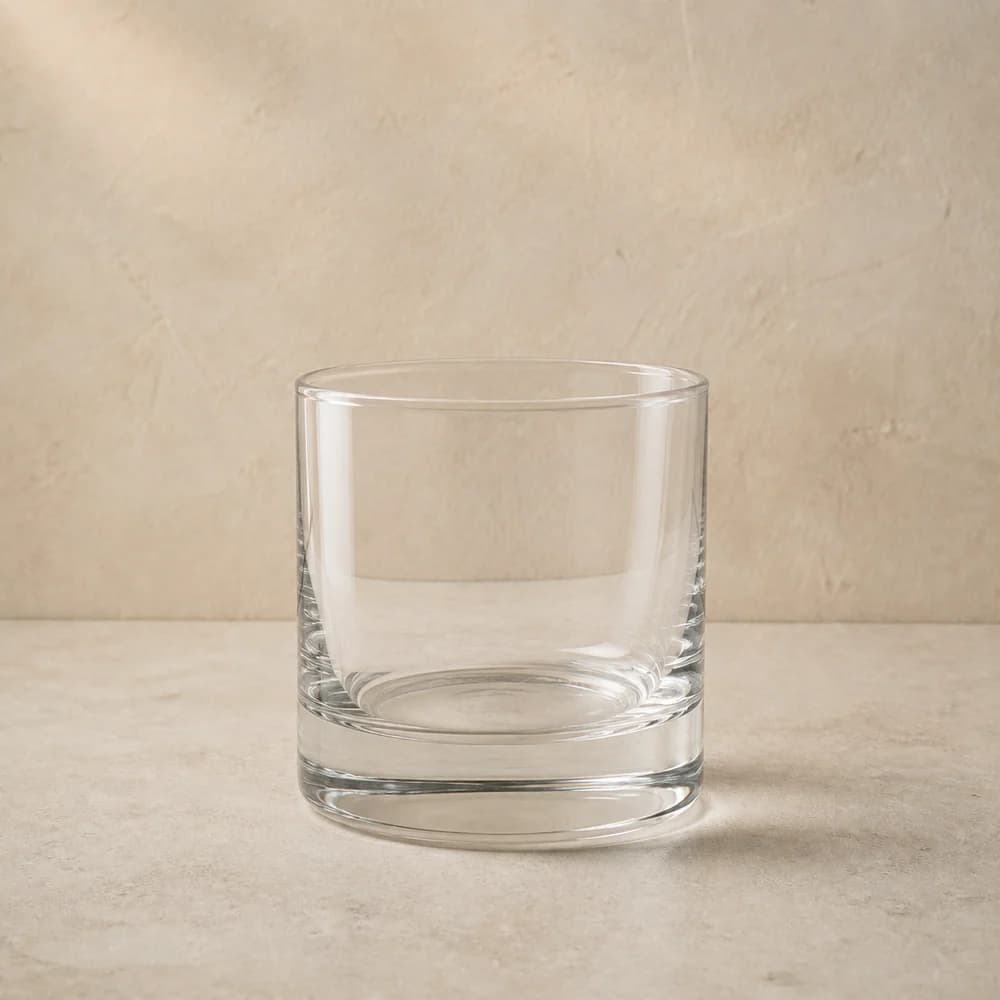
Use a rocks glass.
The low, sturdy bowl suits concentrated drinks and gives one large cube enough width.
- Standard size
- 300 ml10¼ oz
- Ice & serve
- Fill it with fresh ice cubes.
- If you don’t own one
- Use a small water tumbler with a heavy base.
- jigger or measuring spoon
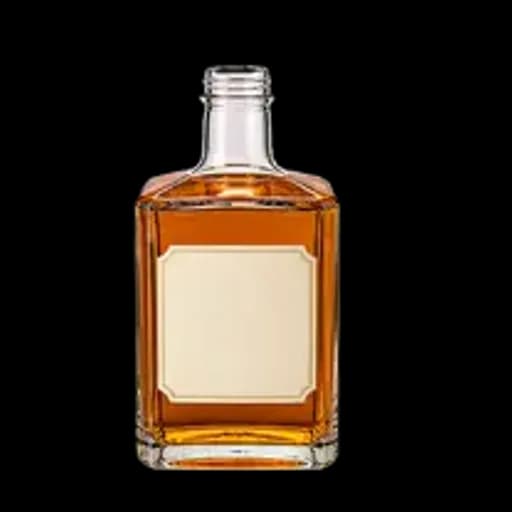
- Rye whiskey60 ml
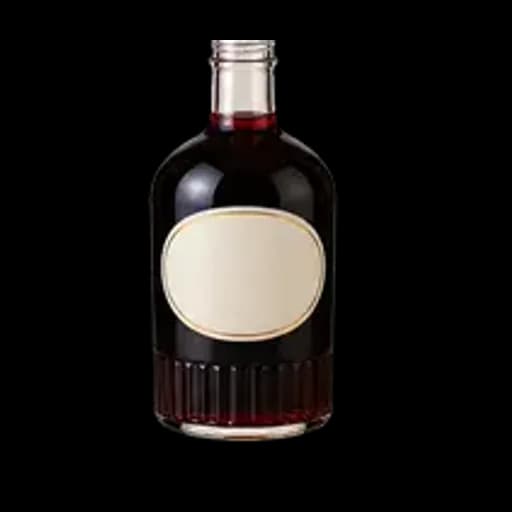
- Raspberry liqueur15 ml
From bottle to glass
Method
- 01
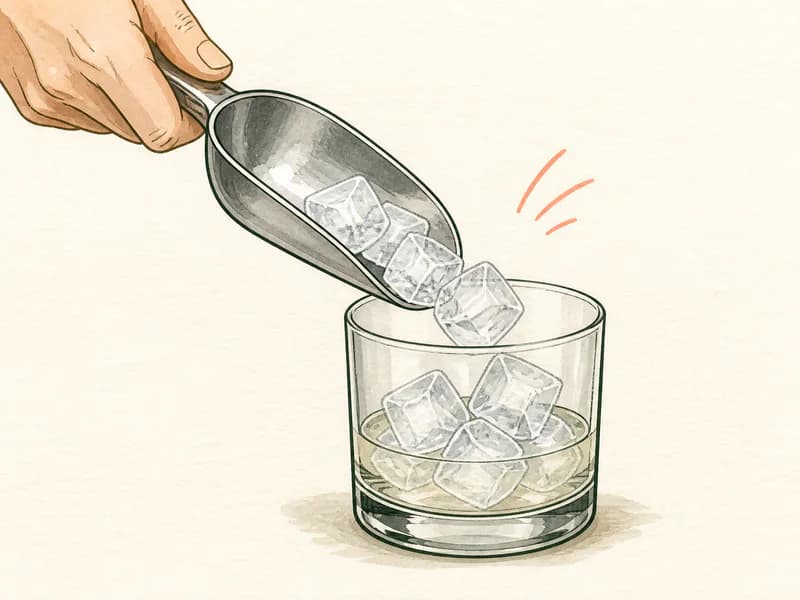
Ice the glass Fill the glass with ice
- 02
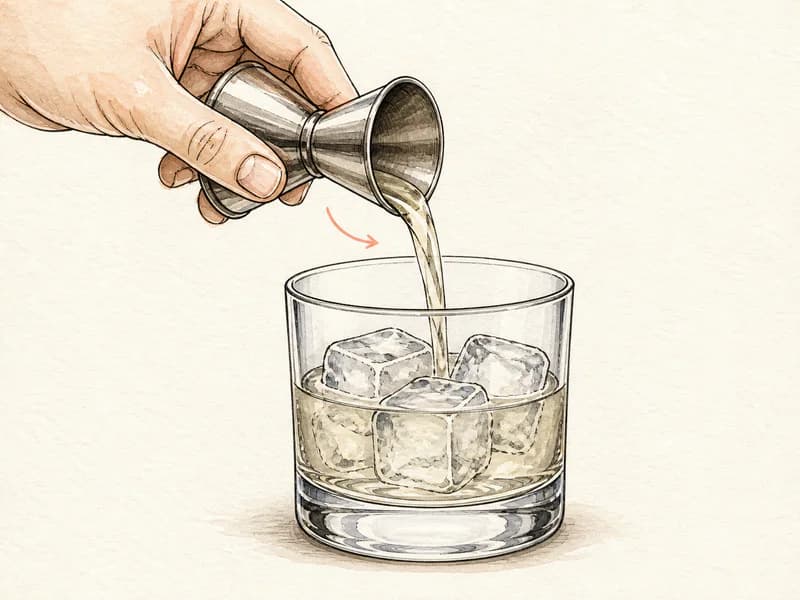
Measure and pour Pour 60 ml rye whiskey
 Rye whiskey
- 03
Measure and pour Add 15 ml raspberry liqueur
 Raspberry liqueur
- 04
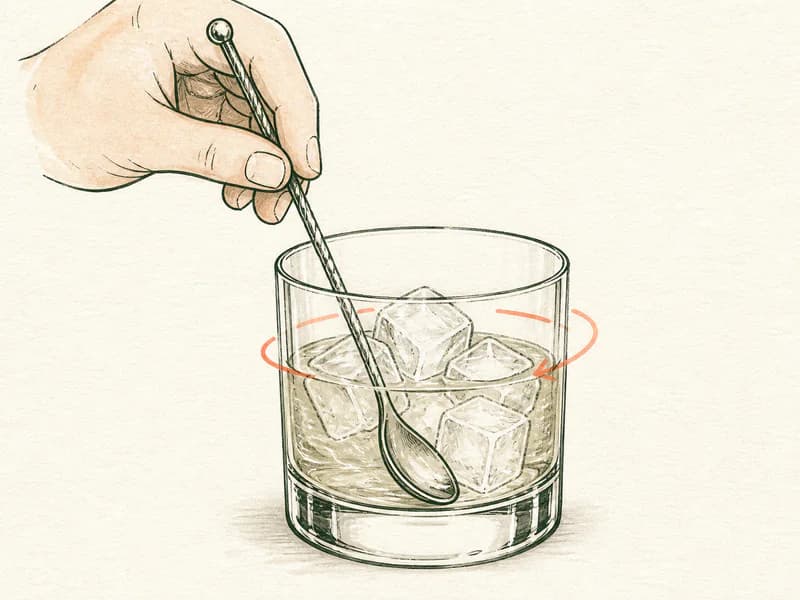
Stir around the ice Stir gently to combine
- 05
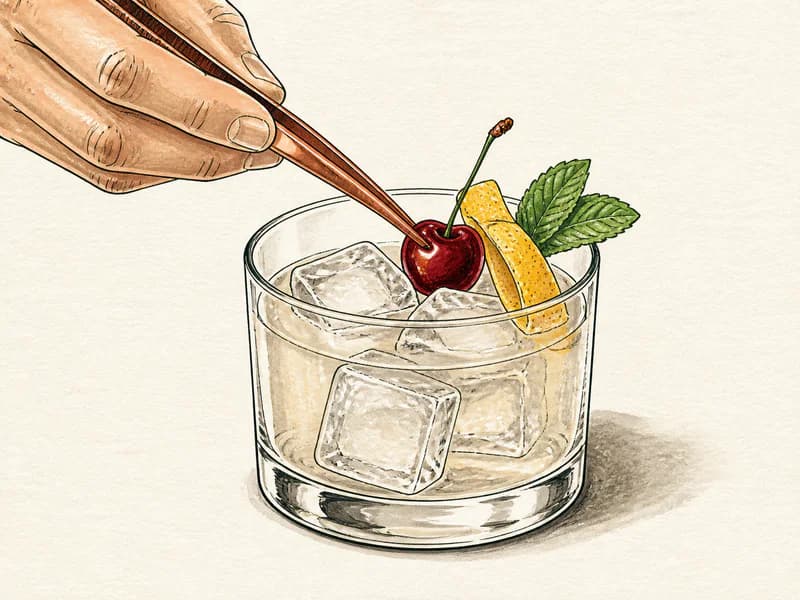
Finish the drink Finish it — add a cocktail cherry
Know your drink
About the Hunter
Fractions, not milliliters
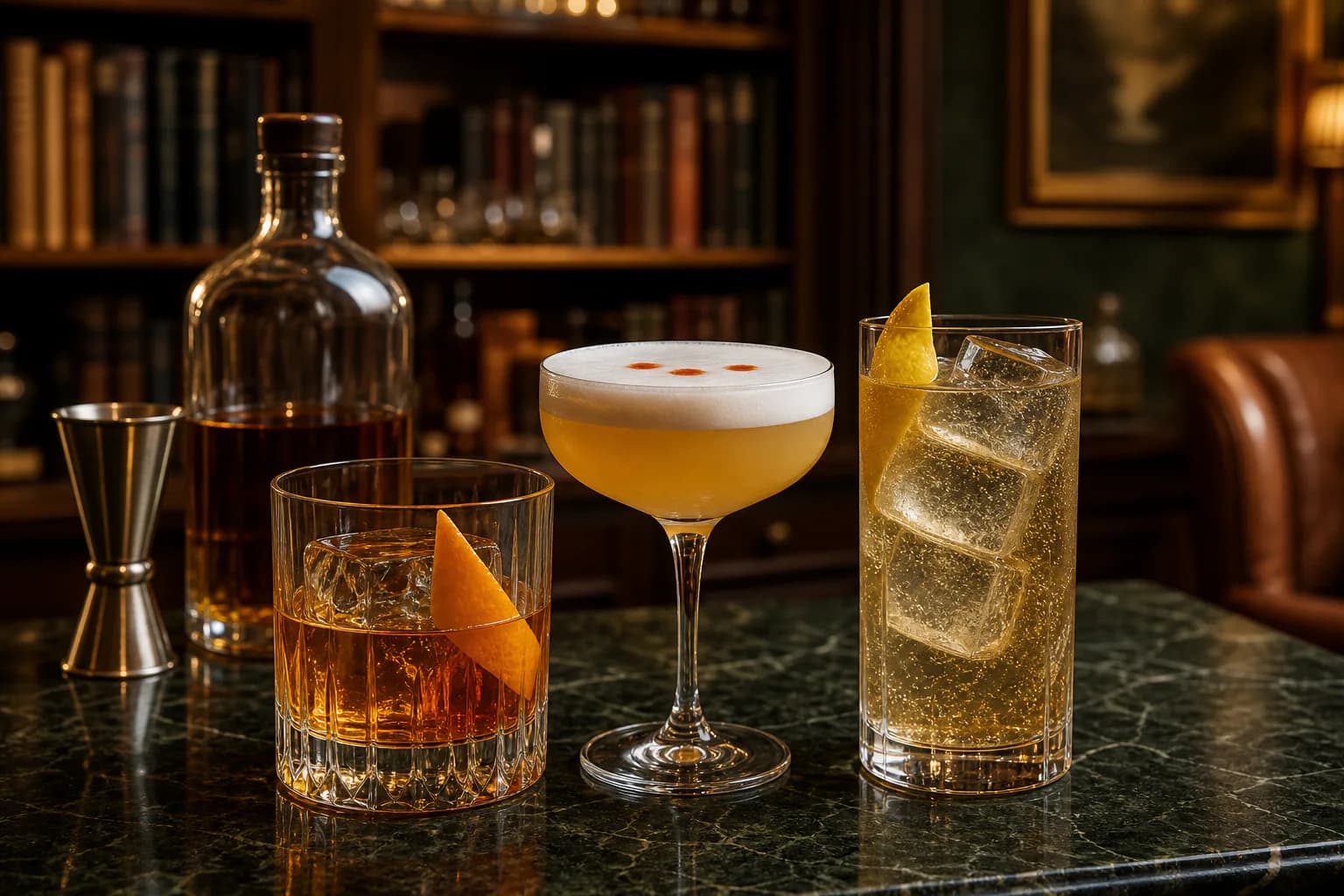
Pre-war books wrote drinks like this in fractions rather than measures: three quarters whiskey, one quarter liqueur. In a modern glass that works out around 60 and 20 ml, a touch sweeter than the build here. Fractions travel better than milliliters because they scale to whatever glass is in front of you, which is why old recipes look vague and are not.
Two-ingredient whiskey drinks live entirely on their ratio. Hunter sits in the same family as the Rusty Nail and the Godfather: spirit plus one sweet bottle, no citrus, no bitters, nothing to fix once it is poured. Taste as you build, and treat 15 ml as a starting point that depends more on your liqueur's sugar than on the whiskey.
Common questions
Hunter FAQ
Older books print it with cherry brandy. Which is right?
Both are in circulation and neither is wrong. Cherry brings almond, stone fruit and a rounder finish. Raspberry is brighter and reads jammier against rye pepper. If you use a genuine cherry brandy rather than a sweet cherry liqueur, drop to 12 ml, because it lands heavier in the glass.
Is 15 ml enough to taste?
It is a fifth of the glass, and a liqueur that sweet does not need more. What it changes is the ending: rye on its own finishes dry and peppery, and the fruit rounds that off without softening the front. At 22 ml you are drinking a liqueur with whiskey in it.
Over ice, or up in a chilled glass?
Over one big cube is how the recipe reads, and the dilution does real work on 75 ml of near neat spirit. Served up it comes at you sweeter and hotter at the same time, because the water that was smoothing things over has gone. Try it that way if you want the fruit forward.
With only two things in the glass, does the rye brand matter?
More than usual, because nothing is covering for it. A high-rye bottling at 45 to 50 percent gives the pepper something for the fruit to push against, while a soft 40 percent rye disappears underneath. Anything you would happily drink neat works here. Anything you would not, will not.
What ingredients are in a Hunter?
A classic Hunter calls for 60 ml (2 oz) Rye whiskey, 15 ml (0.5 oz) Raspberry liqueur. That single-serve spec scales cleanly — the recipe above converts it to oz and multiplies it for 2–4 drinks.
How strong is a Hunter?
A standard Hunter is roughly 39% ABV once mixed (before ice melt softens it further). That makes it spirit-forward — closer to a Martini than to a beer, so sip it slowly.
Is a Hunter shaken or stirred?
A Hunter is stirred, not shaken. It contains no citrus juice, so stirring keeps it crystal clear and silky instead of cloudy and aerated.
Sharpen the technique
Skills used in this recipe
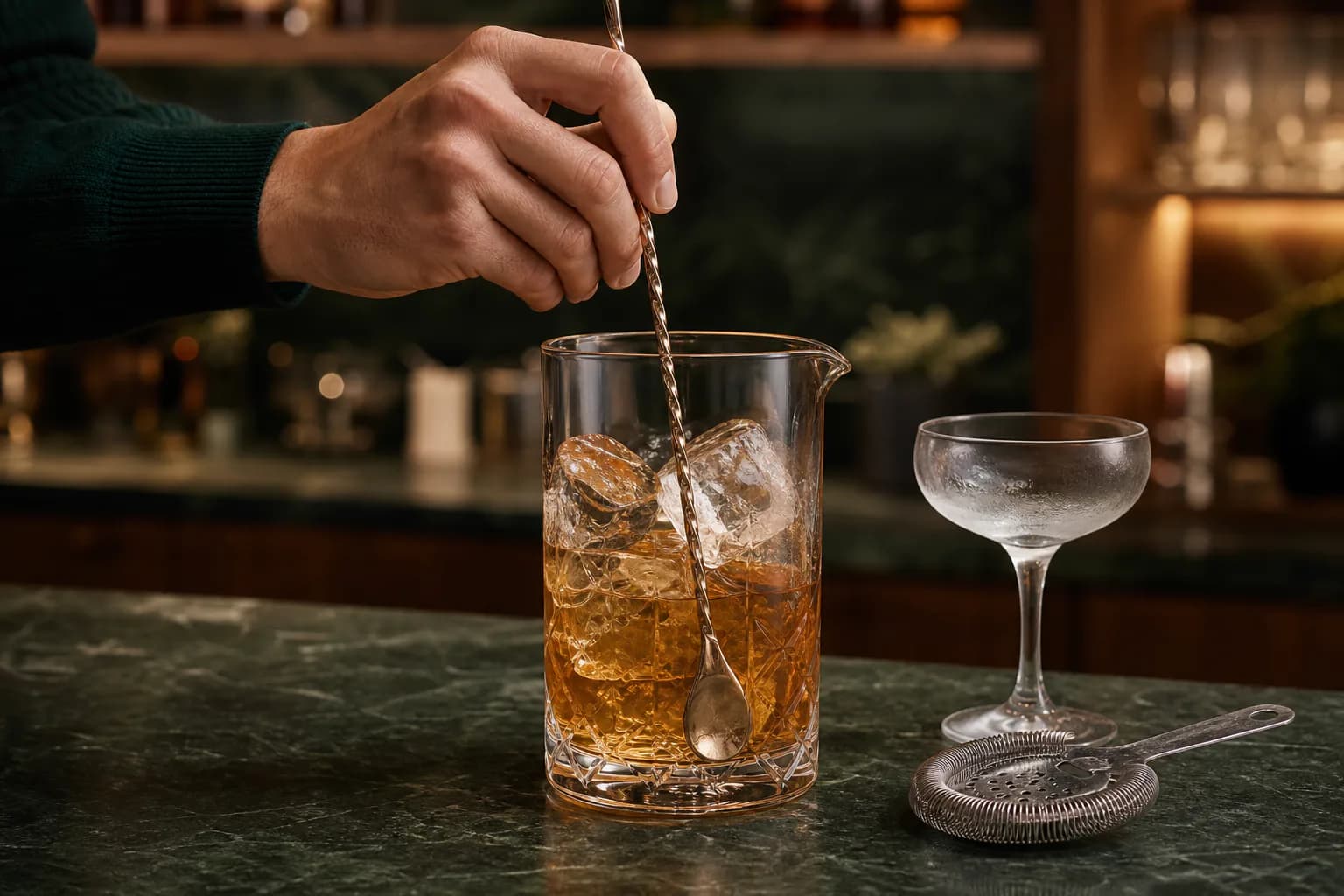
How to stir a cocktail for a silky finish
Control chilling and dilution without adding the bubbles and texture of a shake.
Read the guide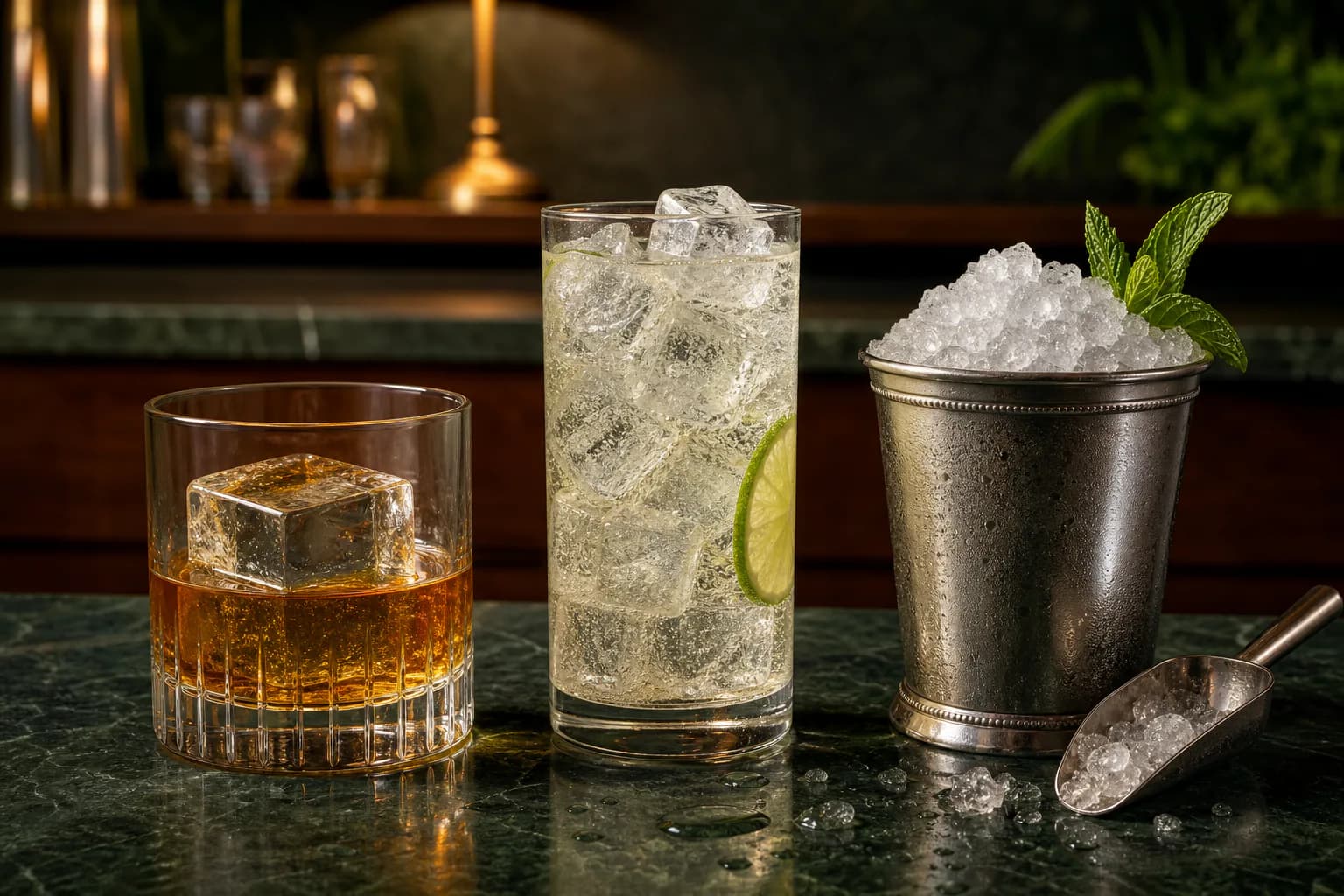
Cocktail ice: cubes, crushed ice and dilution
Understand why ice is an ingredient—and choose the right shape for every drink.
Read the guideWhere to go next
If you like the Hunter, try these.
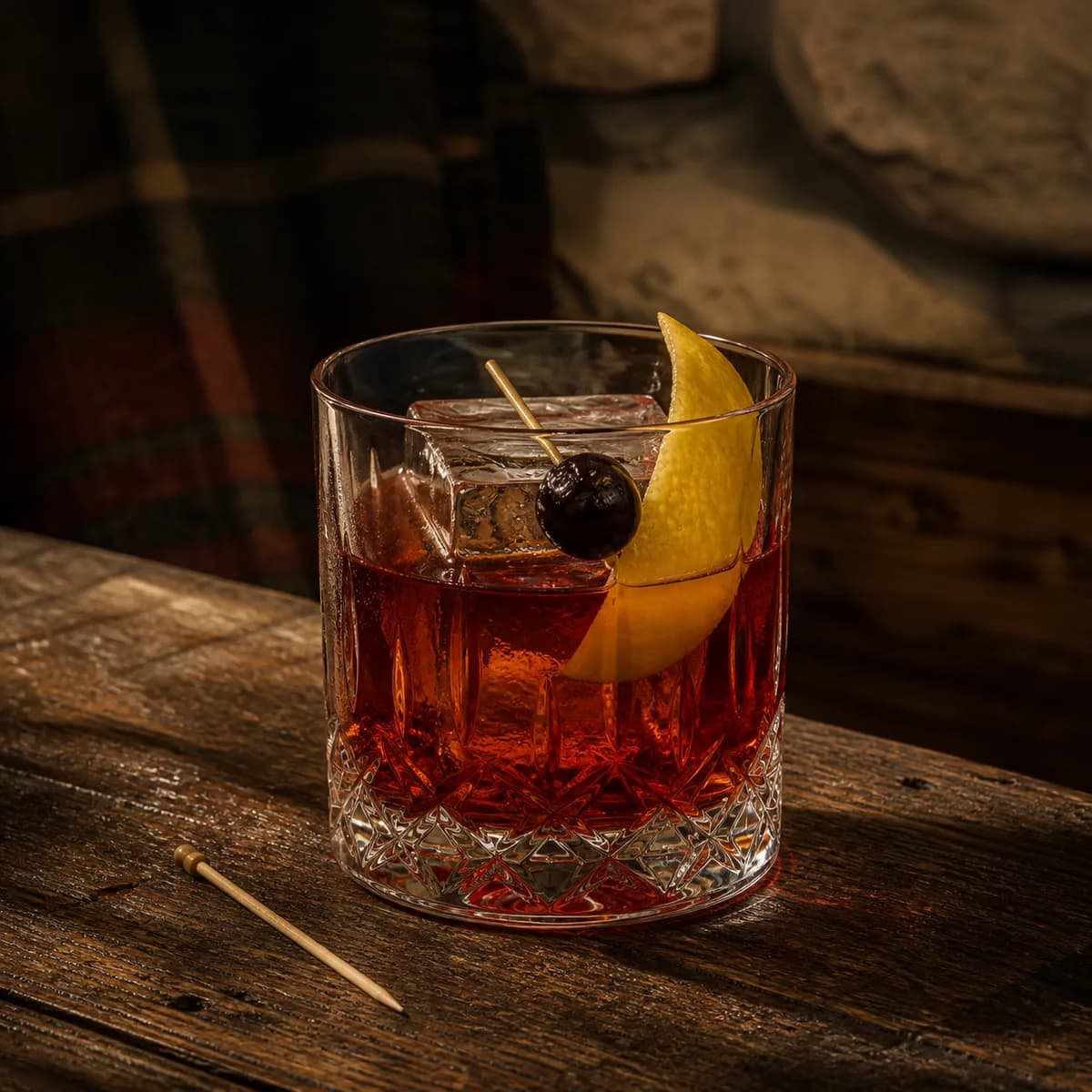
Vieux Carré
New Orleans in a glass: rye and cognac with sweet vermouth, Bénédictine and two kinds of bitters. Deep, spiced and utterly complex.
View recipe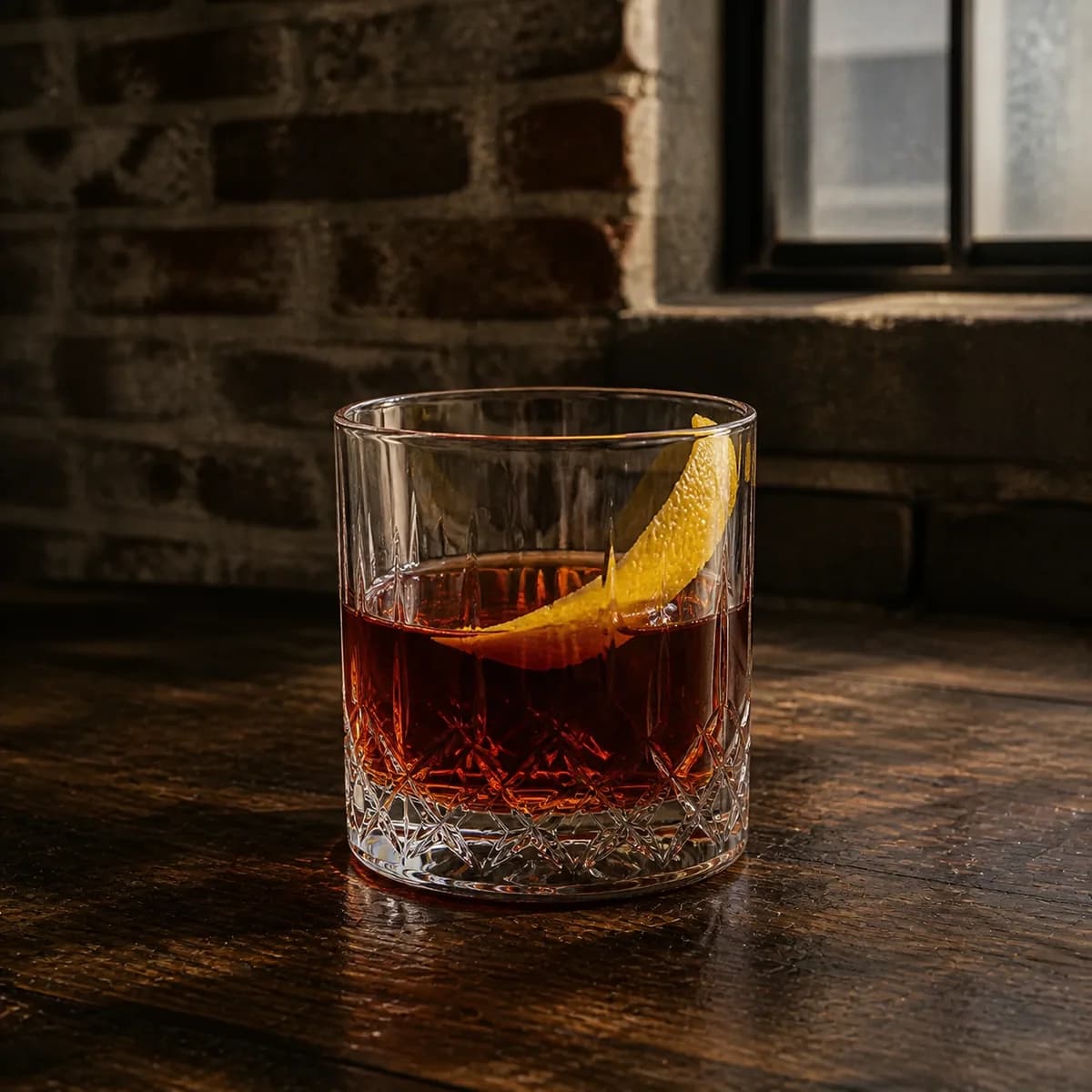
Sazerac
The pride of New Orleans: rye and Peychaud’s bitters in an absinthe-rinsed glass, no ice, lemon oils on top. Aromatic, dry and dangerously smooth.
View recipe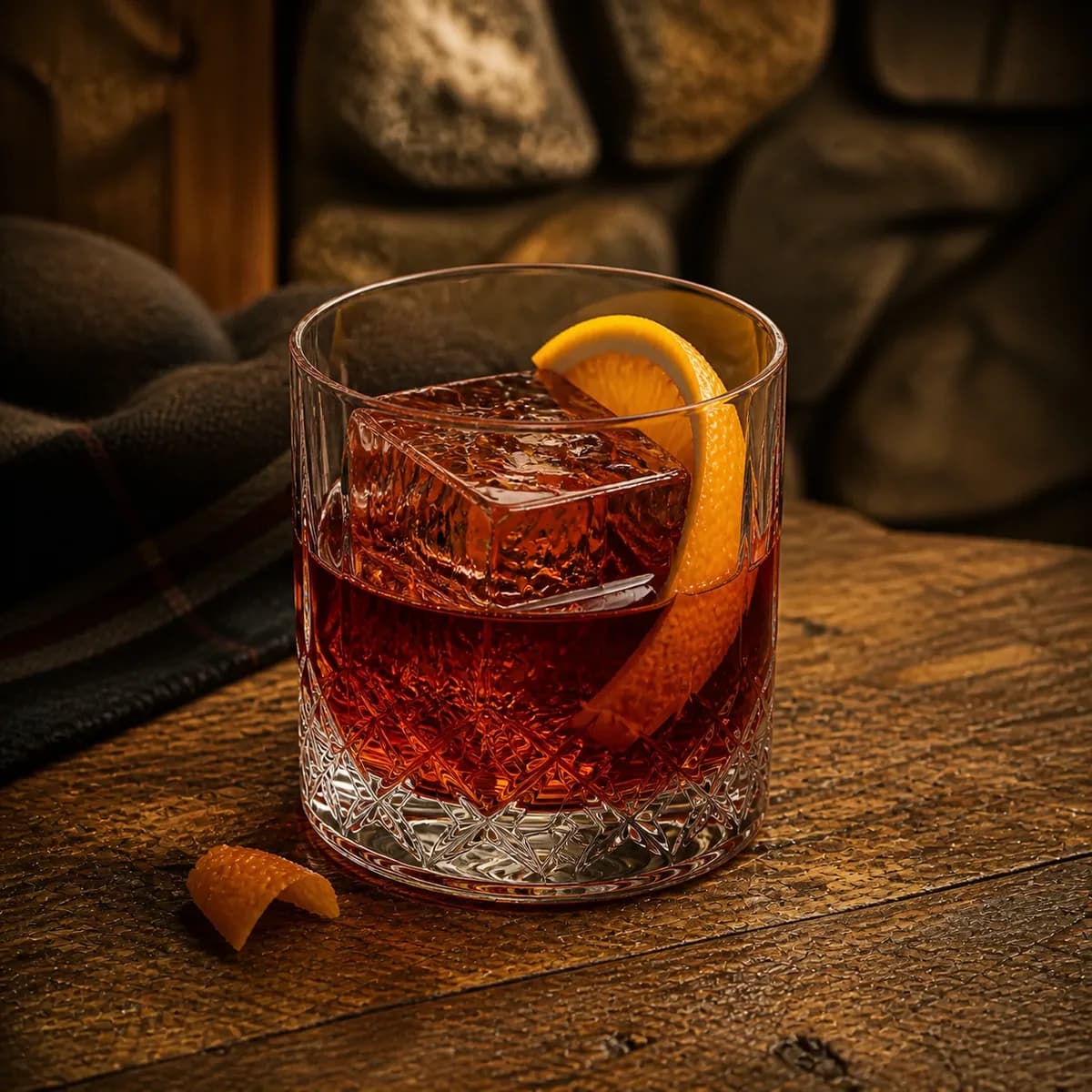
Toronto
An Old Fashioned with a bitter Fernet backbone — rye, a little sugar and bitters, stirred over ice.
View recipe