Classic cocktail · Guided recipe
Contessa
Start makingA paler, softer Negroni: gin and Campari with blanc vermouth in place of sweet. Bitter and floral, with a lighter touch.
In the glassGin · Campari · Blanc vermouth
See exact amounts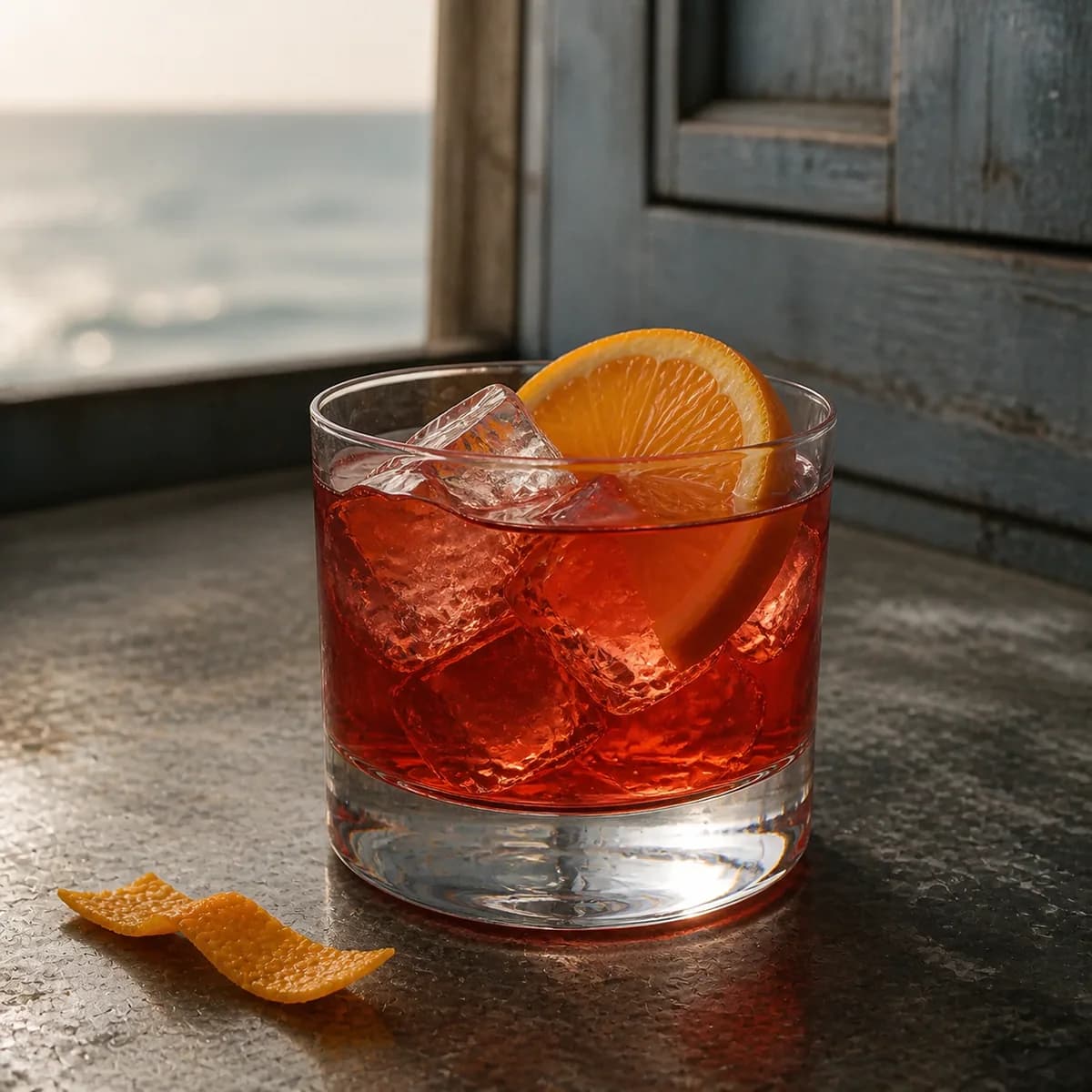
What goes in
Ingredients

Set up before you pour
Use a rocks glass.
The low, sturdy bowl suits concentrated drinks and gives one large cube enough width.
- Standard size
- 300 ml10¼ oz
- Ice & serve
- Fill it with fresh ice cubes.
- If you don’t own one
- Use a small water tumbler with a heavy base.
- jigger or measuring spoon
- Gin30 ml
- Campari30 ml
- Blanc vermouth30 ml
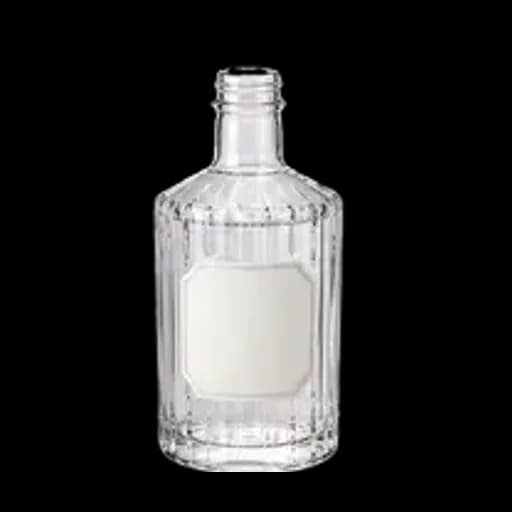


From bottle to glass
Method
- 01
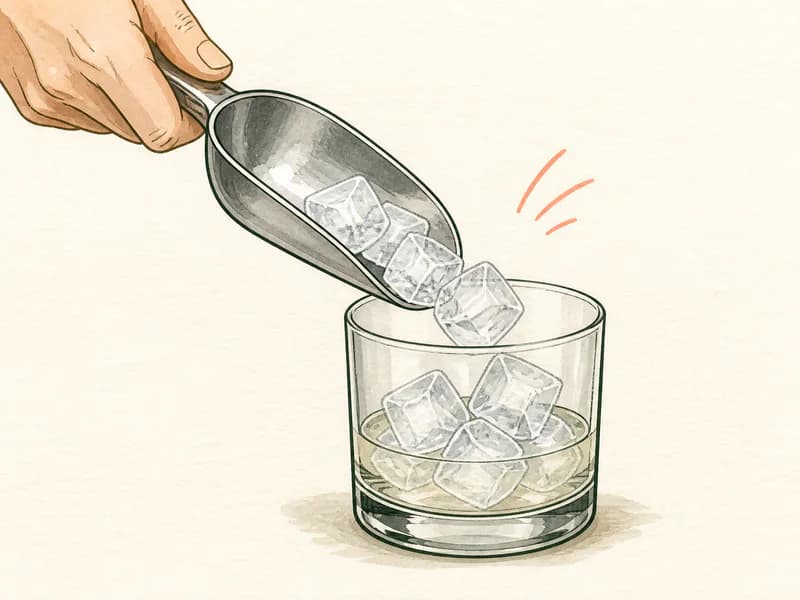
Ice the glass Fill the glass with ice
- 02
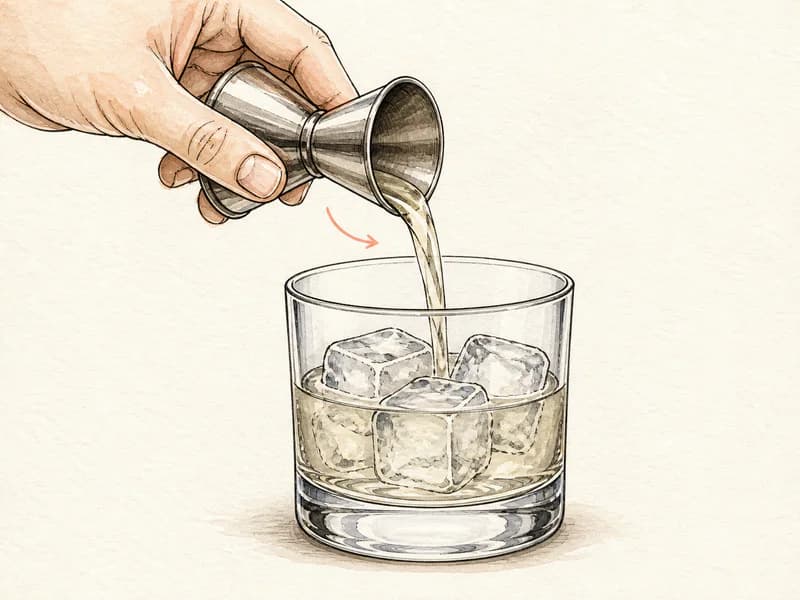
Measure and pour Pour 30 ml gin
 Gin
Gin
- 03
Measure and pour Add 30 ml campari
 Campari
- 04
Measure and pour Add 30 ml blanc vermouth
 Blanc vermouth
- 05
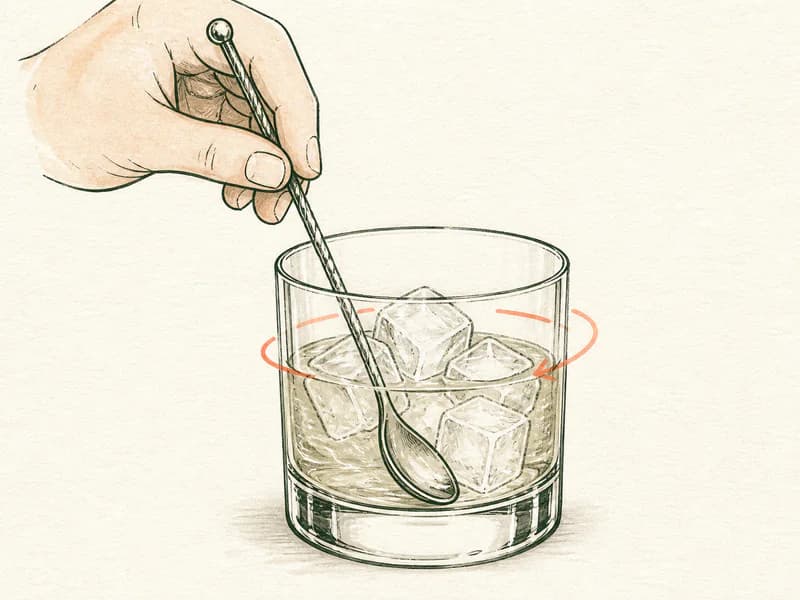
Stir around the ice Stir gently to combine
- 06
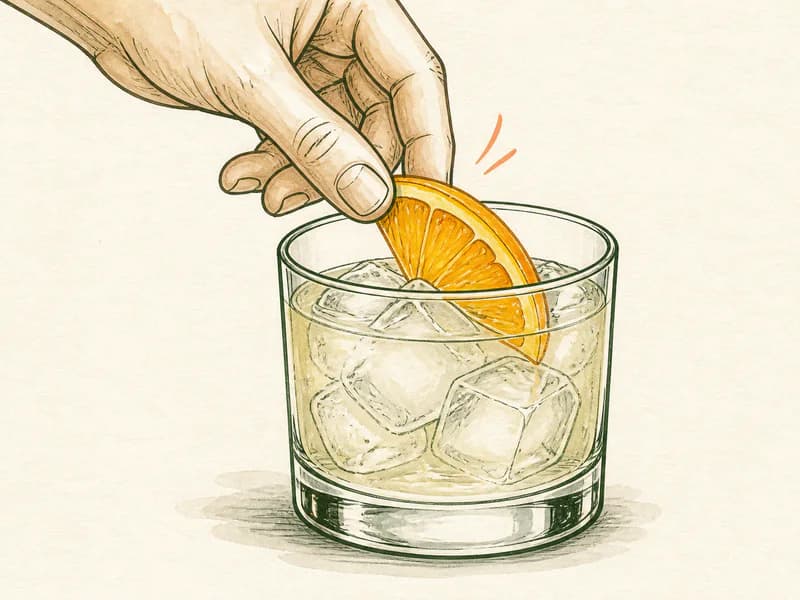
Finish the drink Finish it — add an orange slice
Know your drink
About the Contessa

Buying a blanc vermouth
Dolin Blanc is the usual reference point, light and faintly bitter, made in Chambéry. Martini Bianco is sweeter and heavier on vanilla, which suits anyone who finds Dolin too restrained. Contratto and Carpano both bottle richer versions worth trying. Whichever you open, treat it as wine rather than spirit: cap it, refrigerate it, and finish it within a month before the fruit goes tired.
Common questions
Contessa FAQ
Is blanc vermouth the same thing as dry vermouth?
No, and the swap is not harmless. Blanc, or bianco, is a sweet white vermouth, sugared like a rosso but built on vanilla and citrus rather than dark spice. French dry has almost no sugar in it. Use dry here and the drink goes thin and bracingly bitter.
Can I put Lillet Blanc or Cocchi Americano in it?
Both make good drinks, but neither is vermouth. Lillet is softer and rounder, while Cocchi Americano adds quinine that stacks on top of the Campari and sharpens everything. Only bianco vermouth gives you the plush version this recipe is aiming at.
Why is mine sweeter than a Negroni?
Bianco vermouth usually carries a shade more sugar than rosso, and there's no dark, spiced weight here to disguise it. If it's cloying, take the vermouth to 22 ml and leave gin and Campari alone. Serving it colder helps too; sweetness gets louder as a drink warms.
I already make a White Negroni. Is this different enough to bother?
Different bitterness. A White Negroni runs on Suze, which is gentian: rooty and drying, with no red anywhere. The Contessa keeps Campari, so you get the same orange-peel bitterness as a standard Negroni over a lighter, more floral body. If you're buying one bottle, blanc vermouth turns up in more drinks than Suze does.
What ingredients are in a Contessa?
A classic Contessa calls for 30 ml (1 oz) Gin, 30 ml (1 oz) Campari, 30 ml (1 oz) Blanc vermouth. That single-serve spec scales cleanly — the recipe above converts it to oz and multiplies it for 2–4 drinks.
How strong is a Contessa?
A standard Contessa is roughly 27% ABV once mixed (before ice melt softens it further). That makes it spirit-forward — closer to a Martini than to a beer, so sip it slowly.
Is a Contessa shaken or stirred?
A Contessa is stirred, not shaken. It contains no citrus juice, so stirring keeps it crystal clear and silky instead of cloudy and aerated.
Sharpen the technique
Skills used in this recipe

How to stir a cocktail for a silky finish
Control chilling and dilution without adding the bubbles and texture of a shake.
Read the guide
Cocktail ice: cubes, crushed ice and dilution
Understand why ice is an ingredient—and choose the right shape for every drink.
Read the guideWhere to go next
If you like the Contessa, try these.

Negroni
Equal parts gin, Campari and sweet vermouth, stirred over ice with an orange twist. Bitter, ruby-red and perfectly balanced — the gateway to every amaro that follows.
View recipe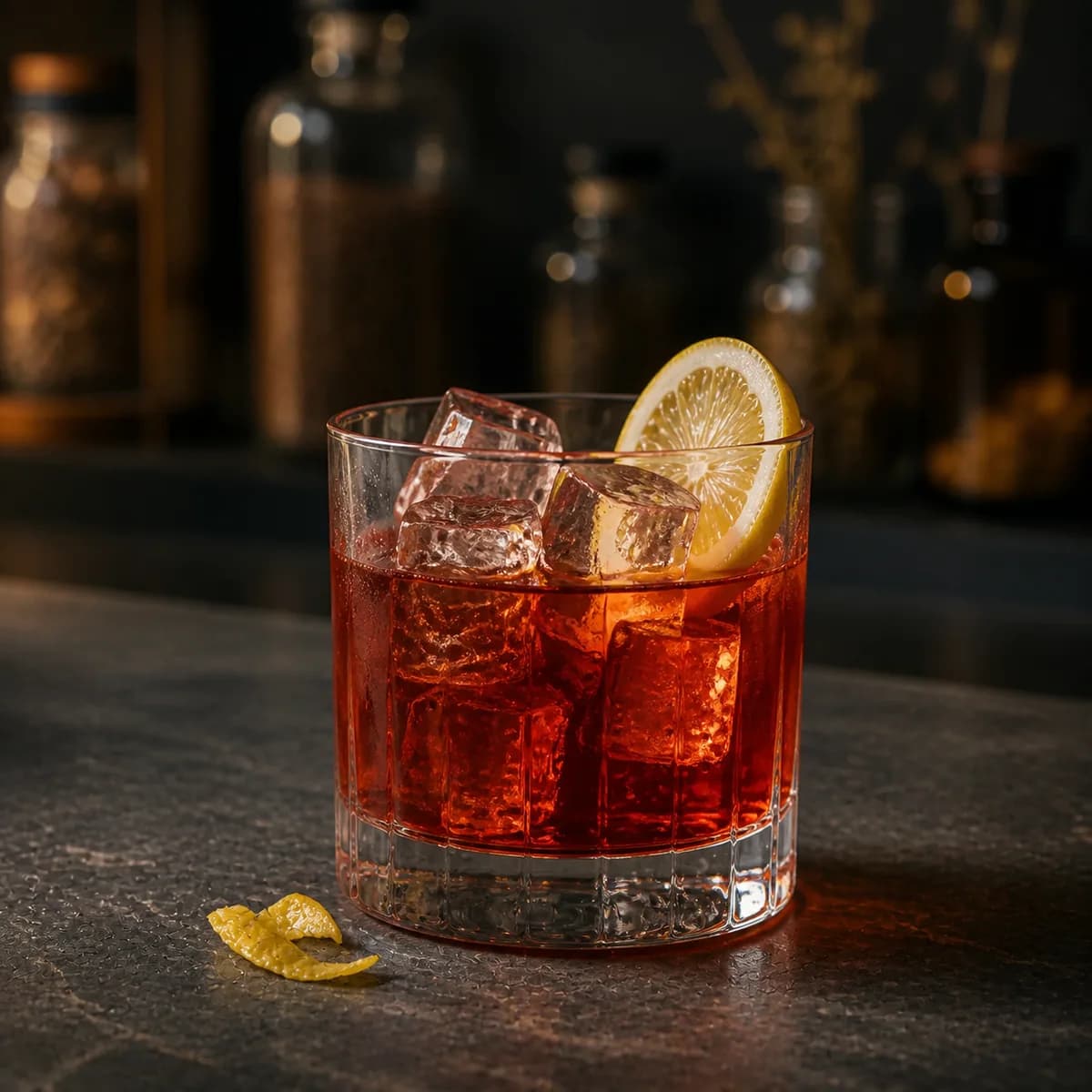
Cardinale
A drier, sharper Negroni: gin and Campari with dry vermouth instead of sweet. Crisp, bitter and bracing.
View recipe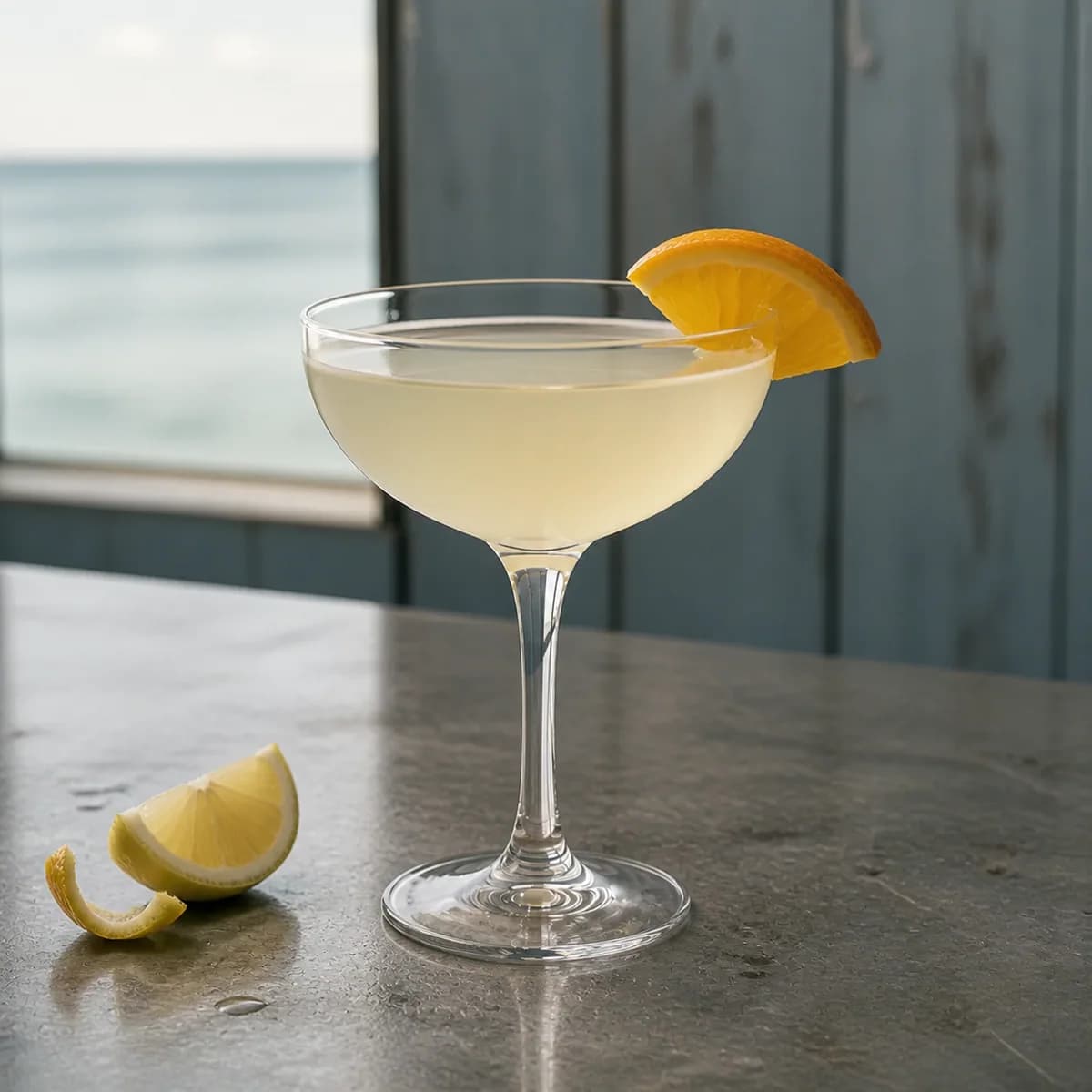
Corpse Reviver #2
The famous morning-after cure: equal parts gin, orange liqueur, blanc vermouth and lemon, with an absinthe rinse. Bright, dry and reviving.
View recipe